
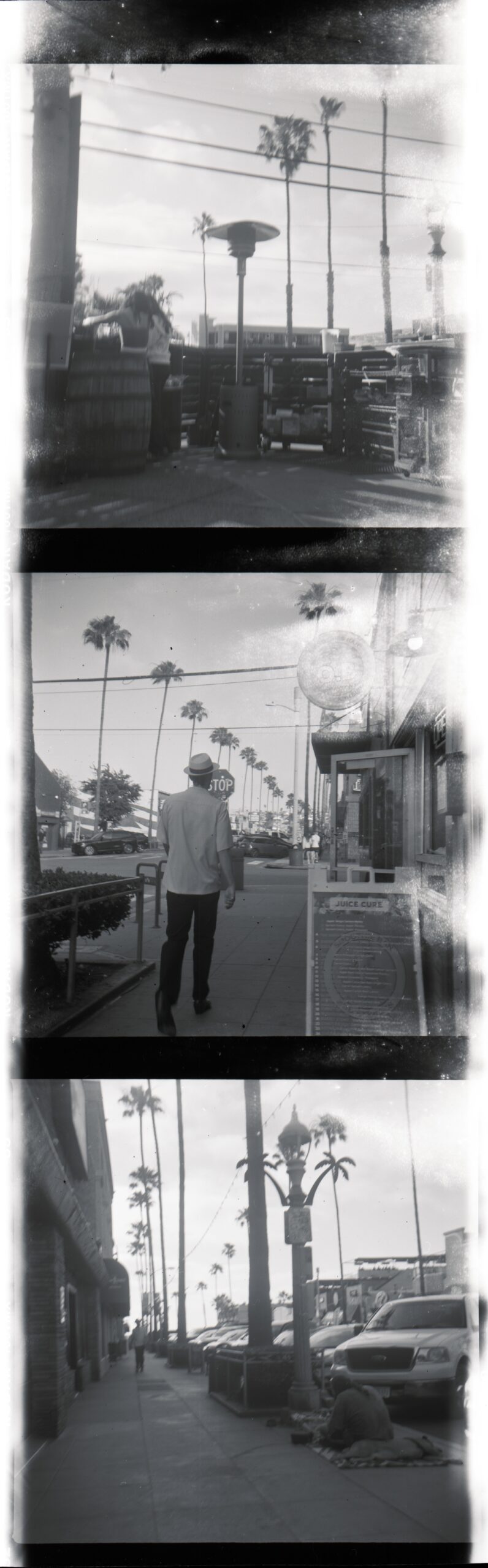
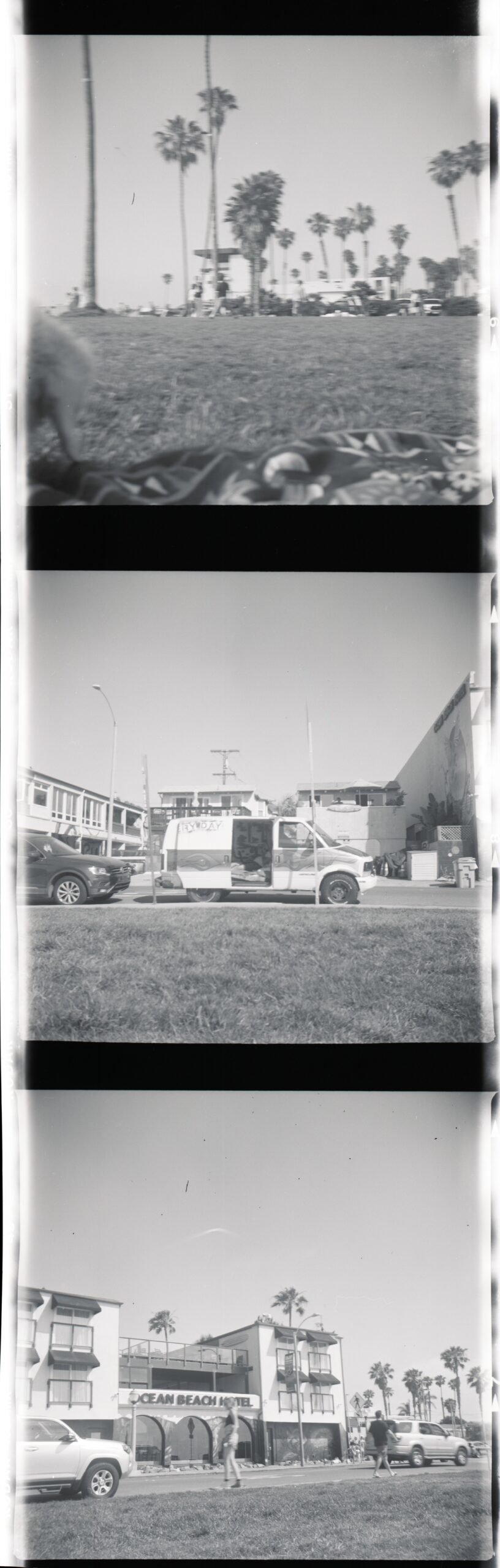
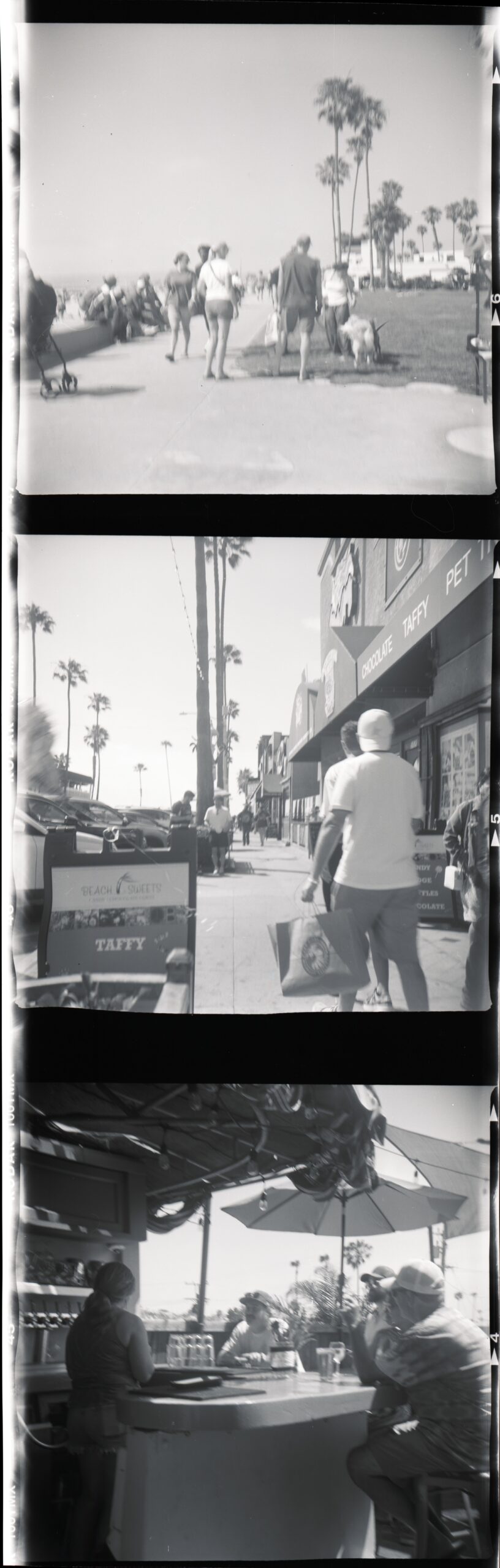
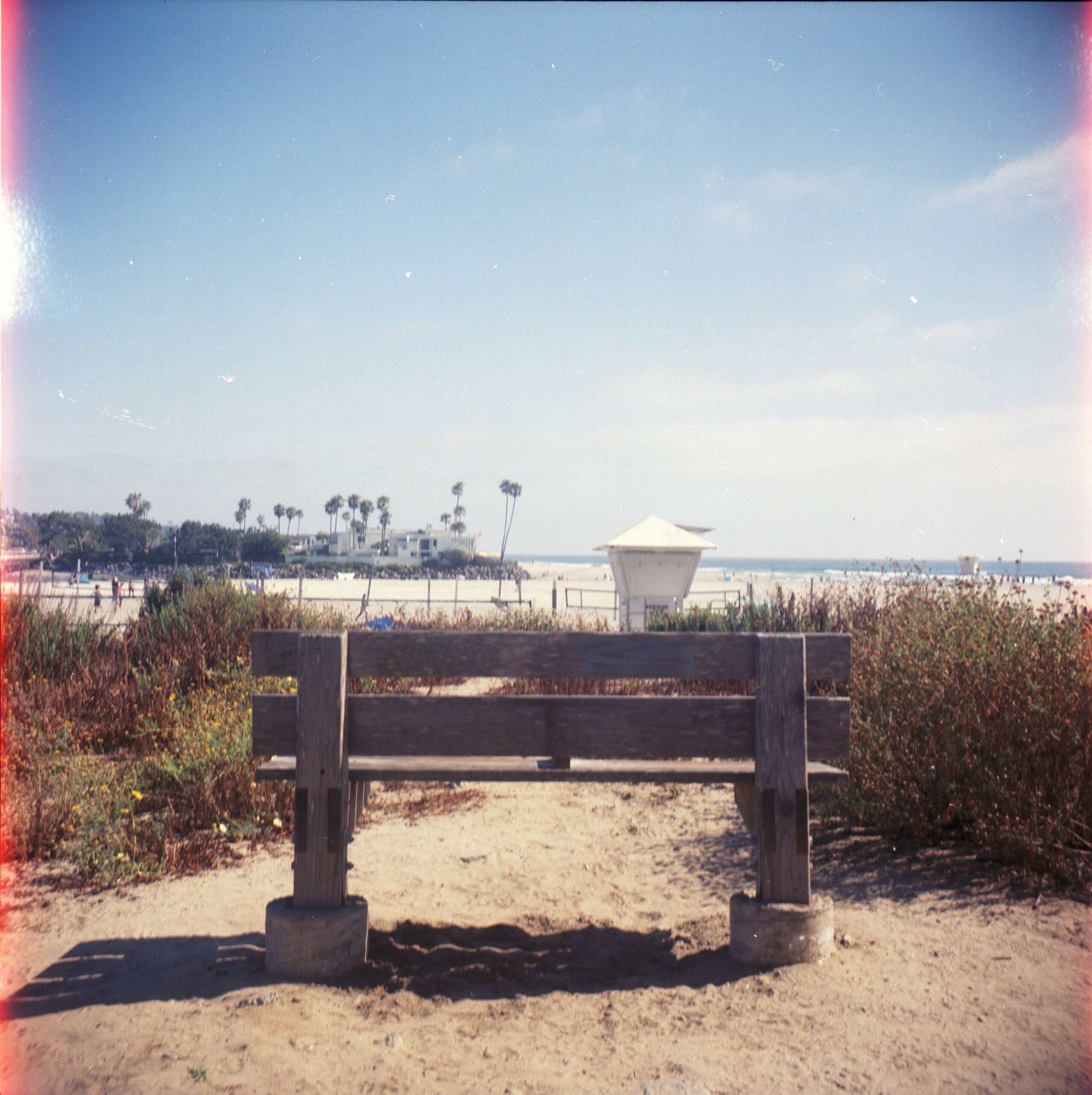
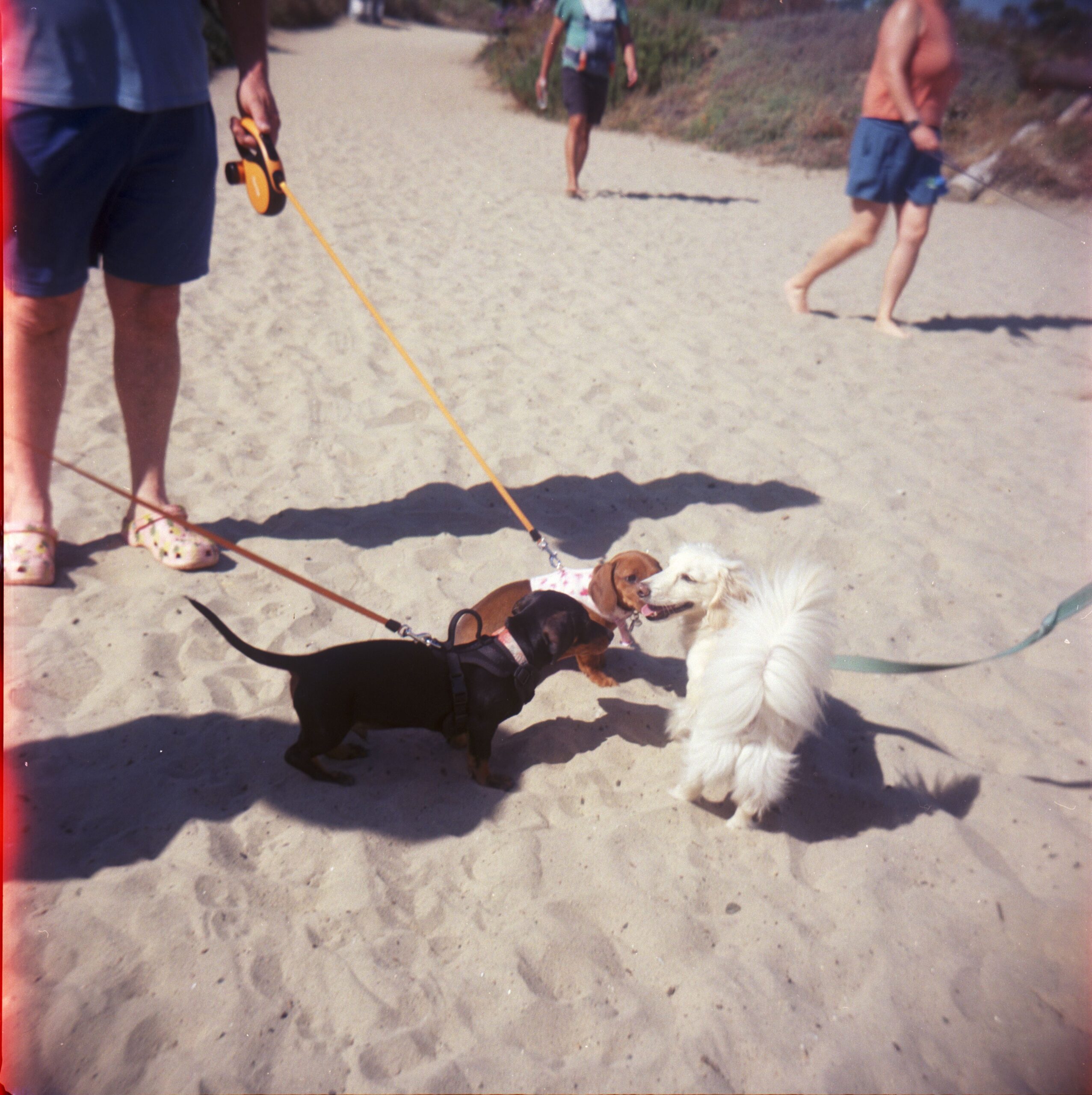
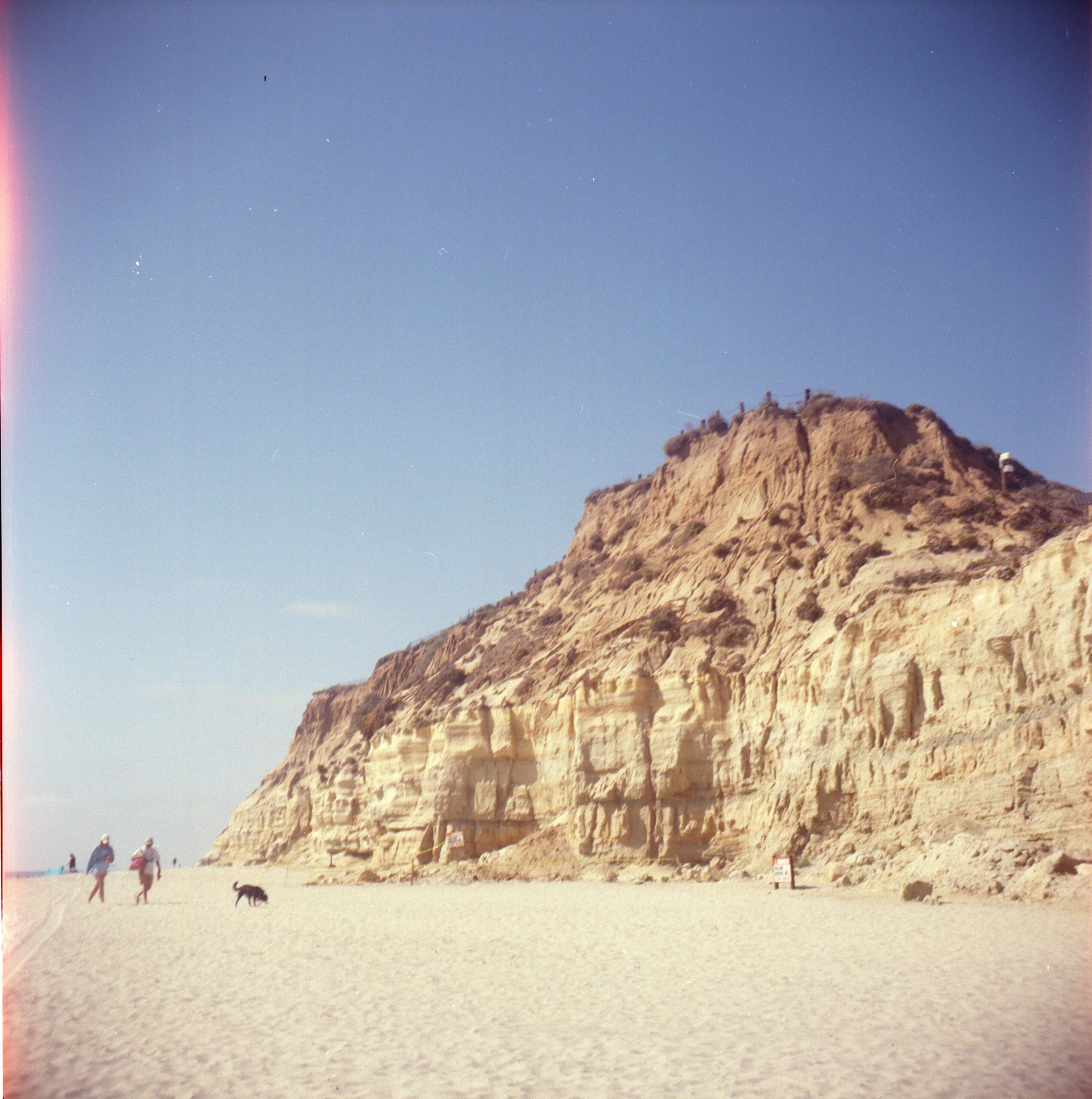
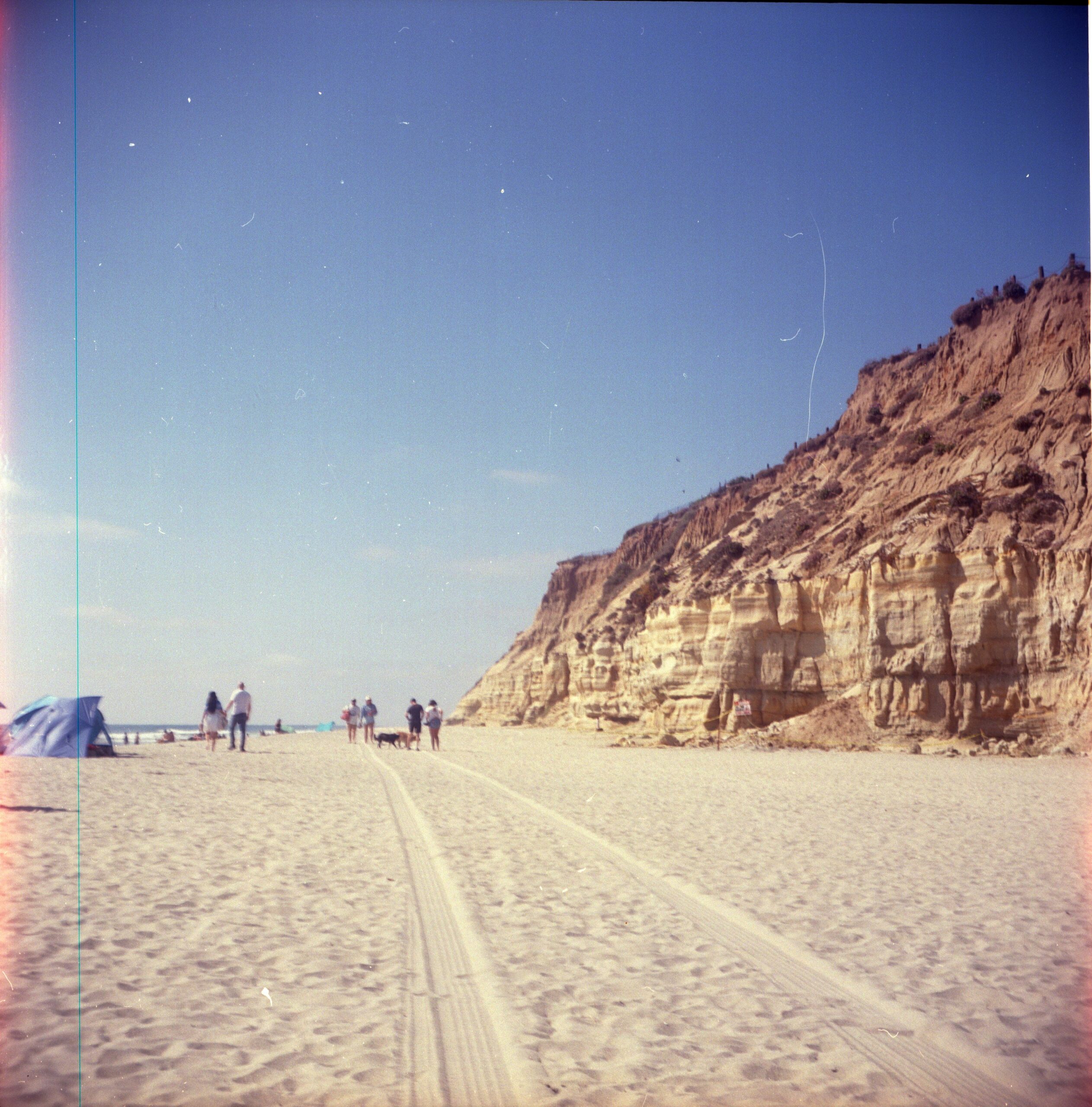
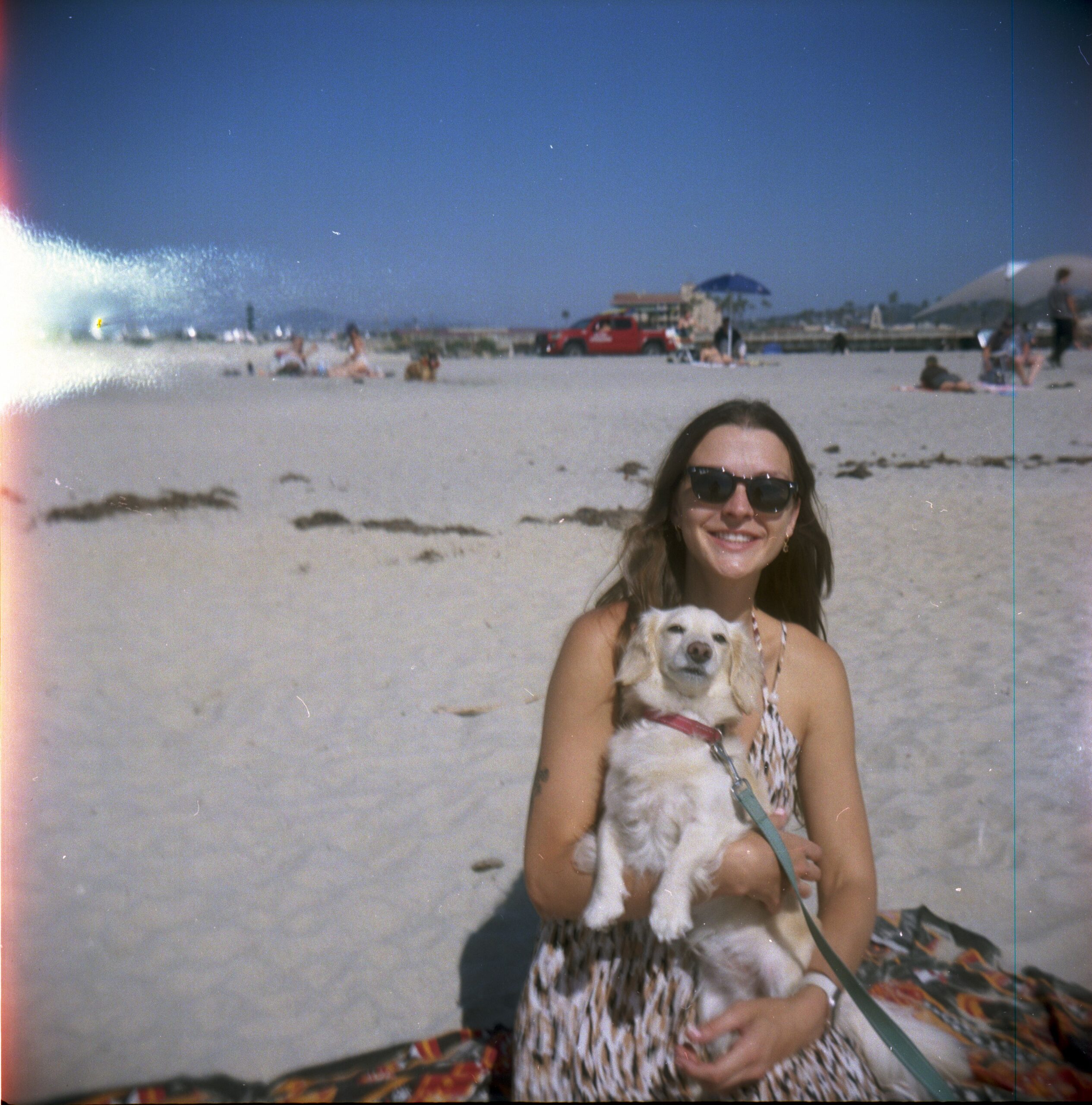
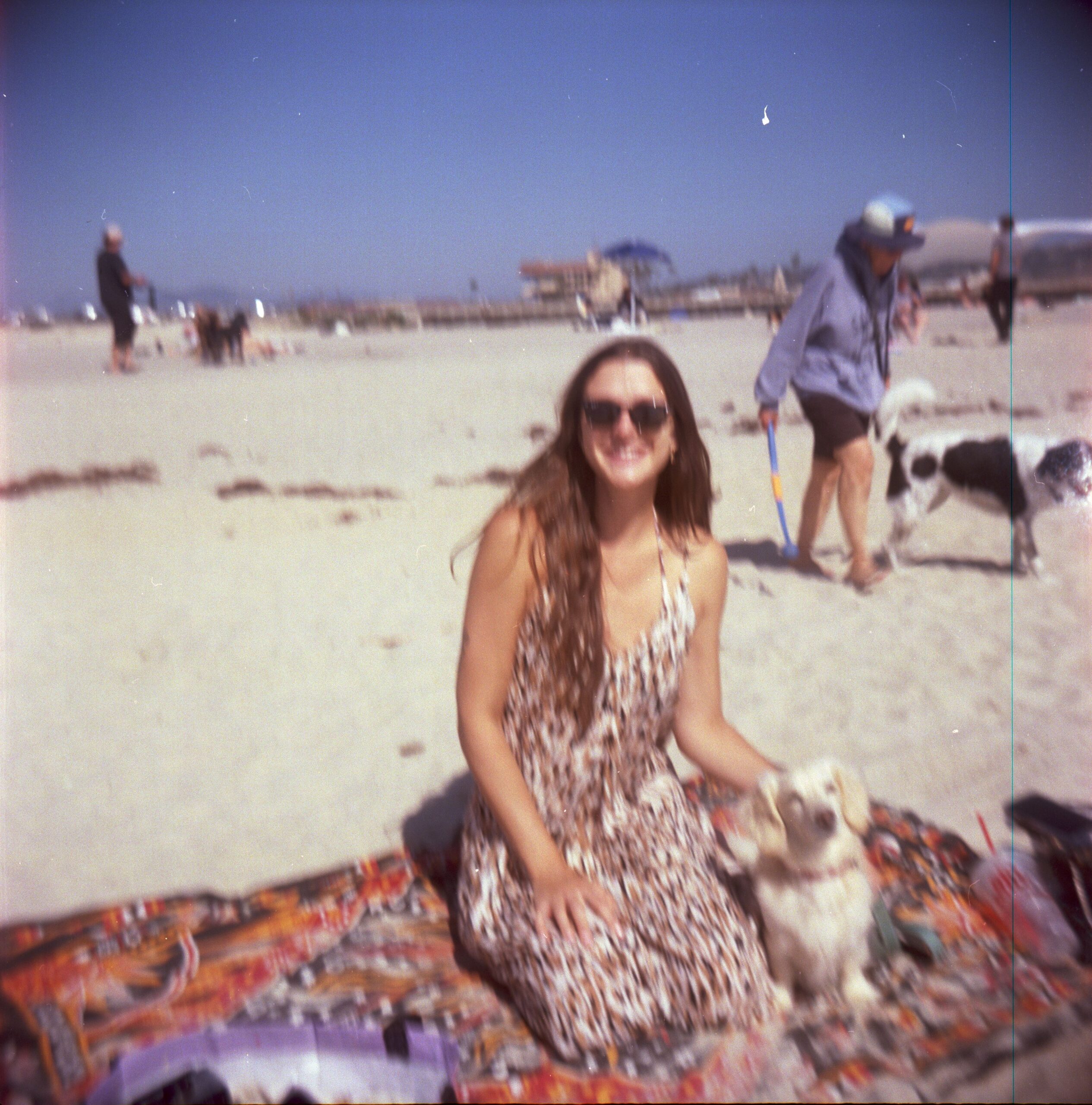
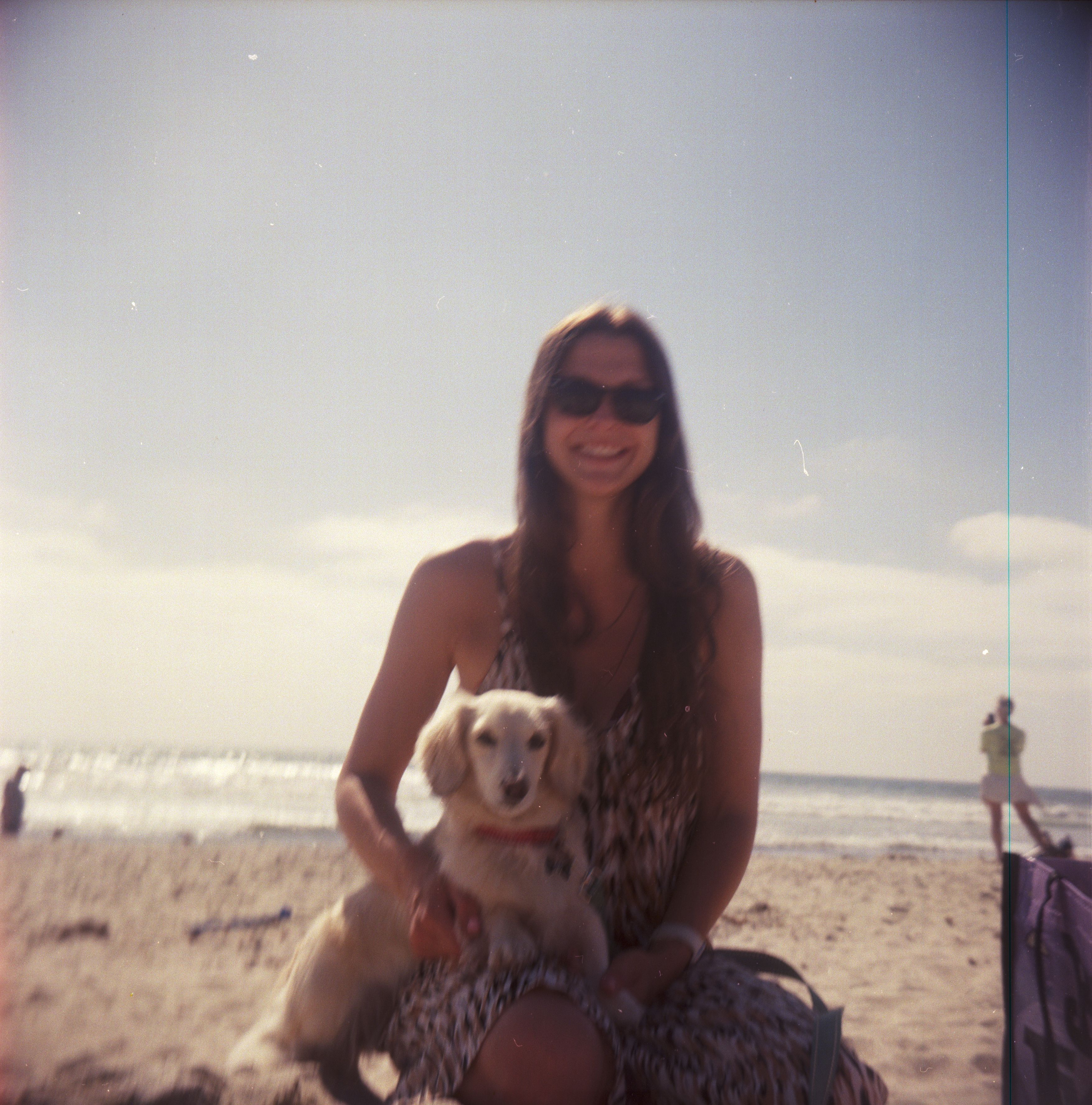
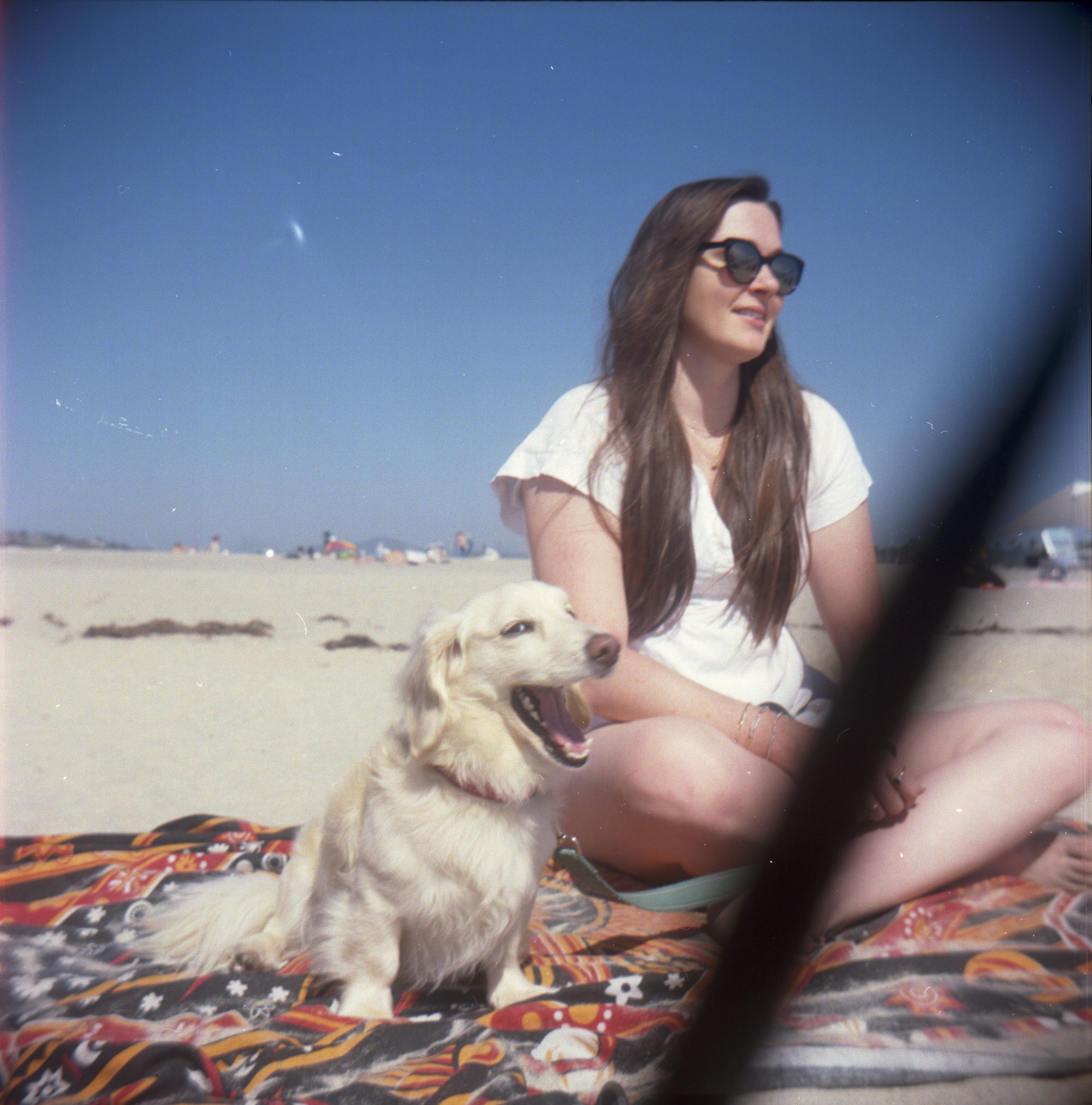
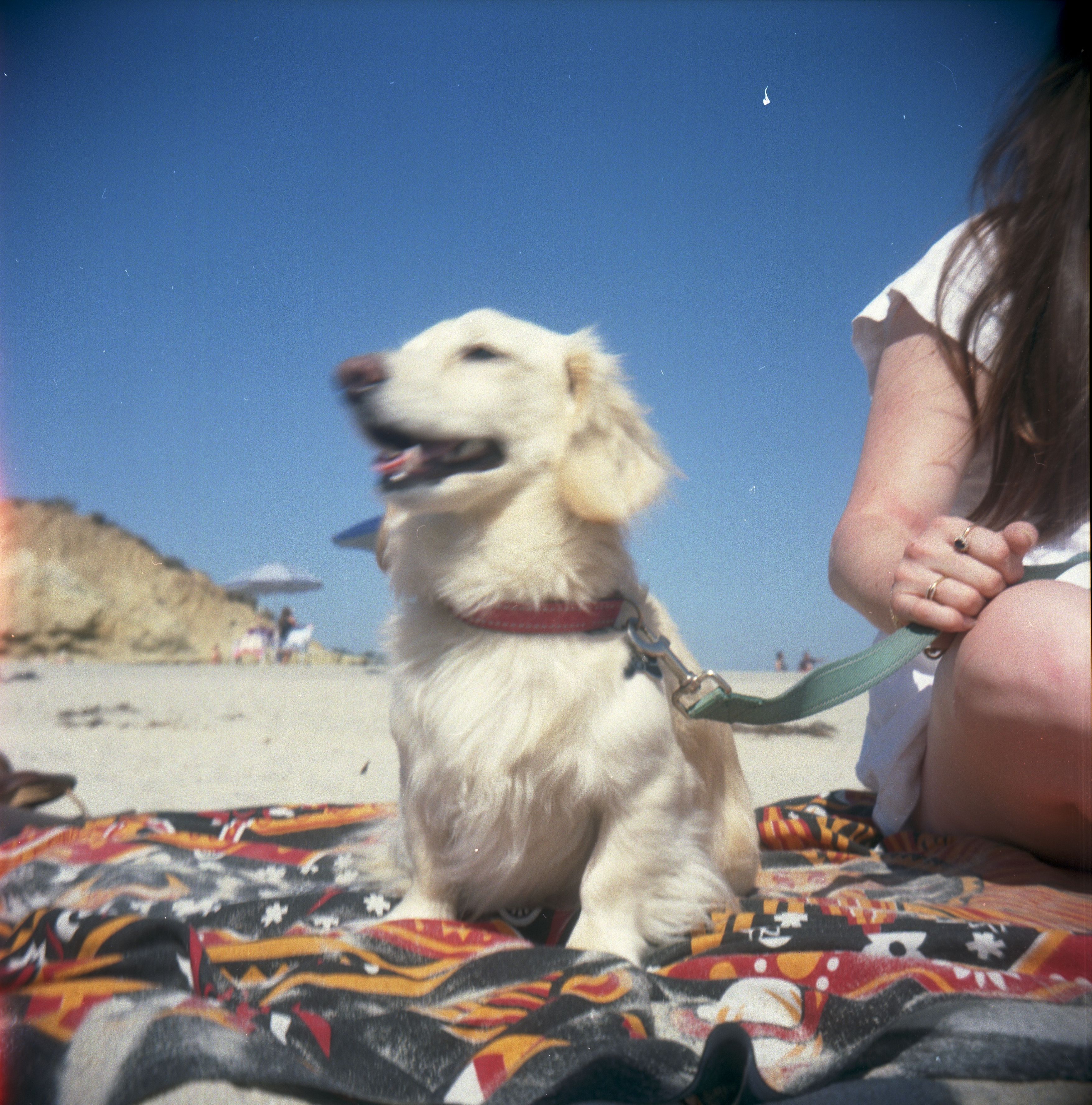
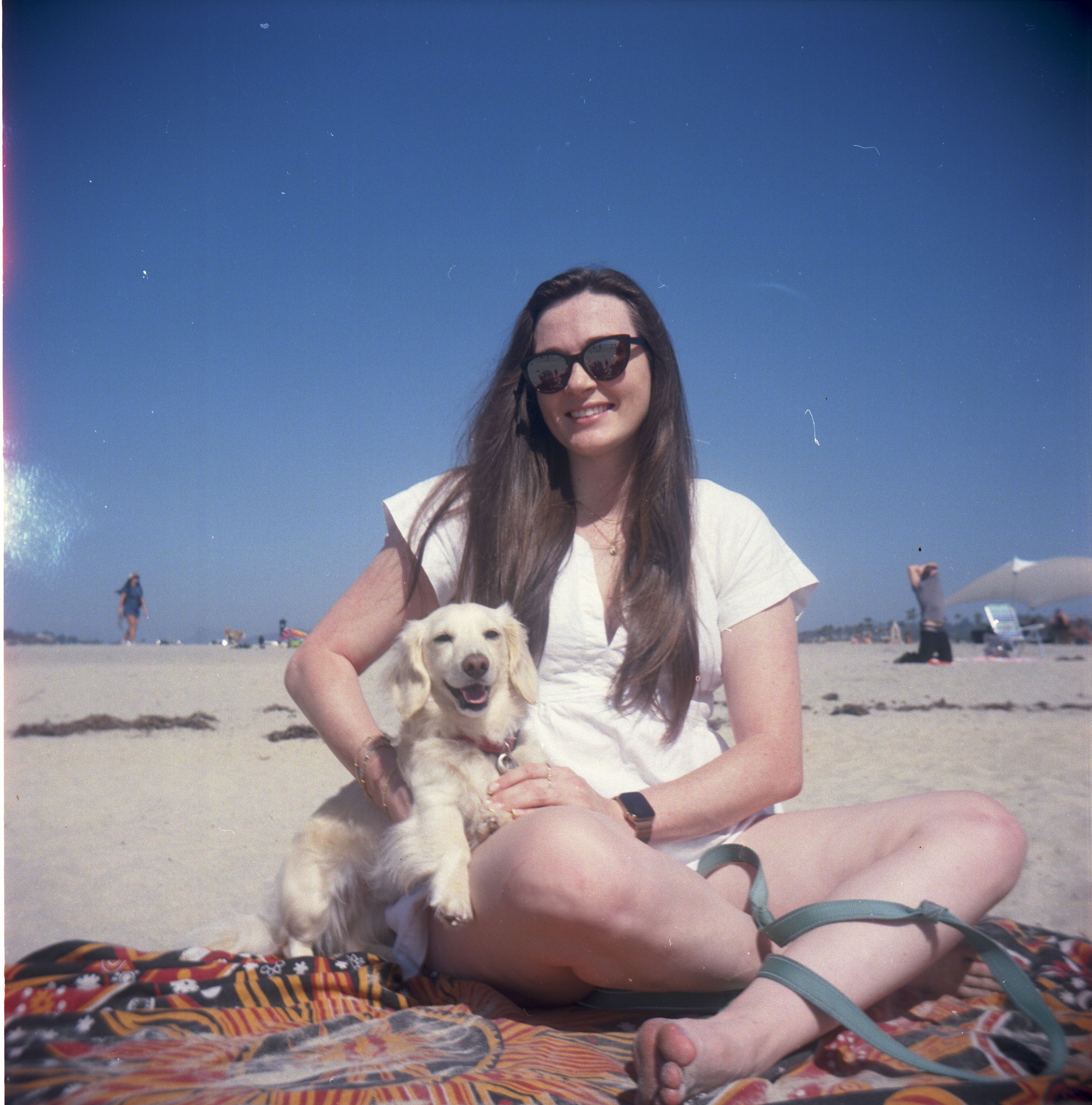
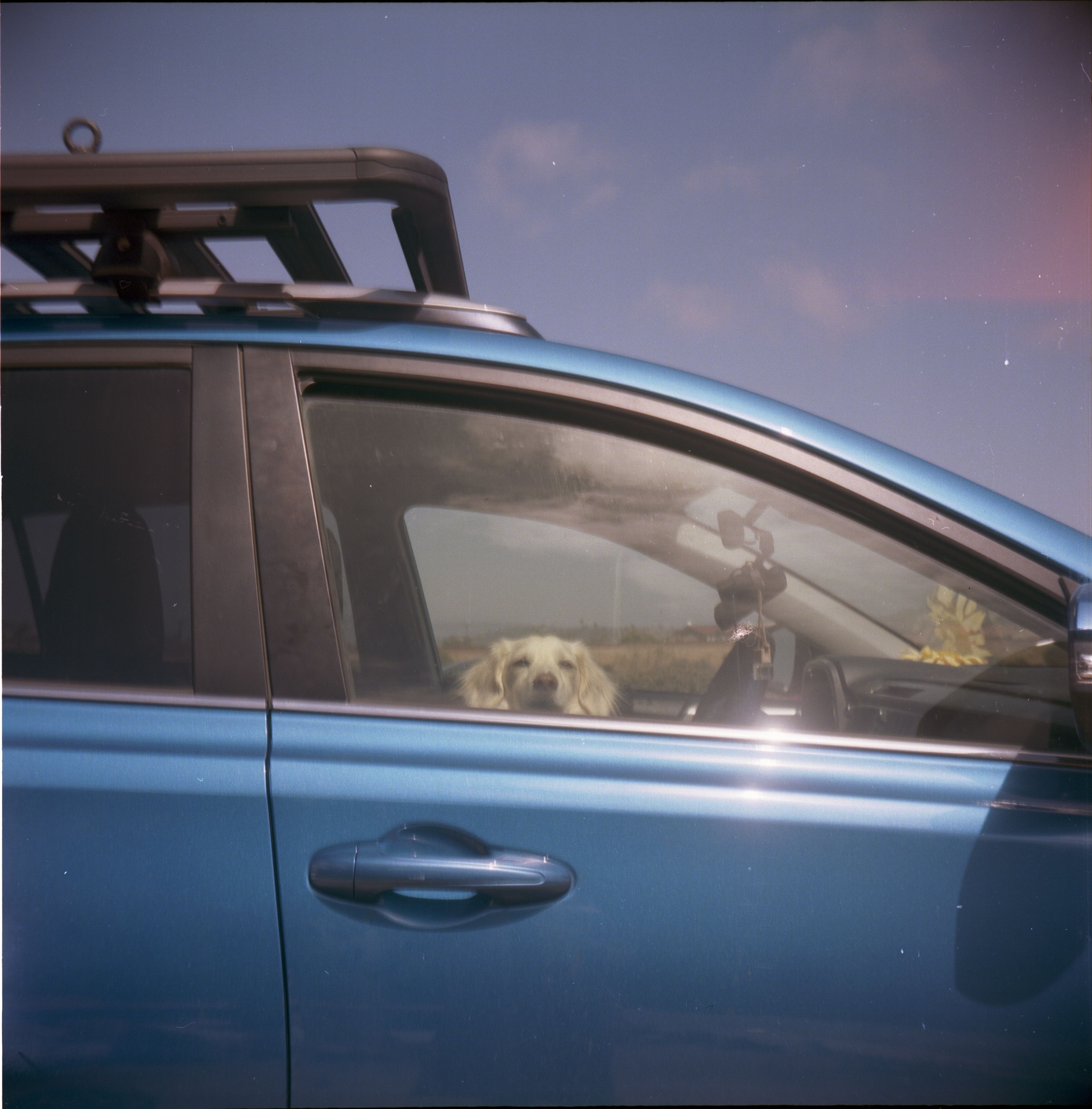
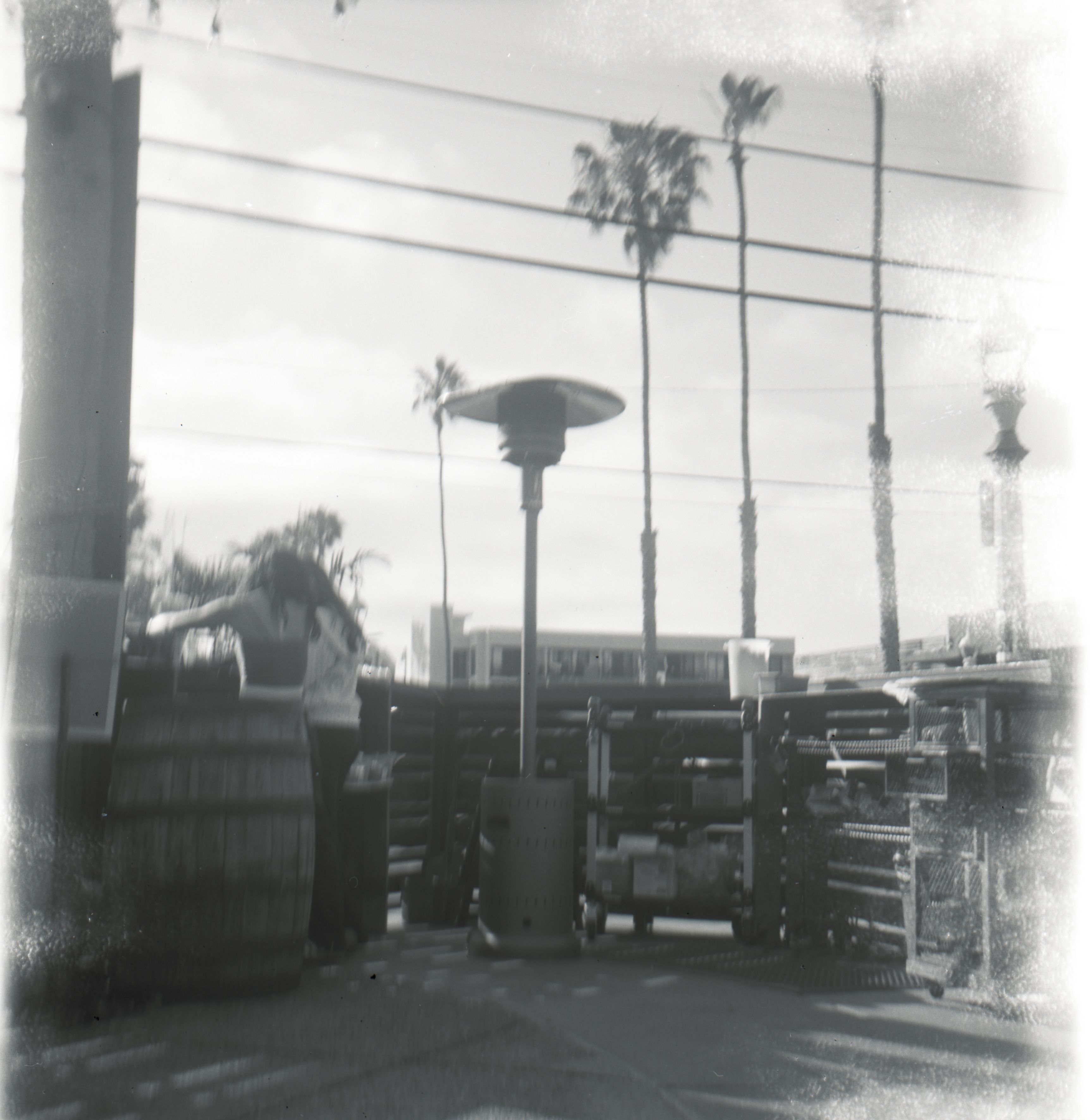
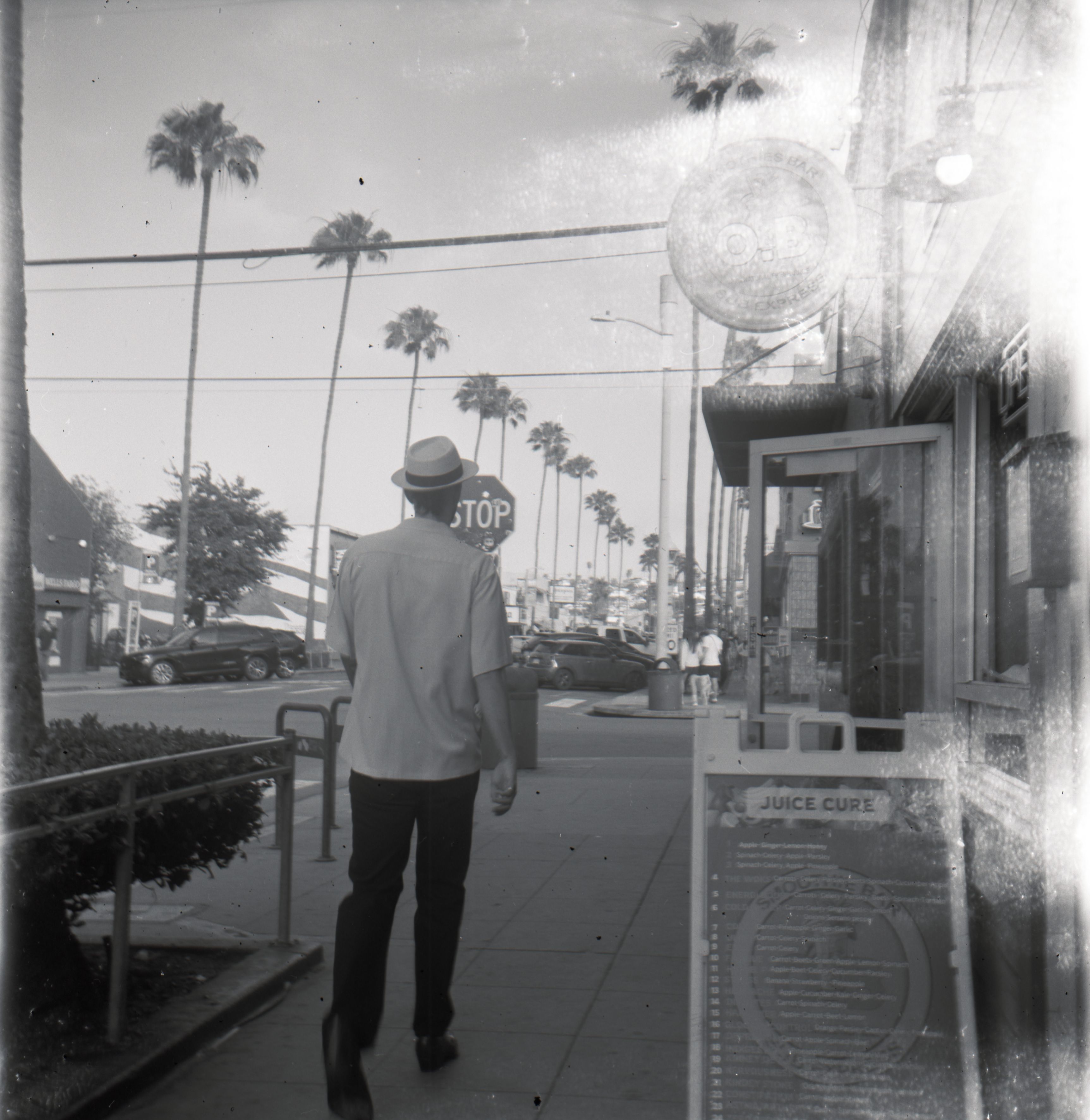
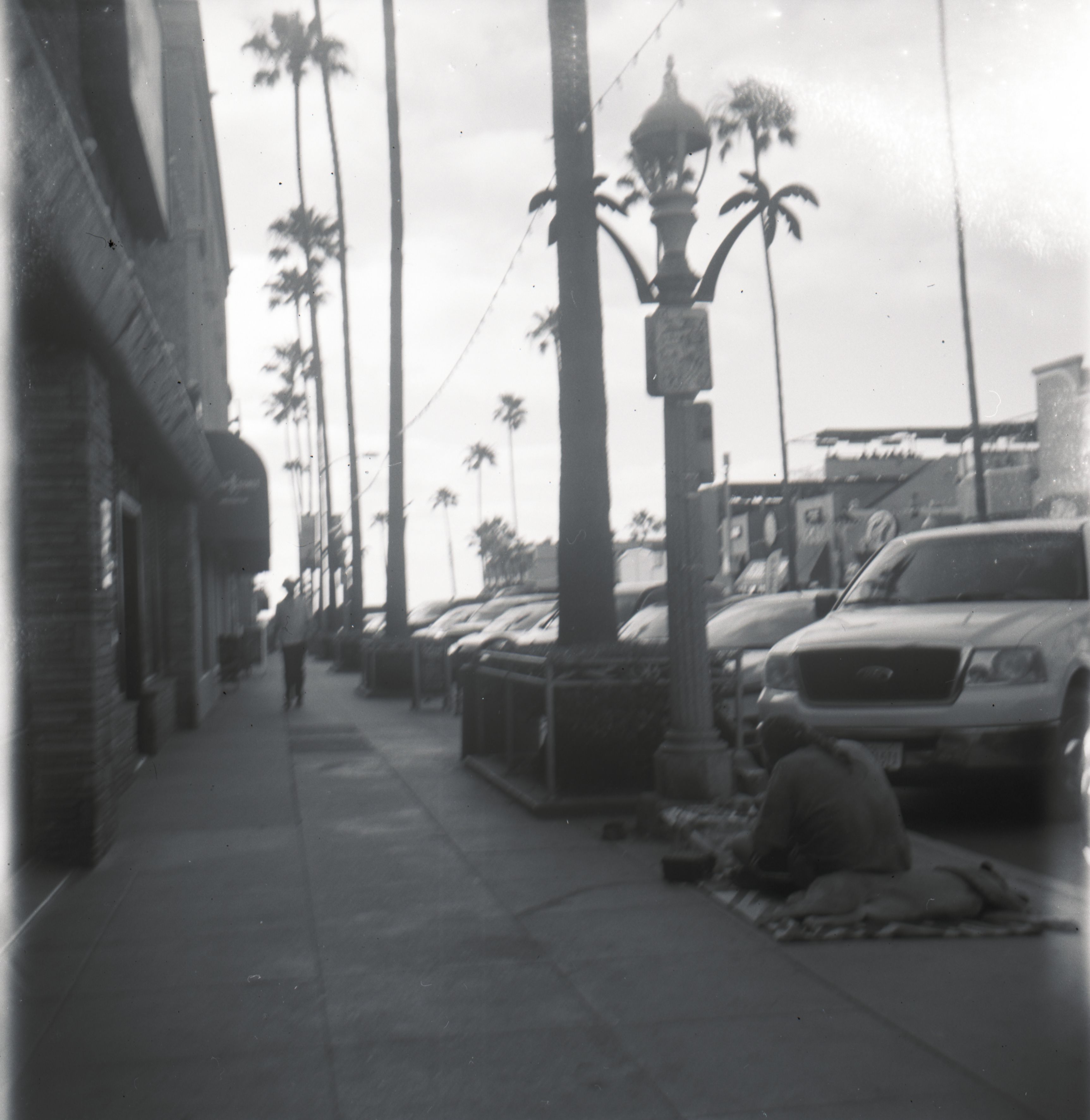
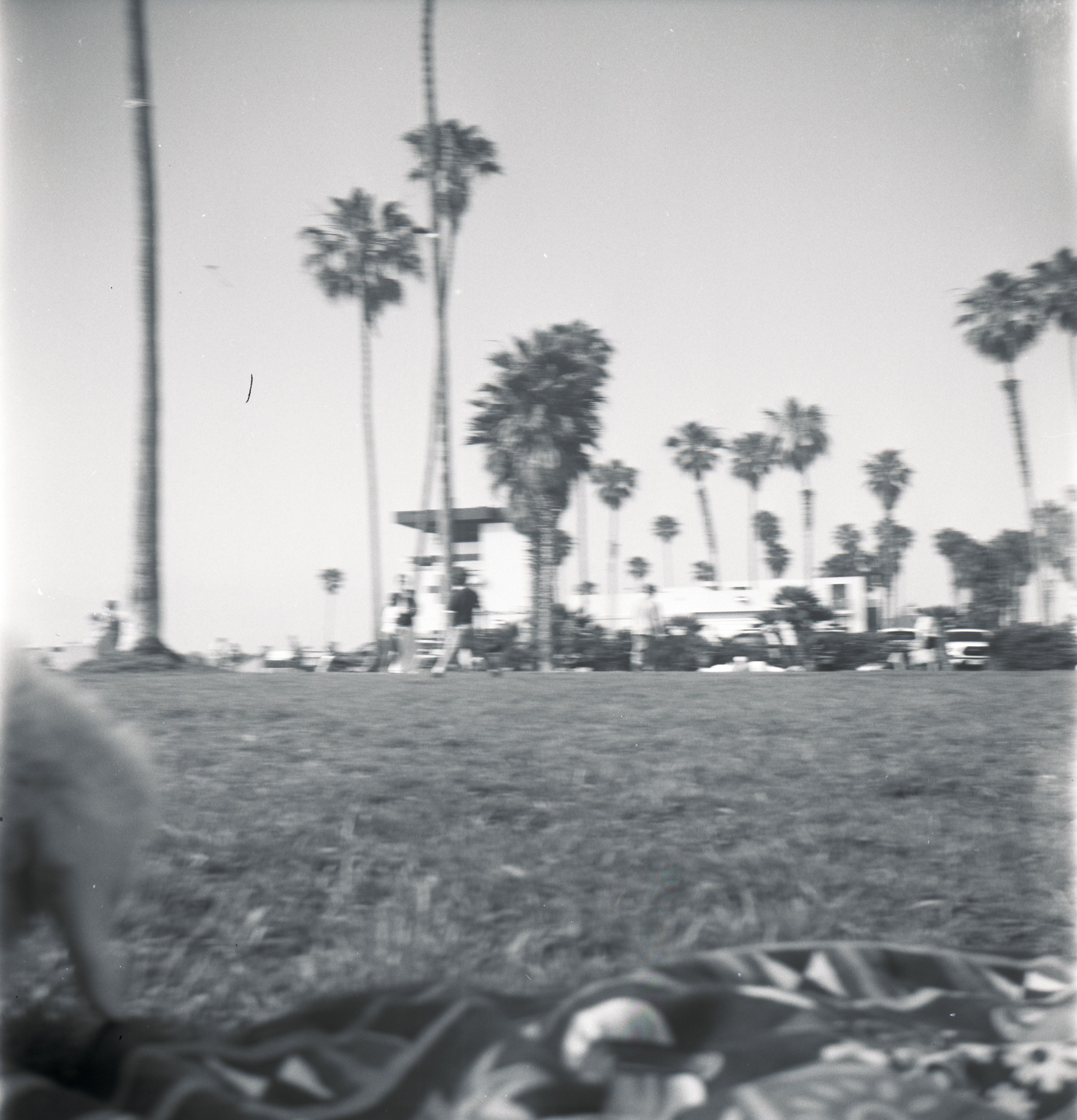
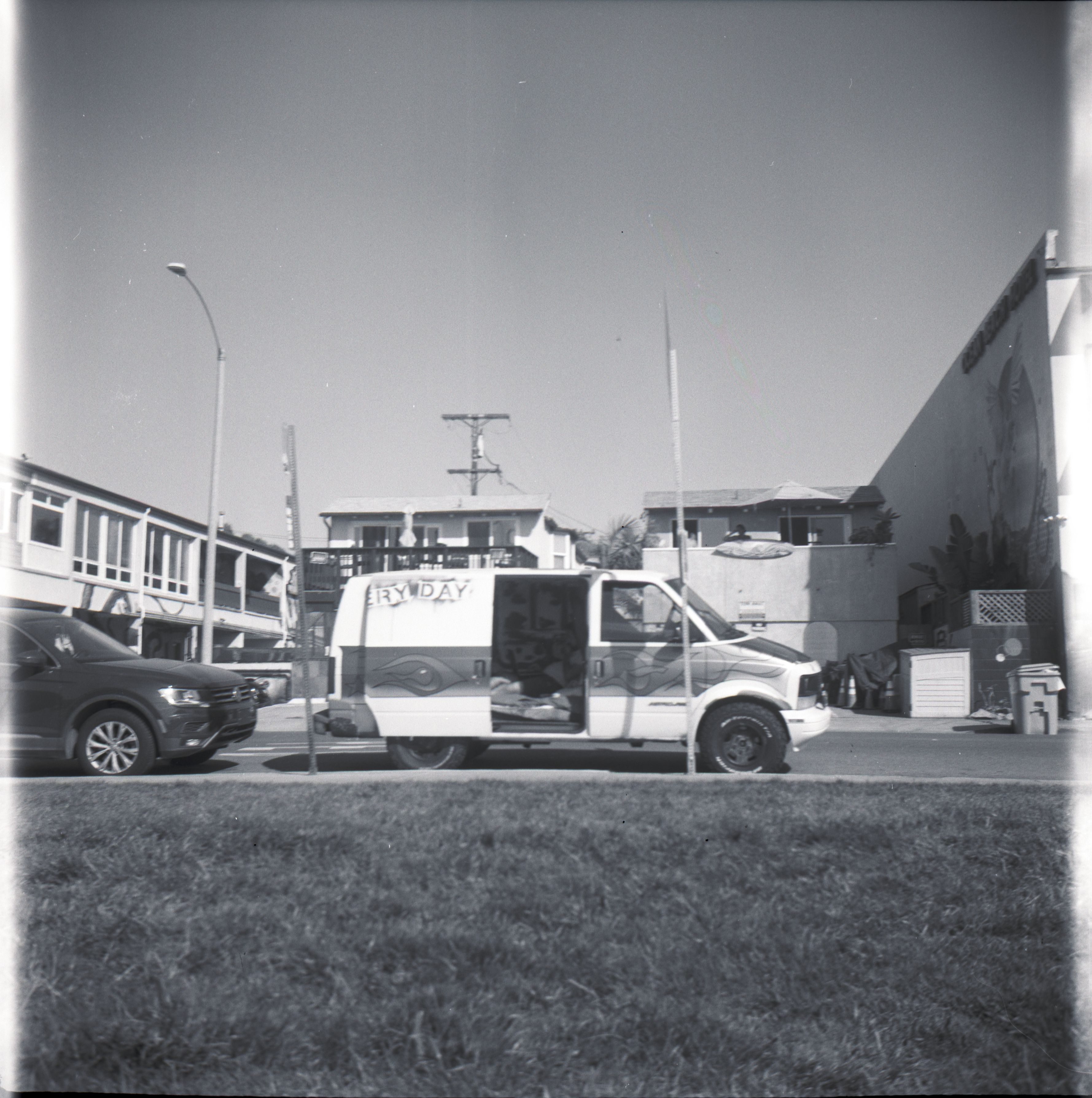
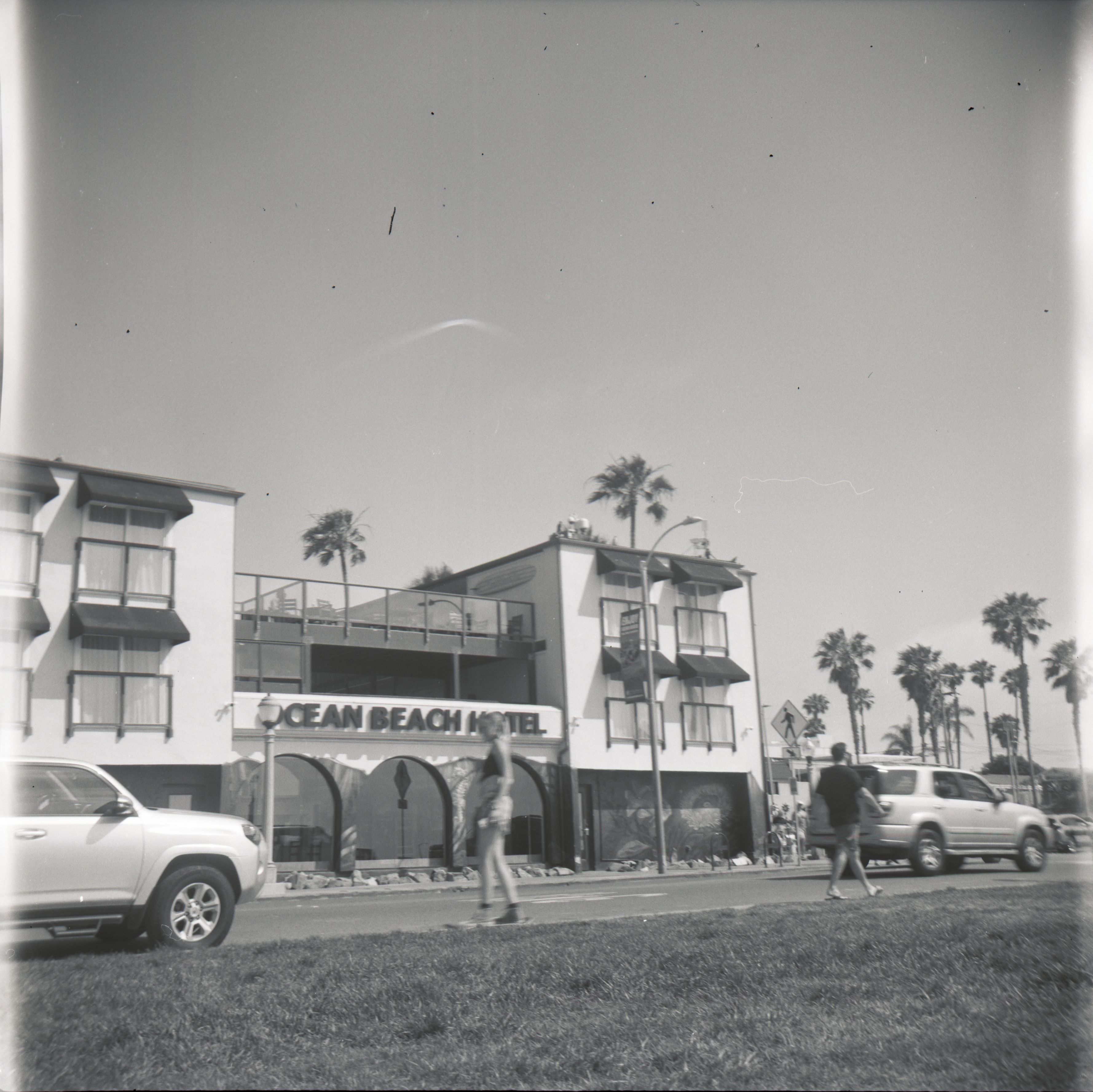
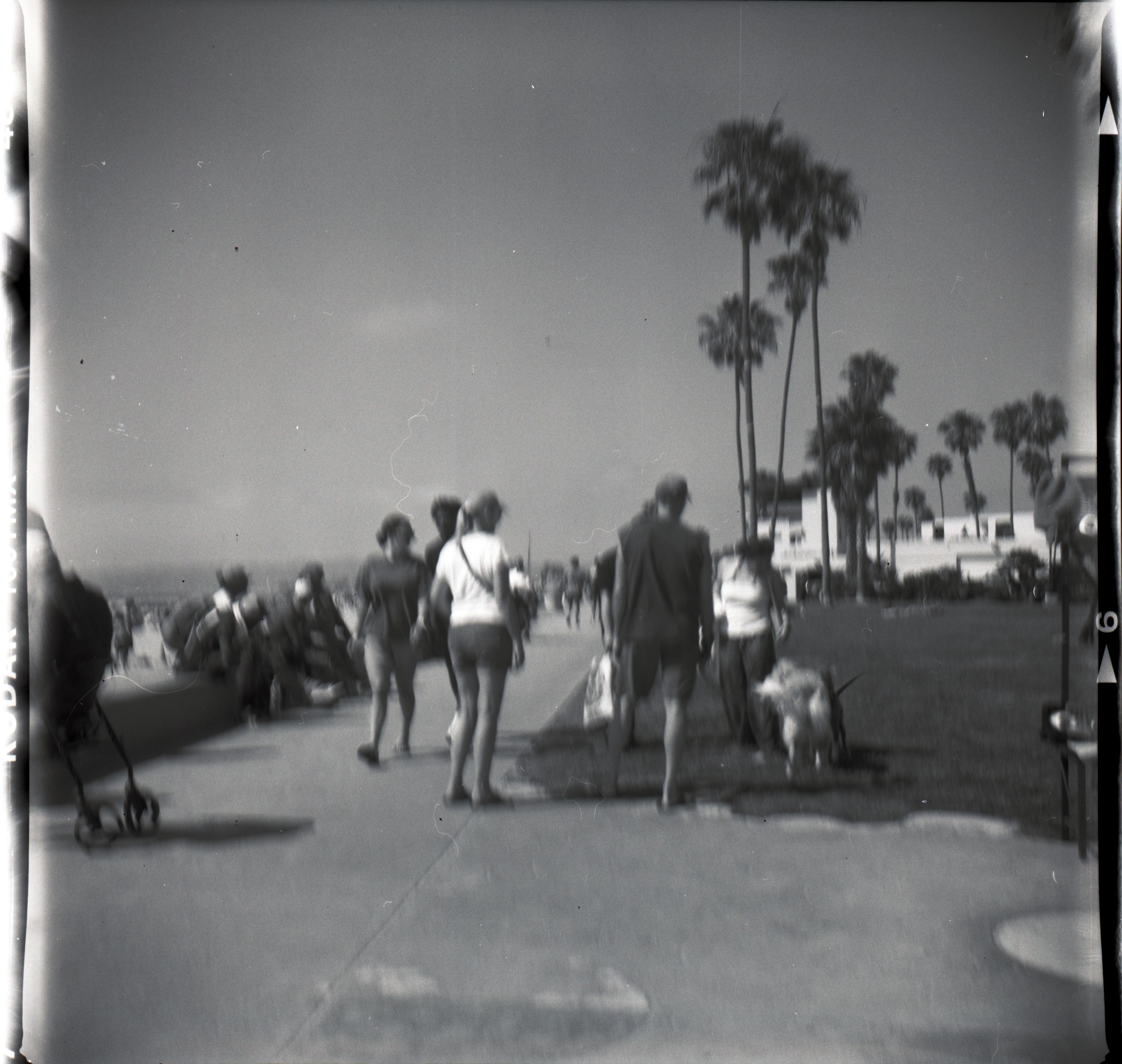
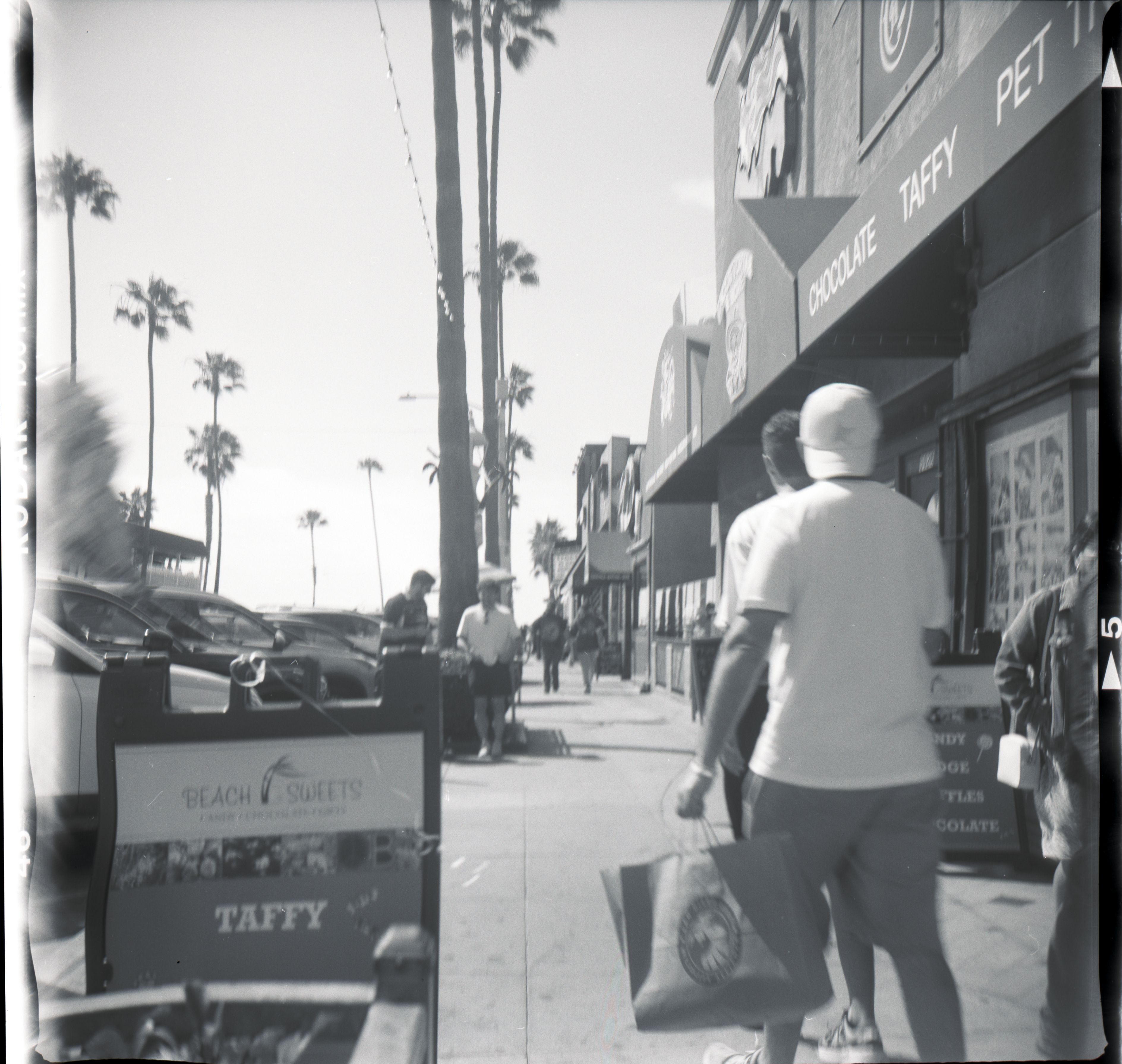
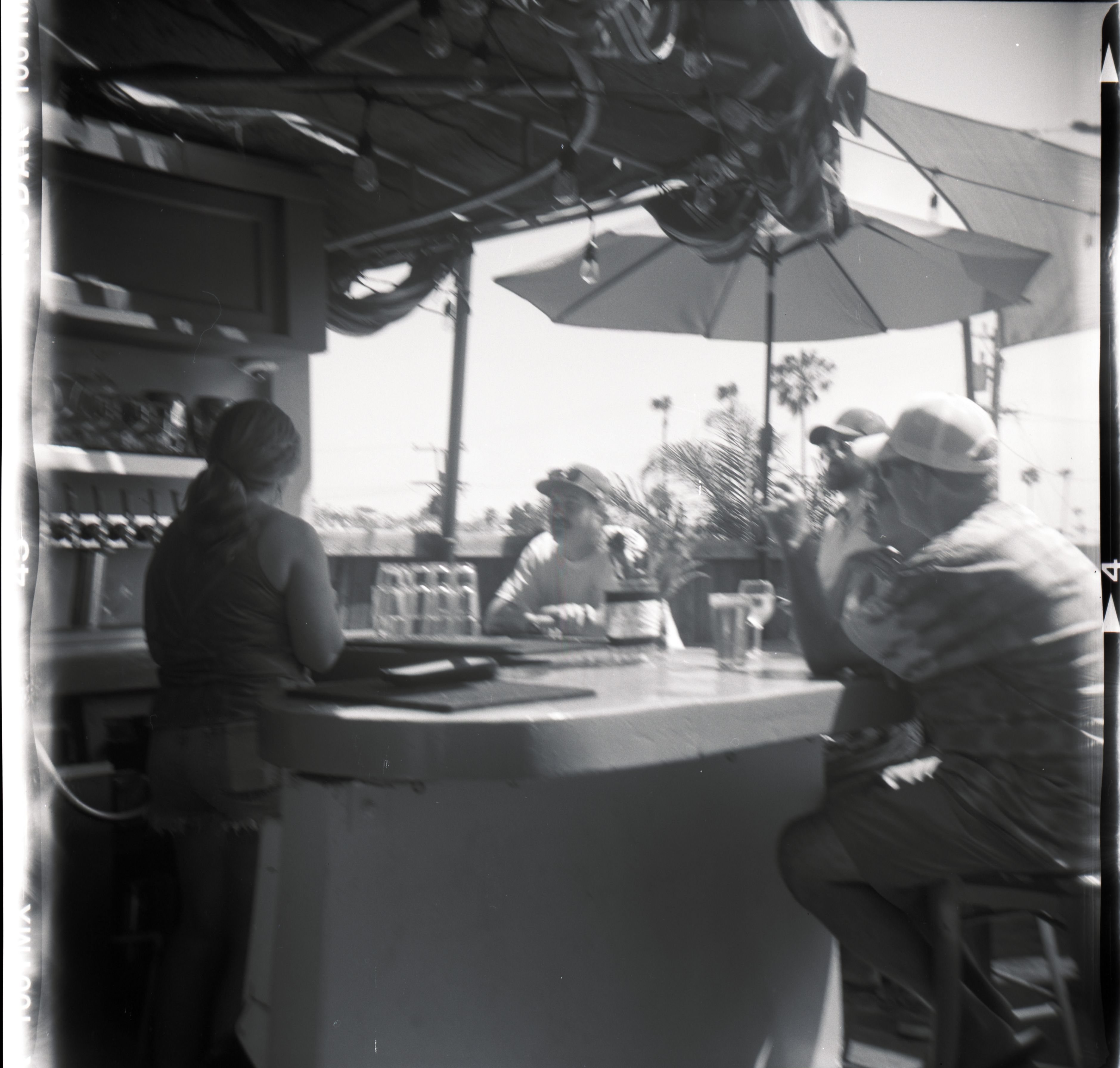
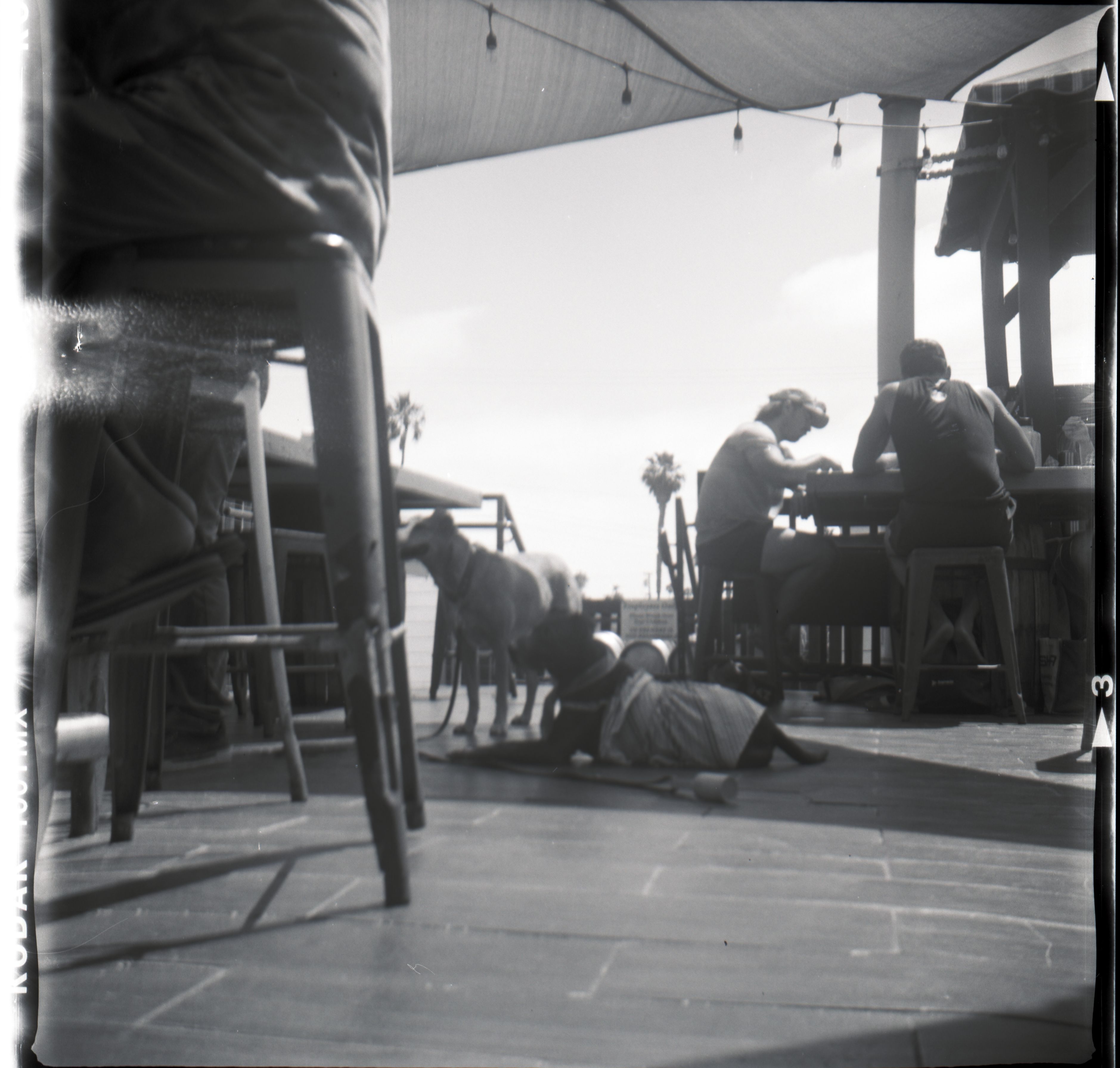
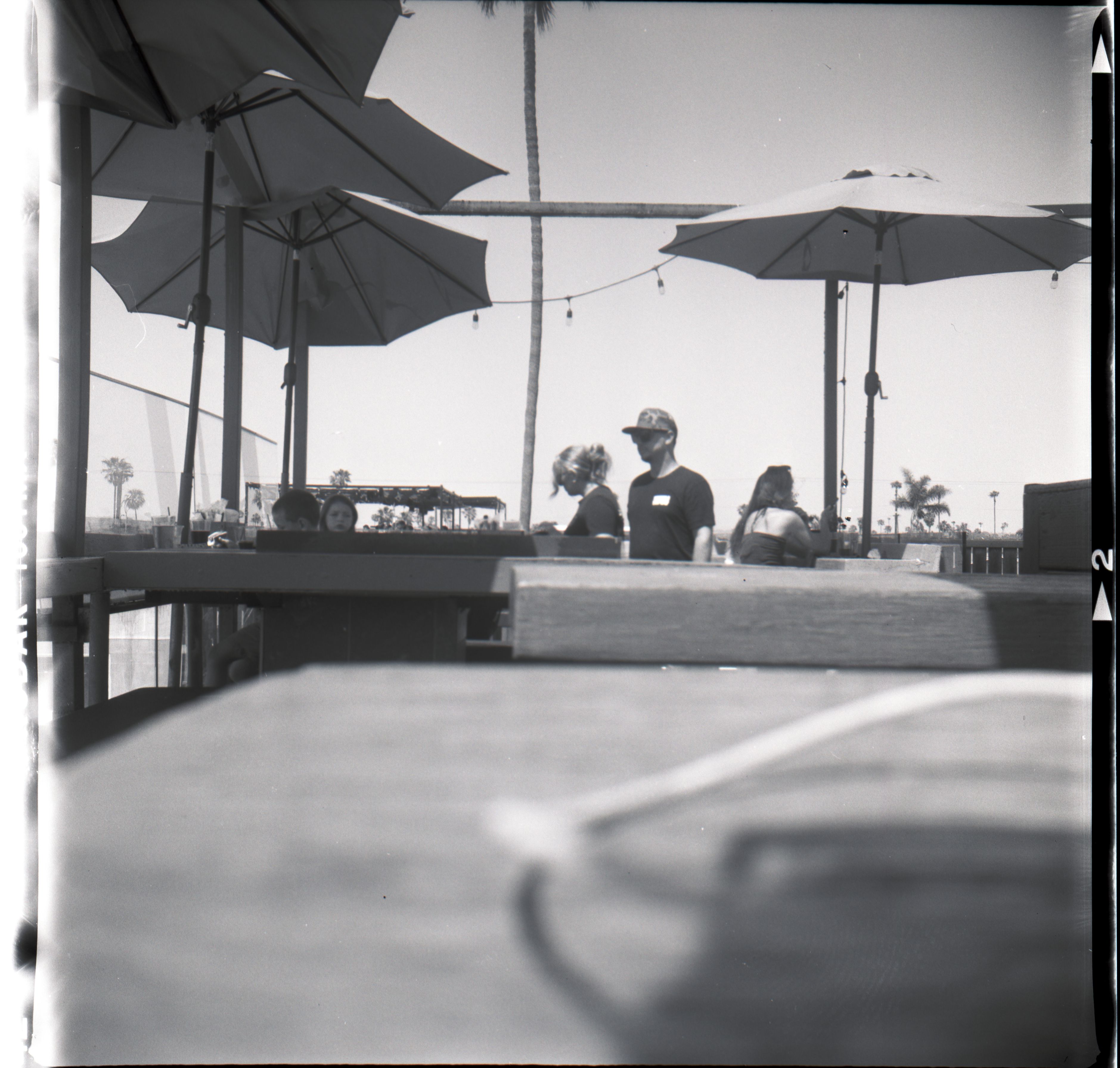
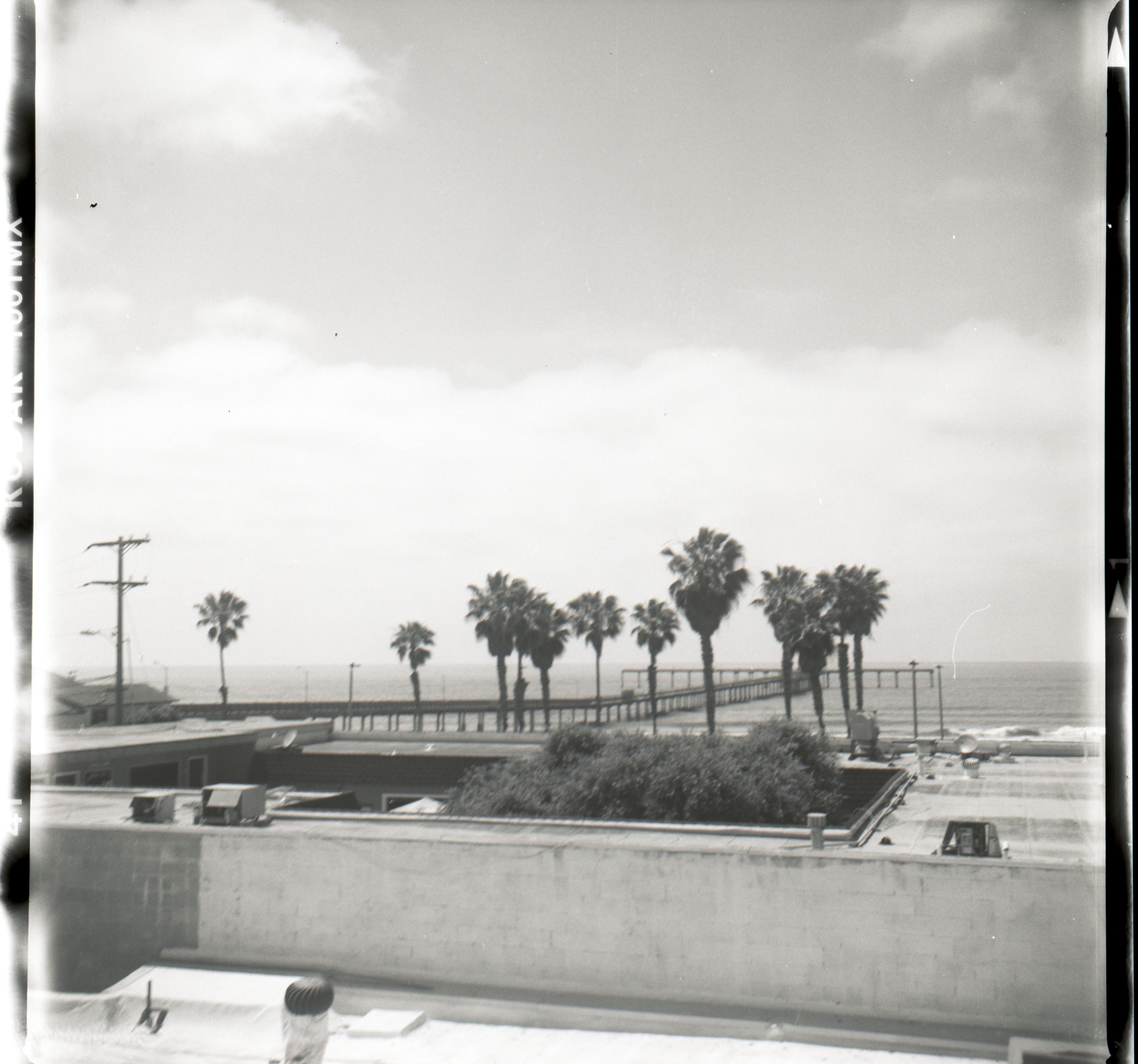
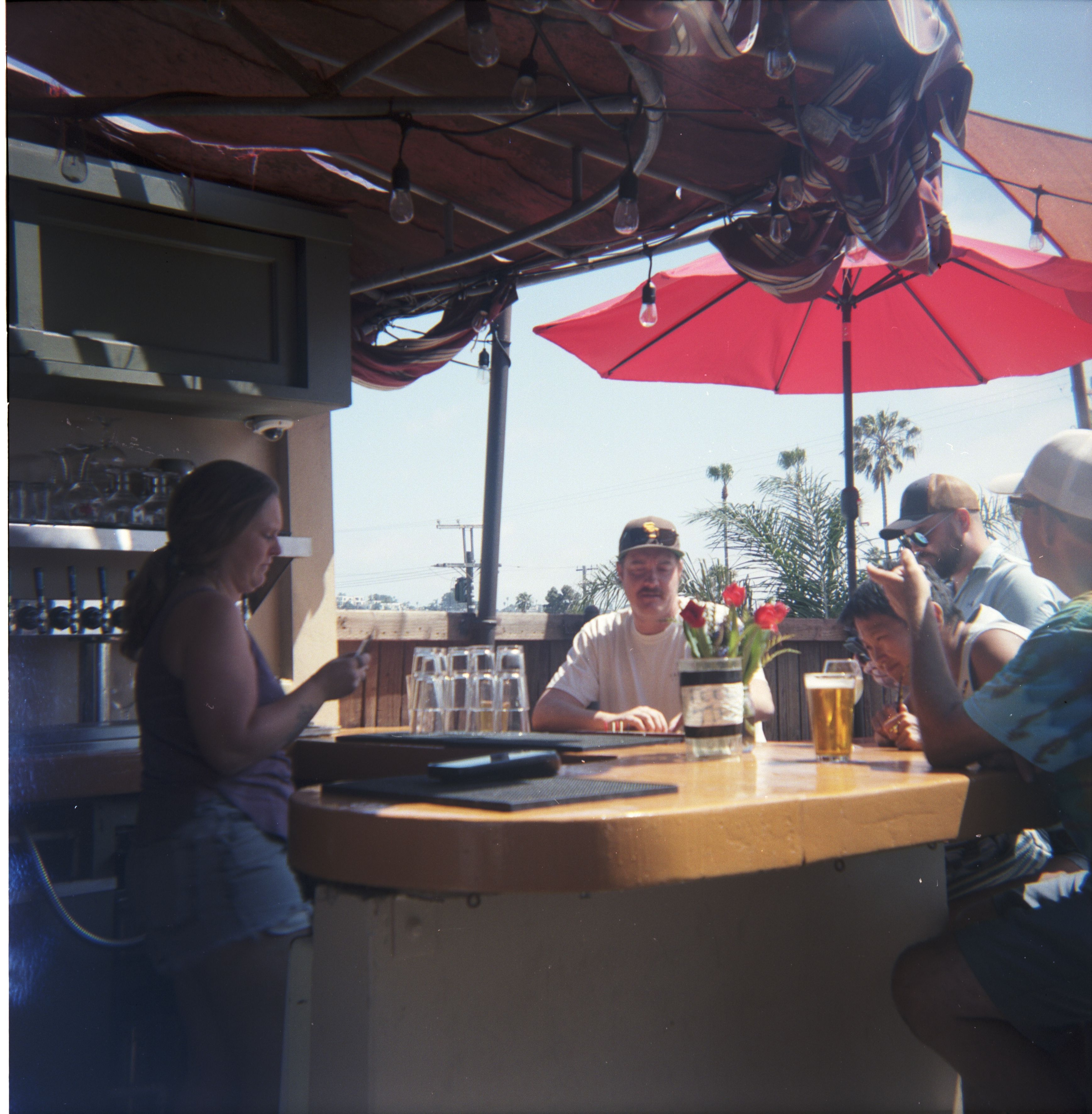
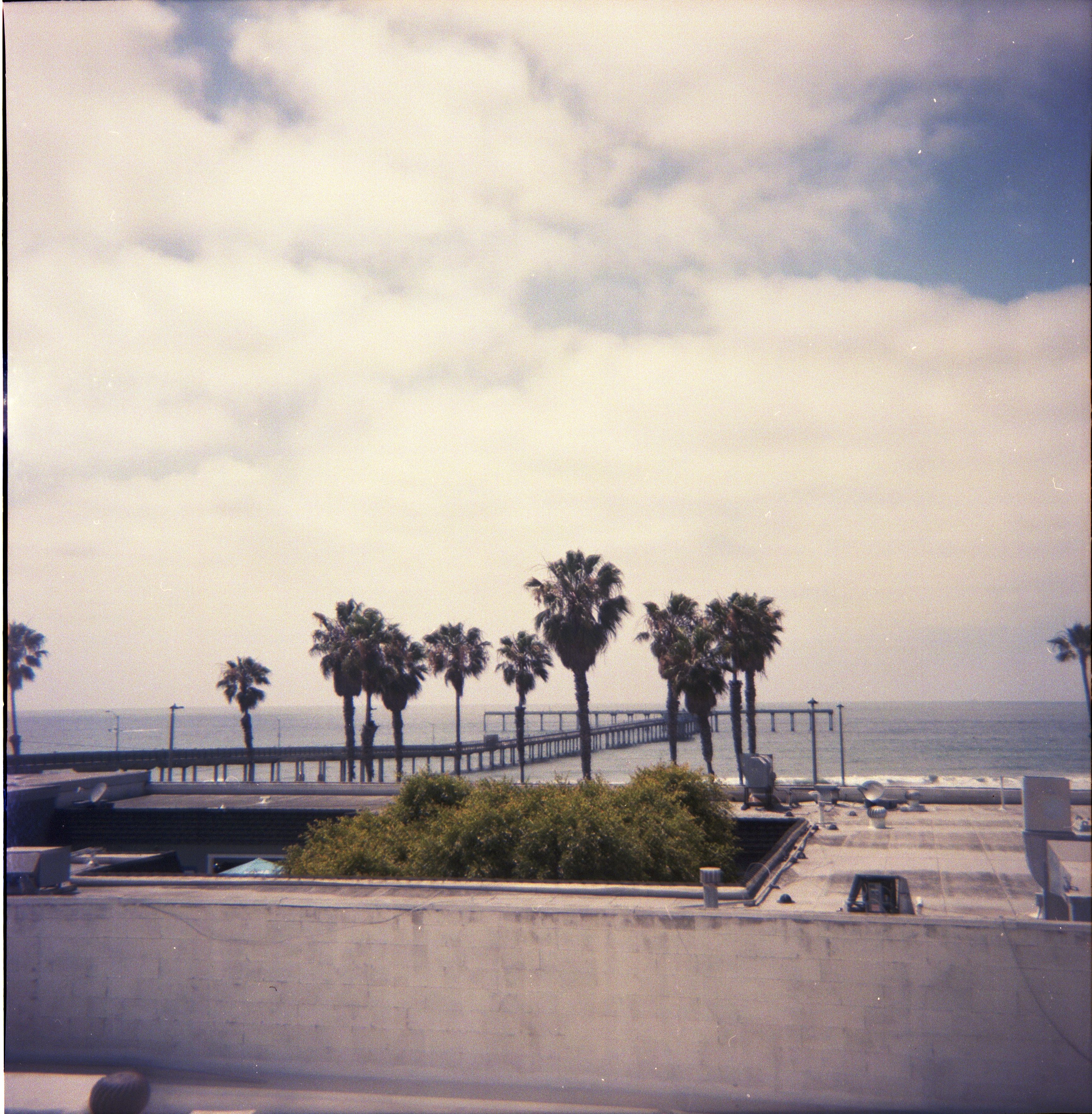
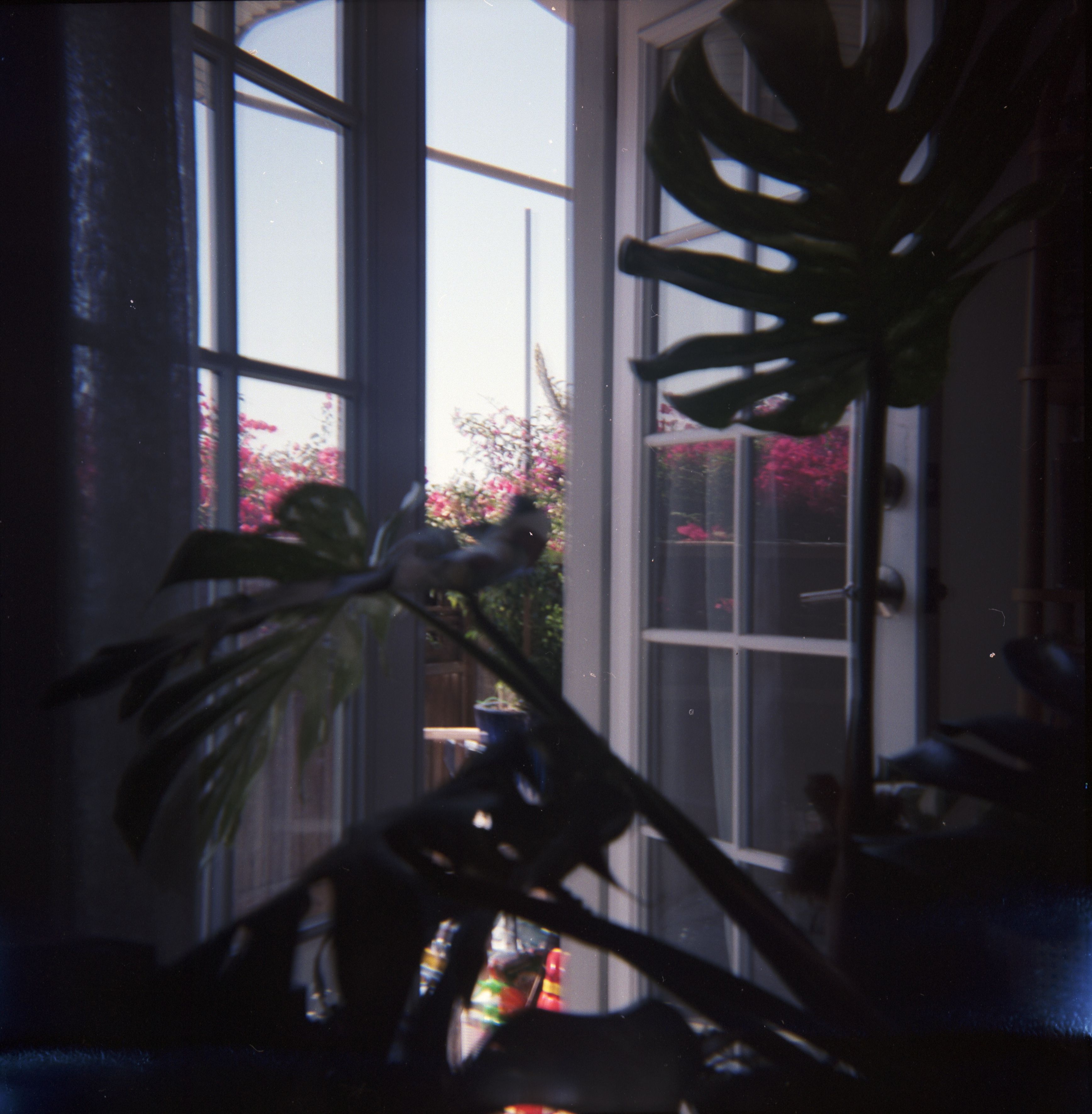
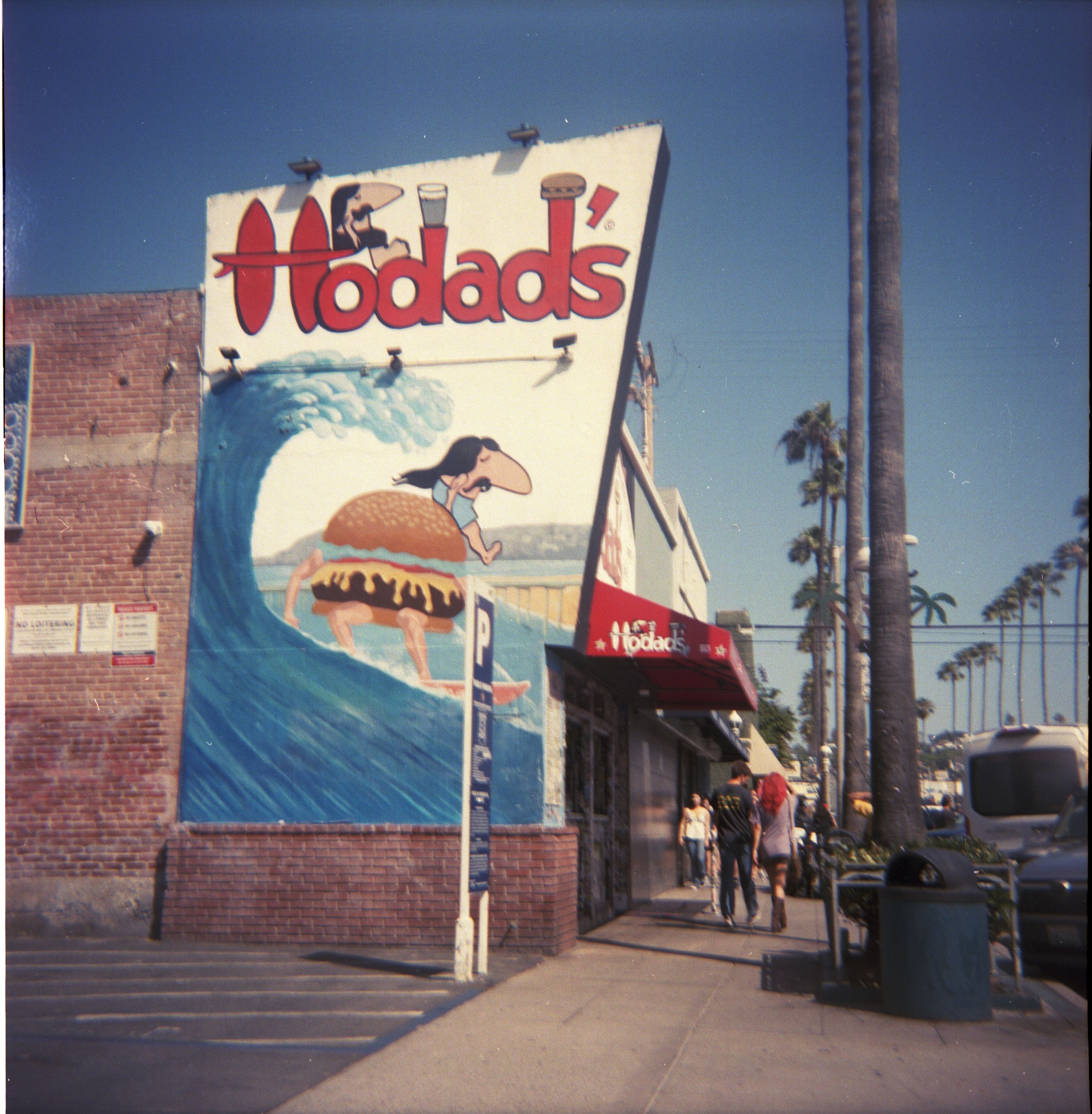
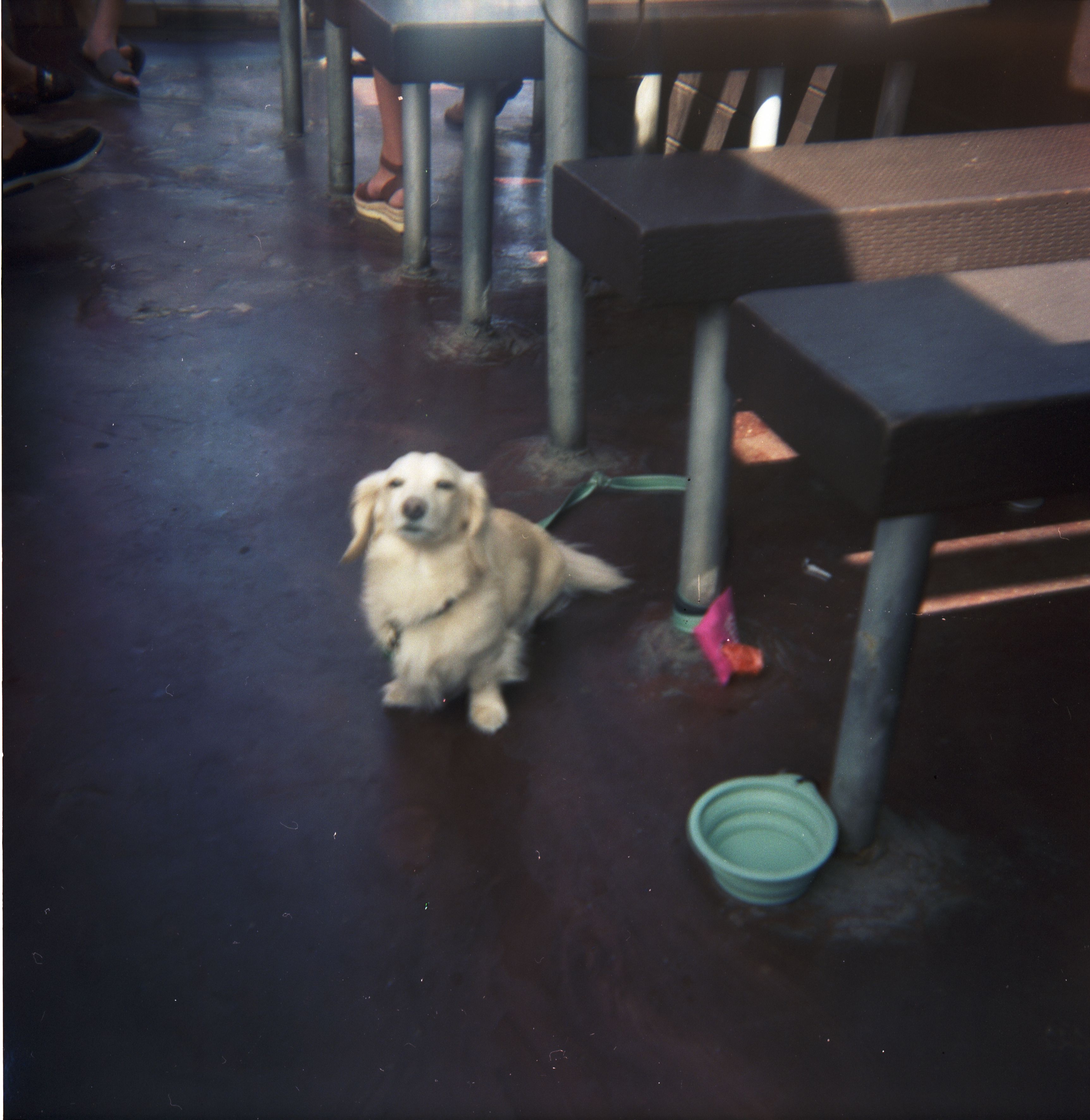
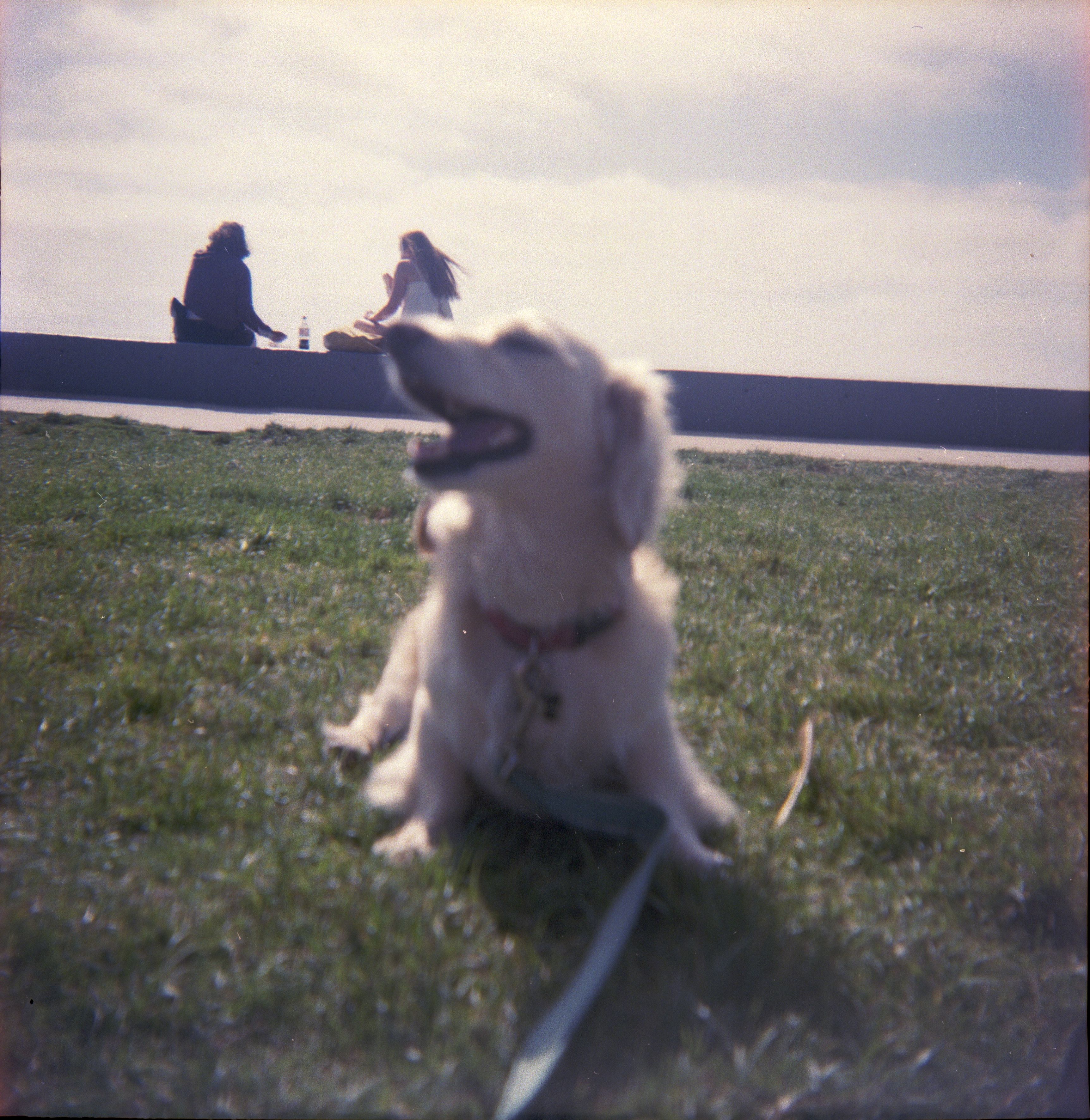
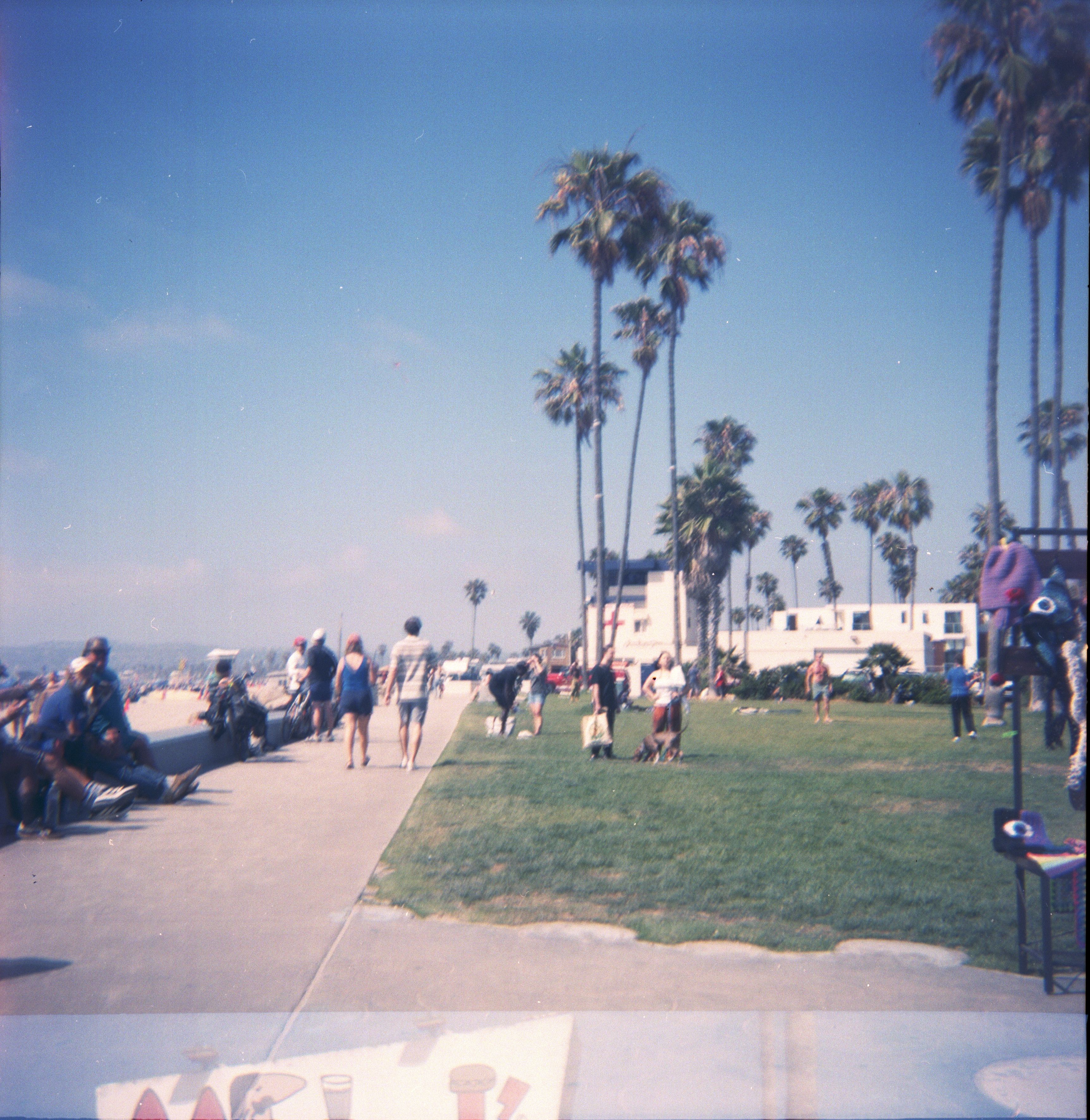
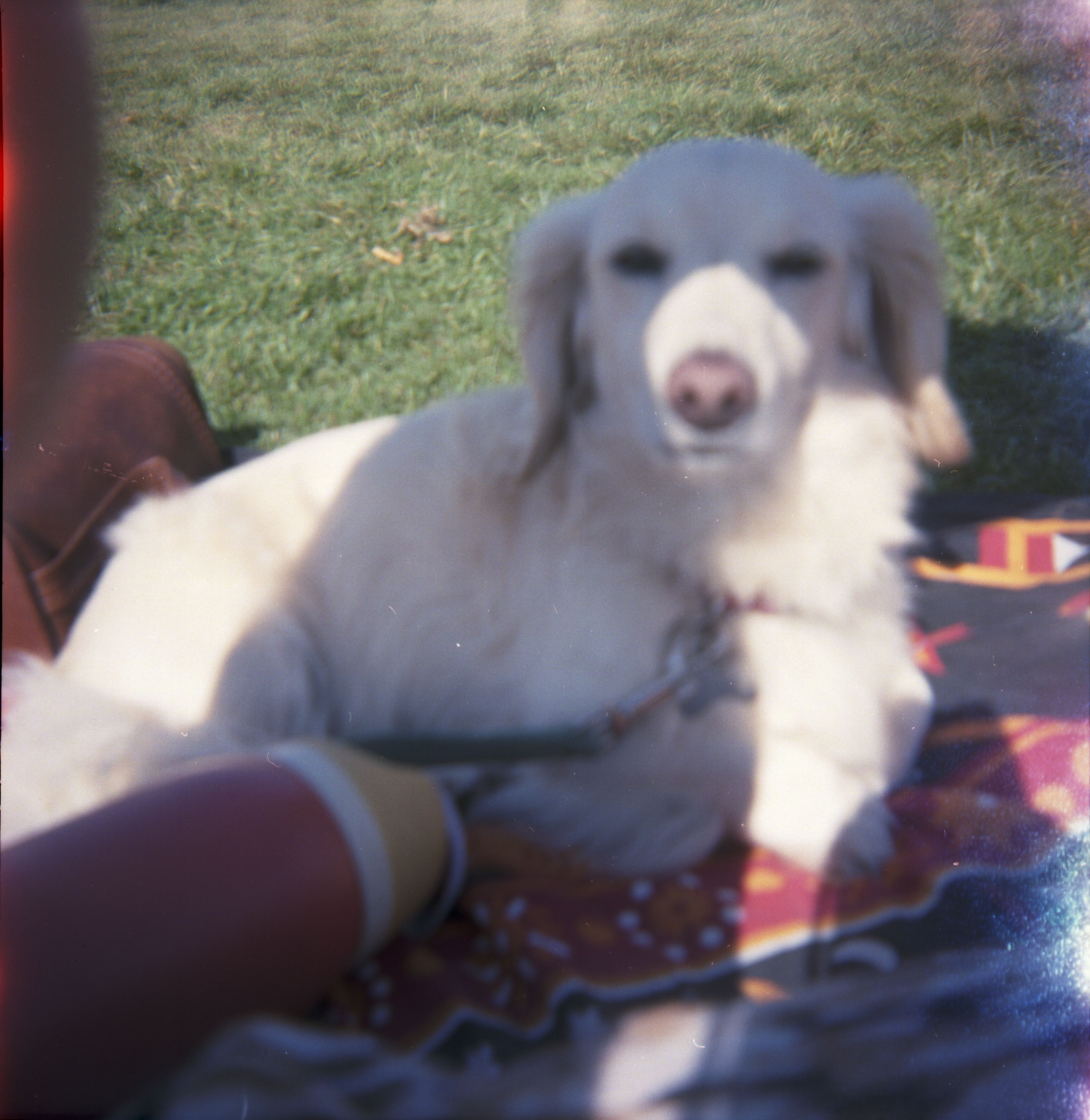
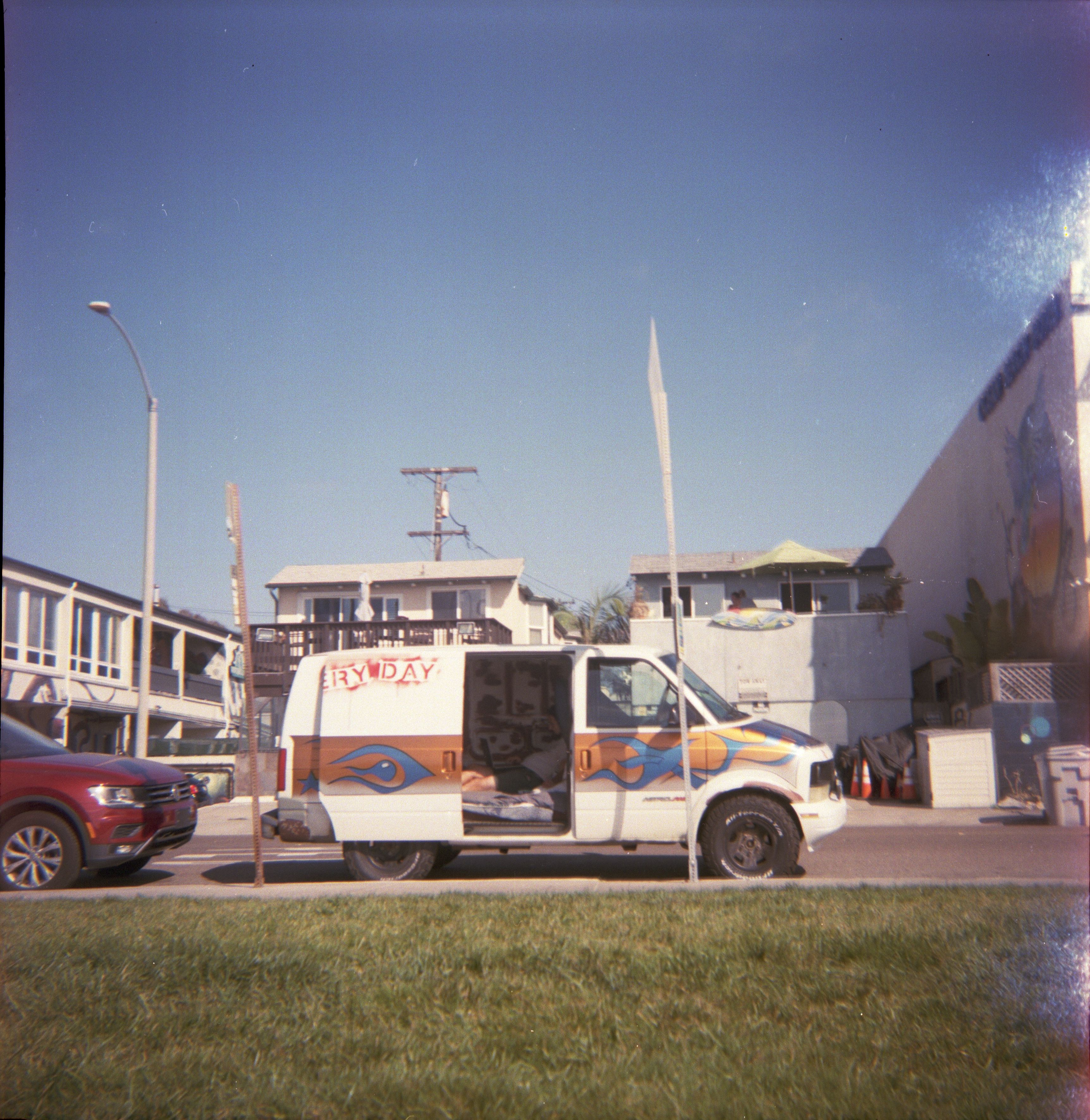
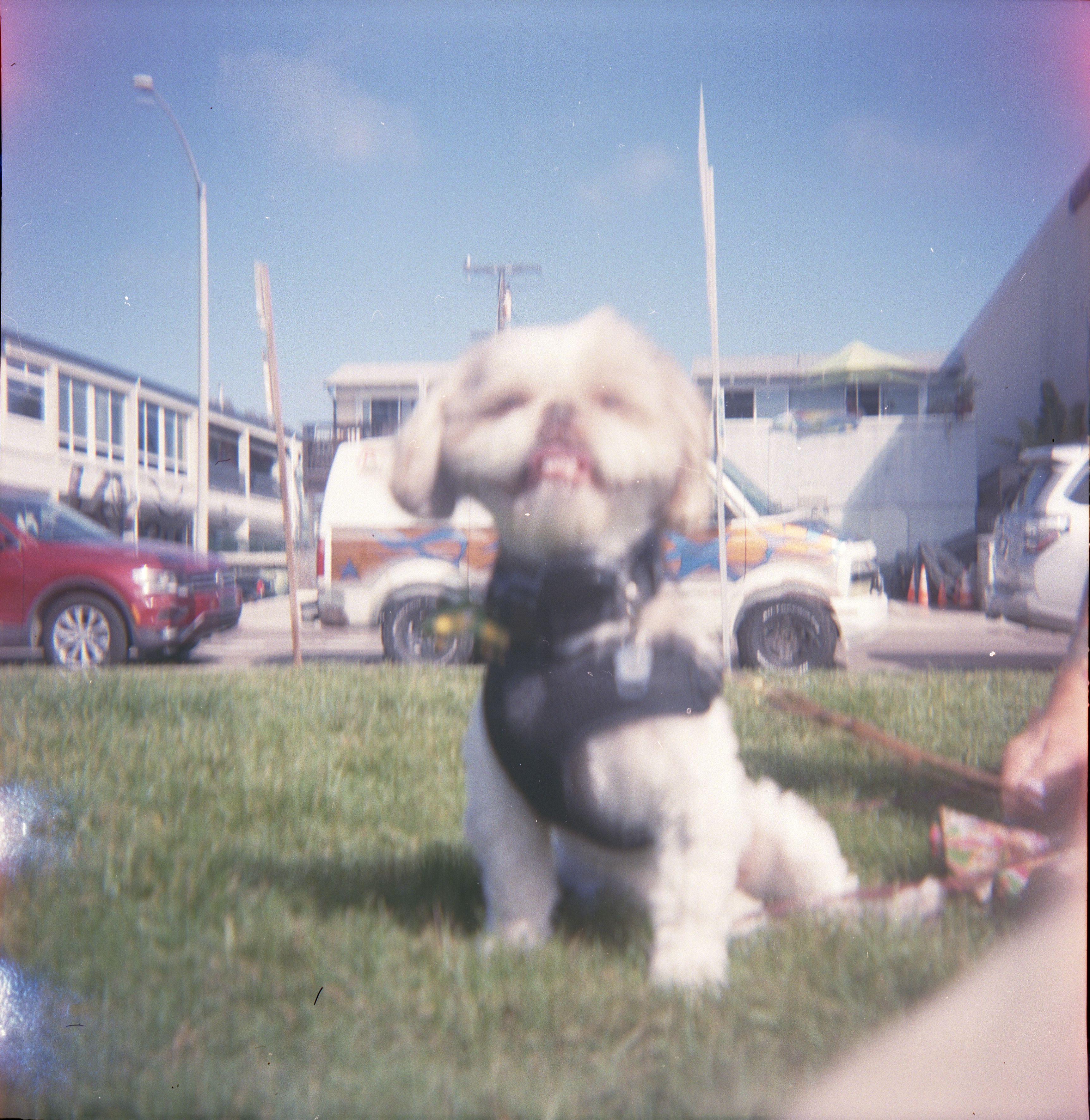
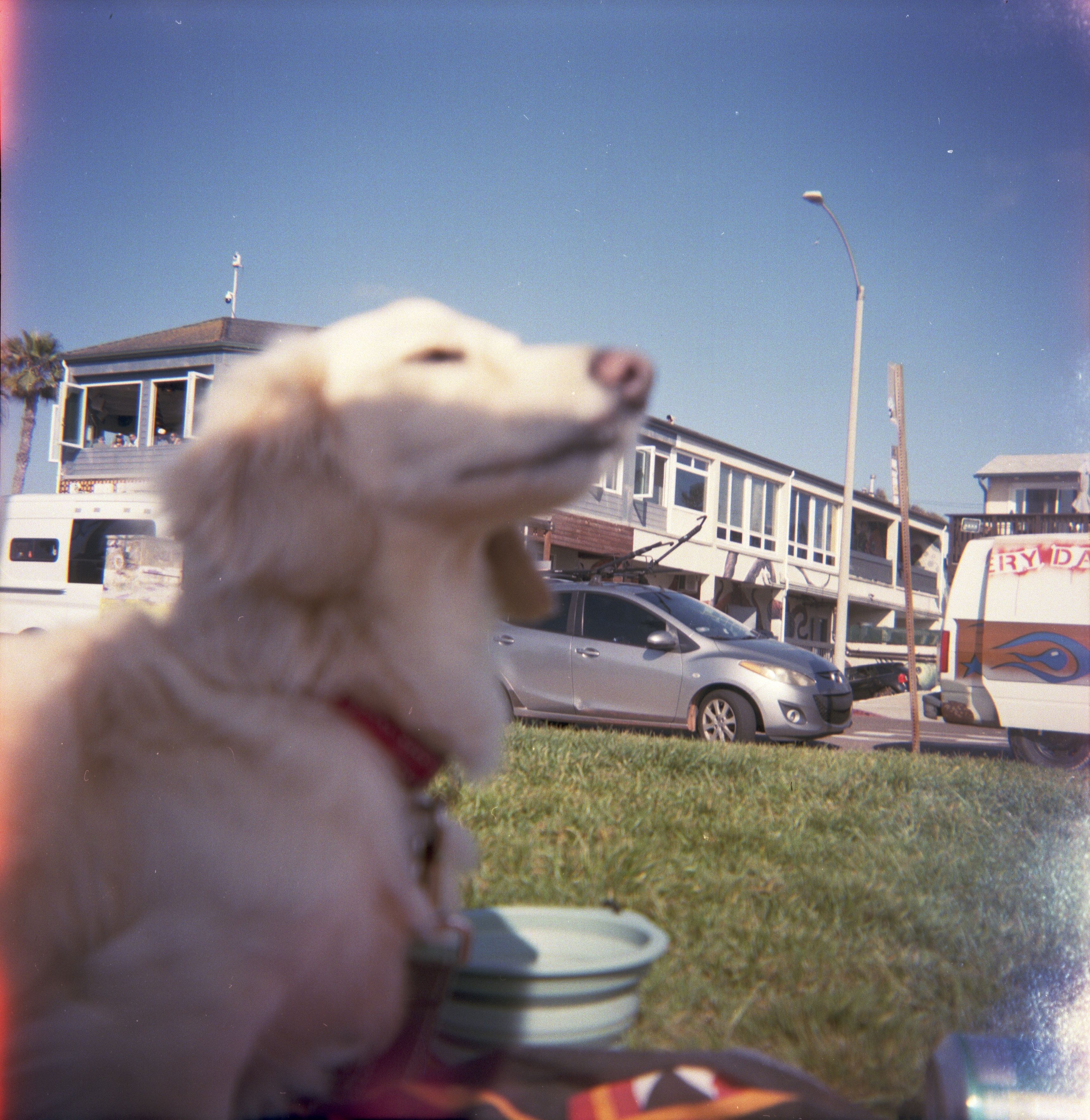
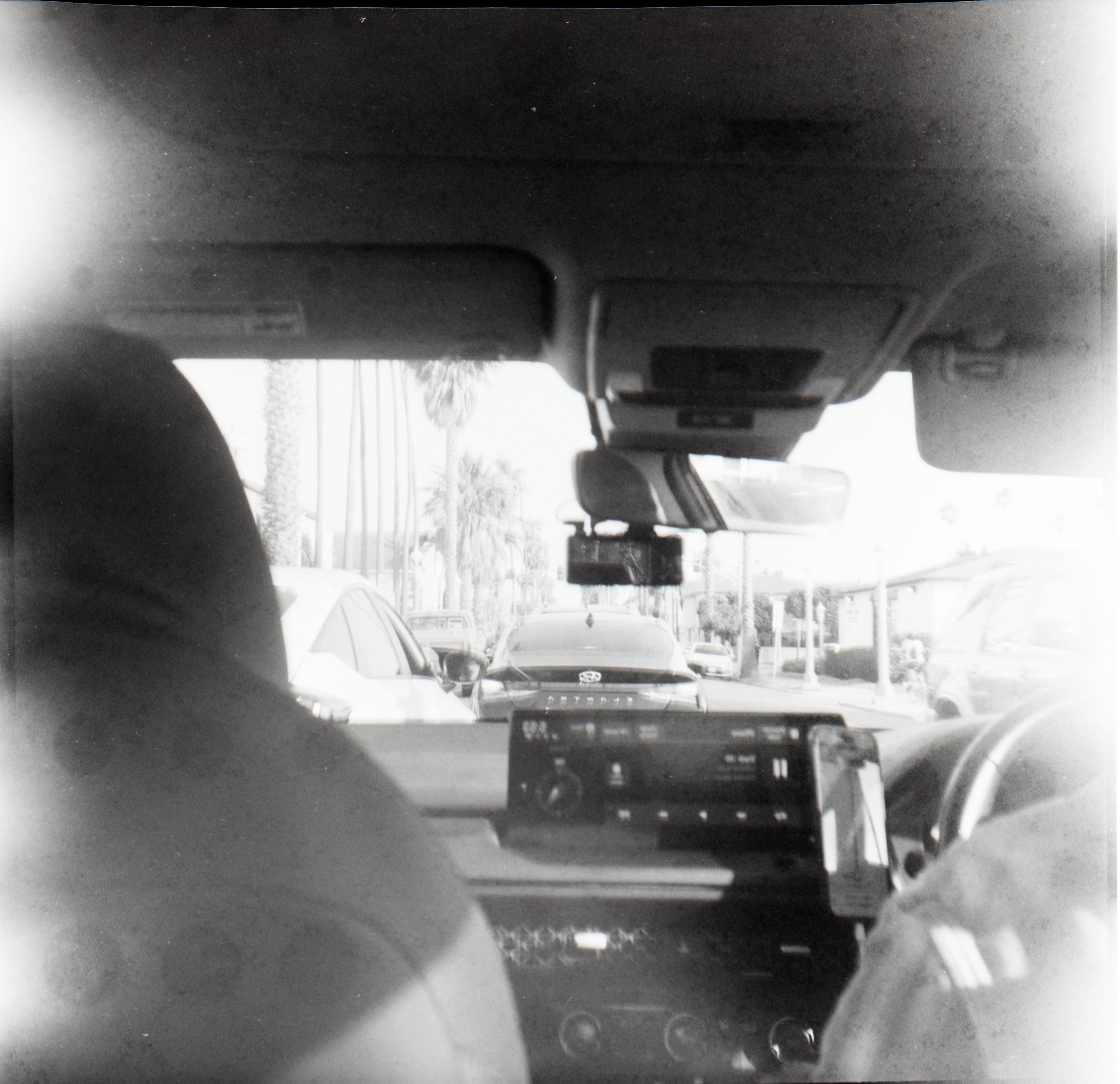
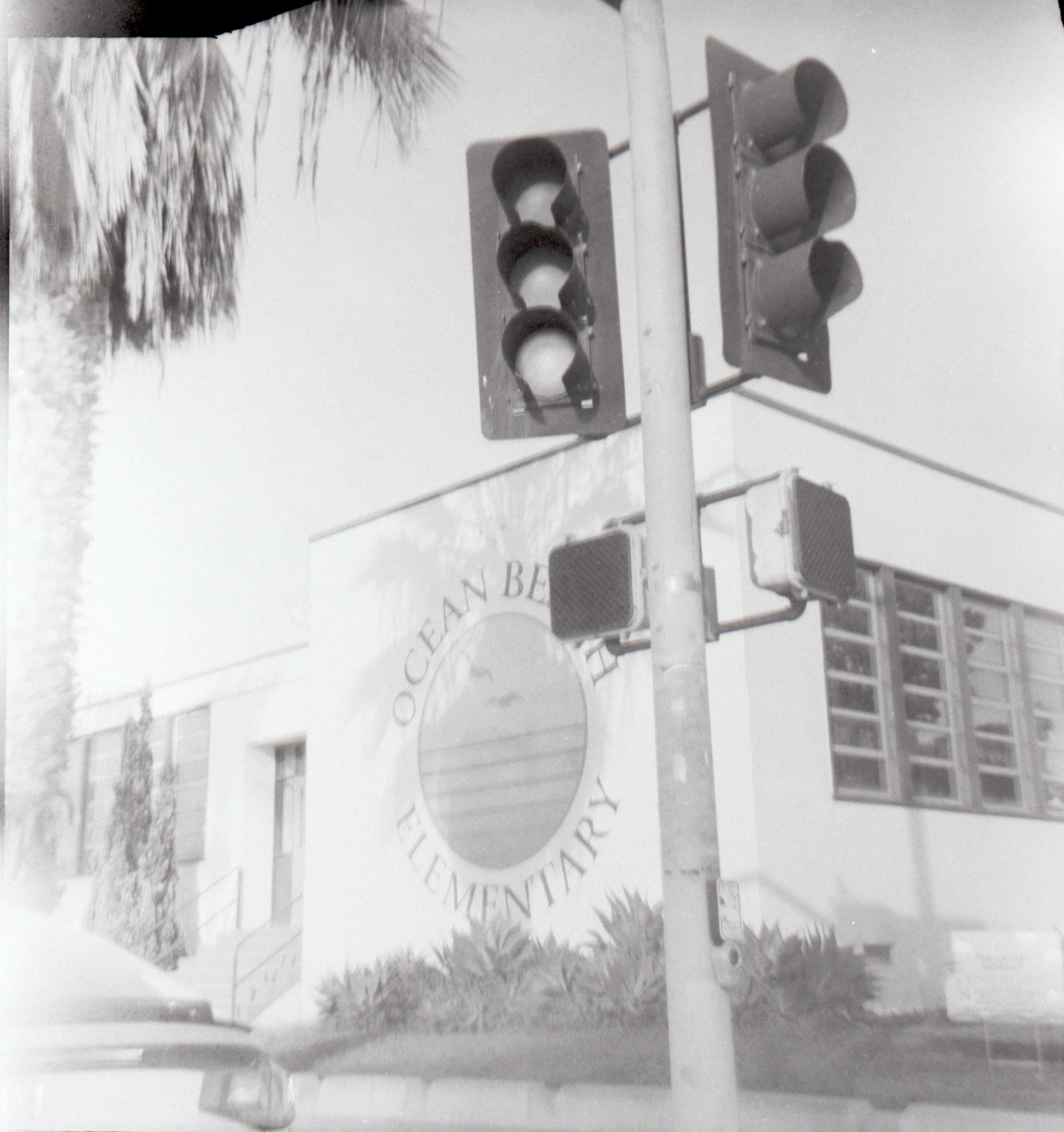
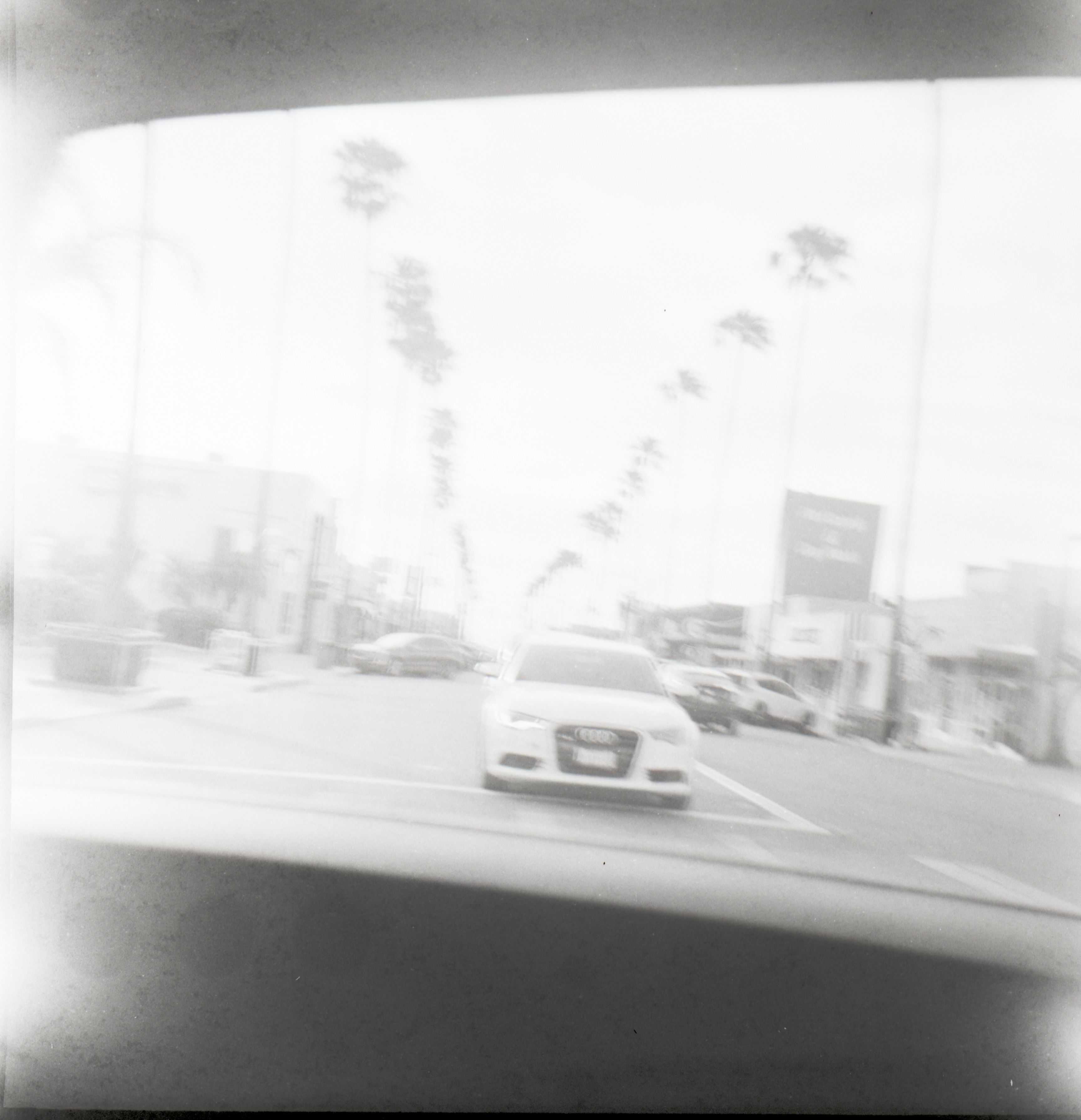
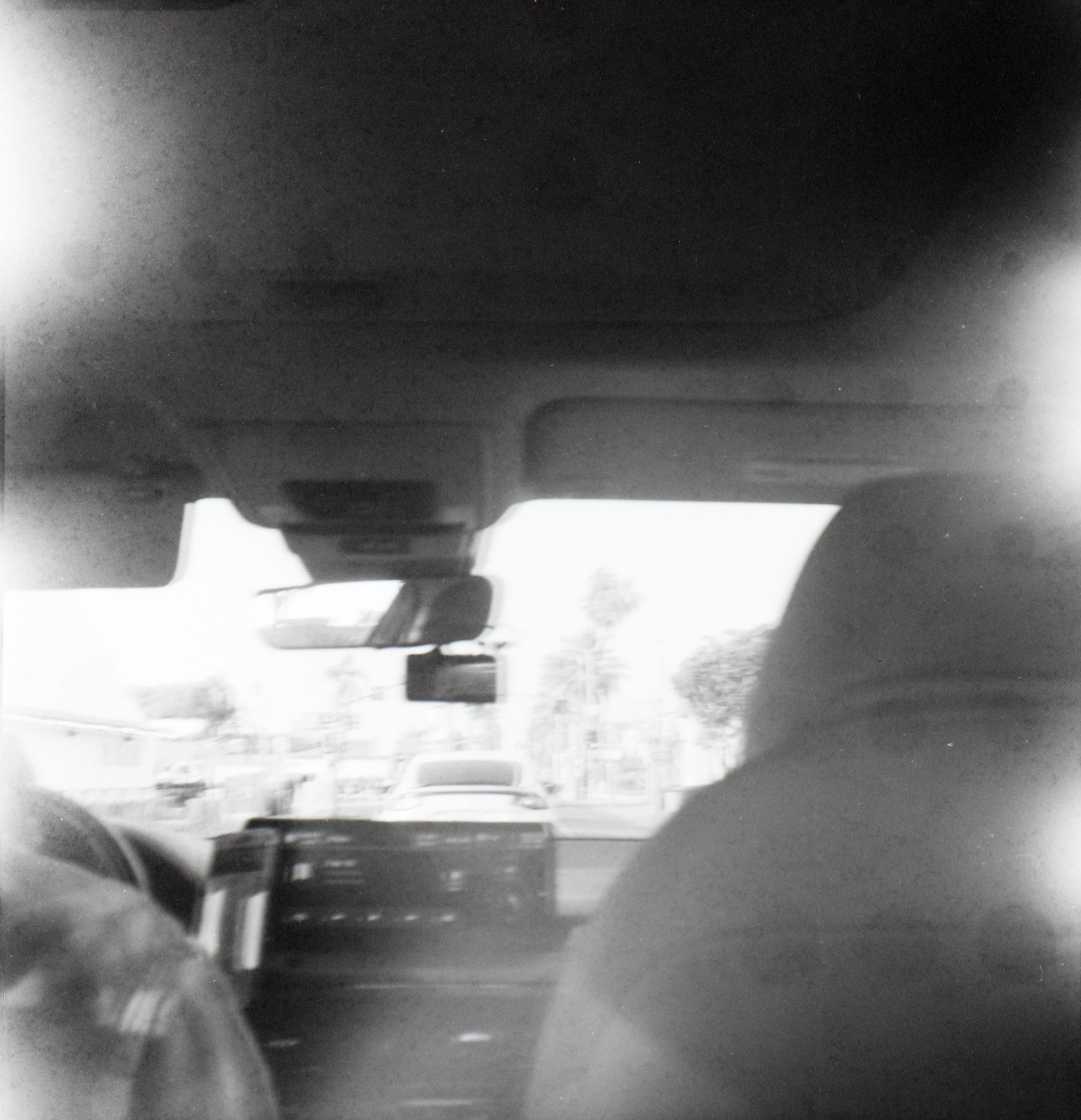
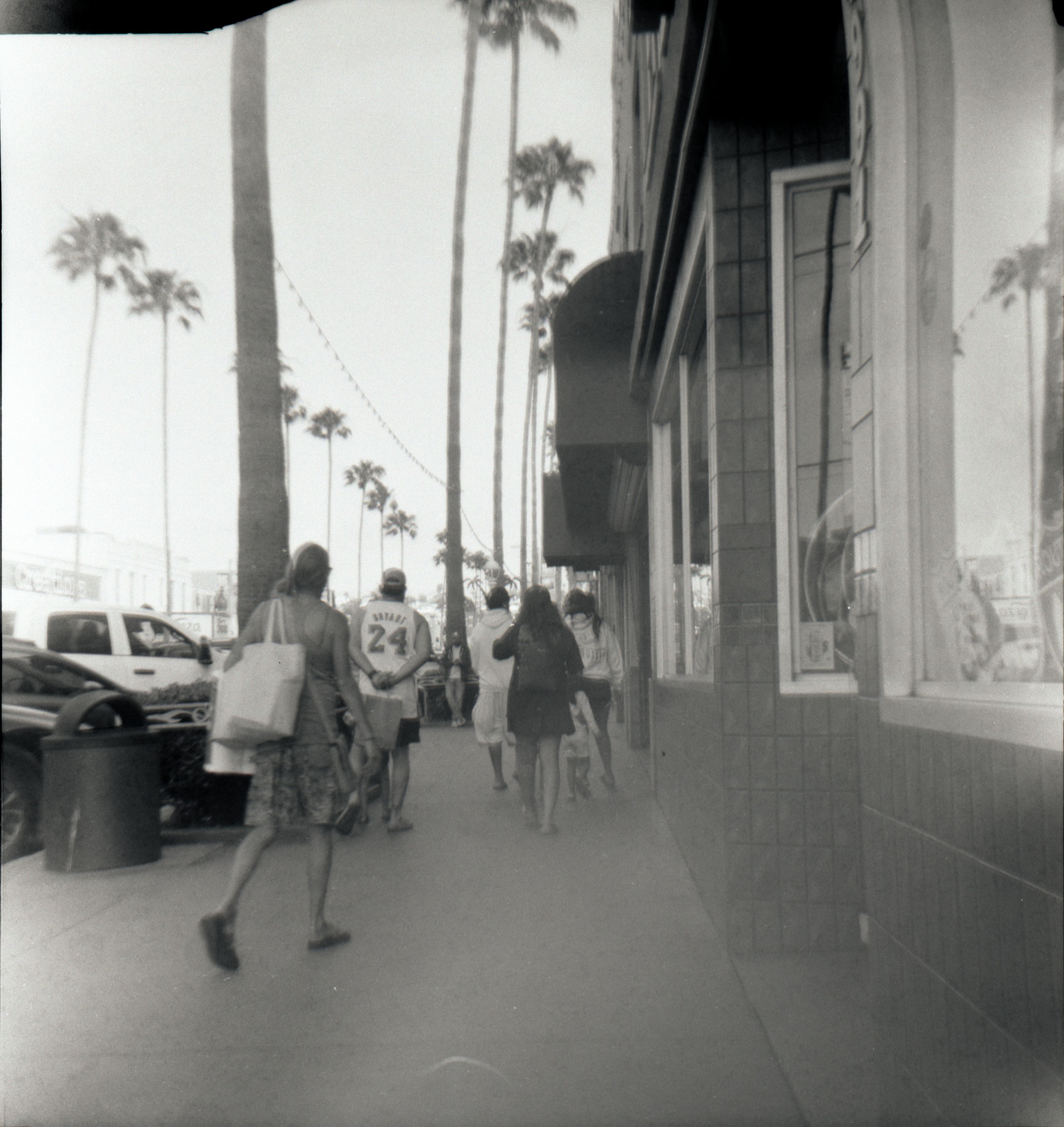
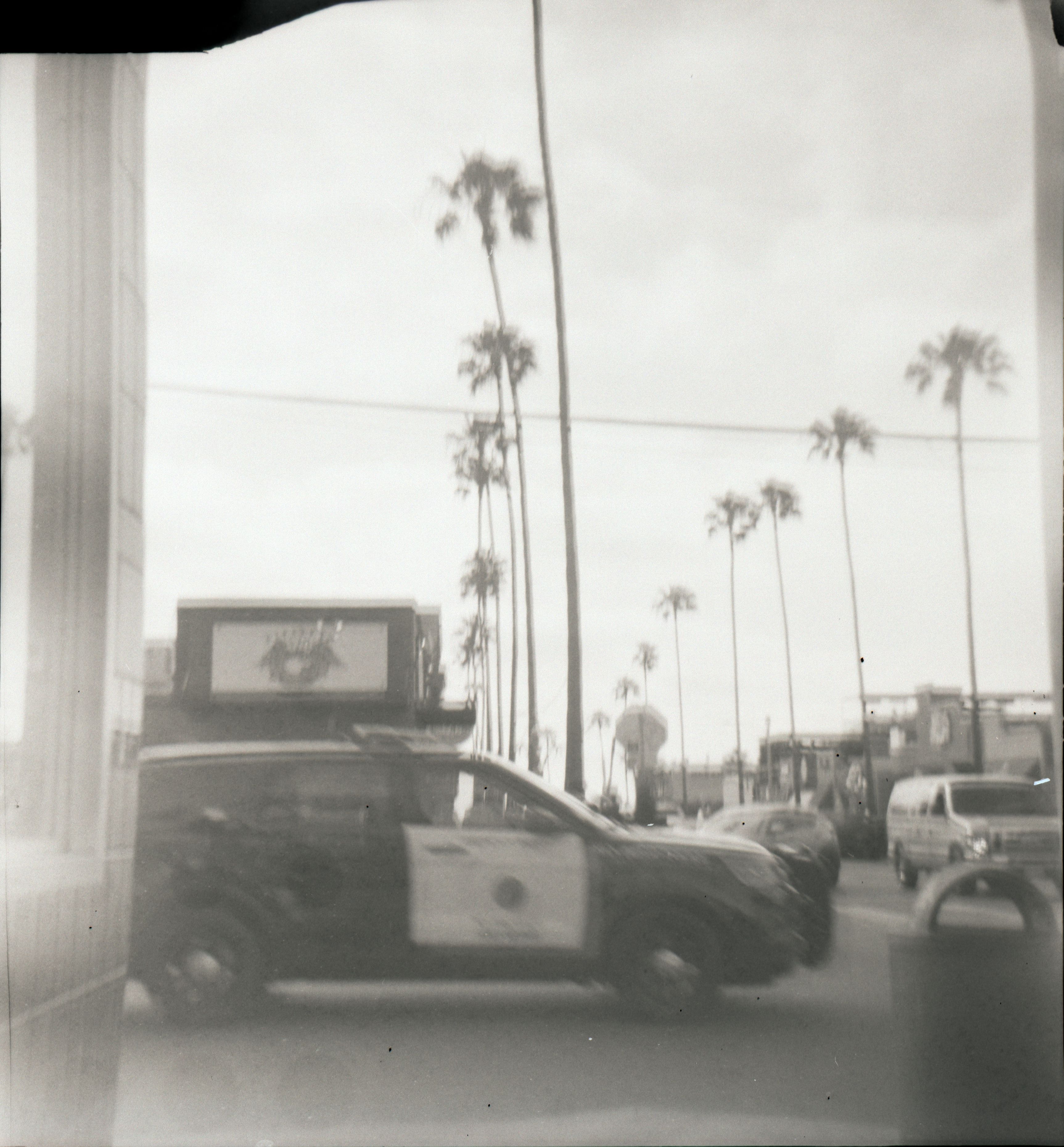
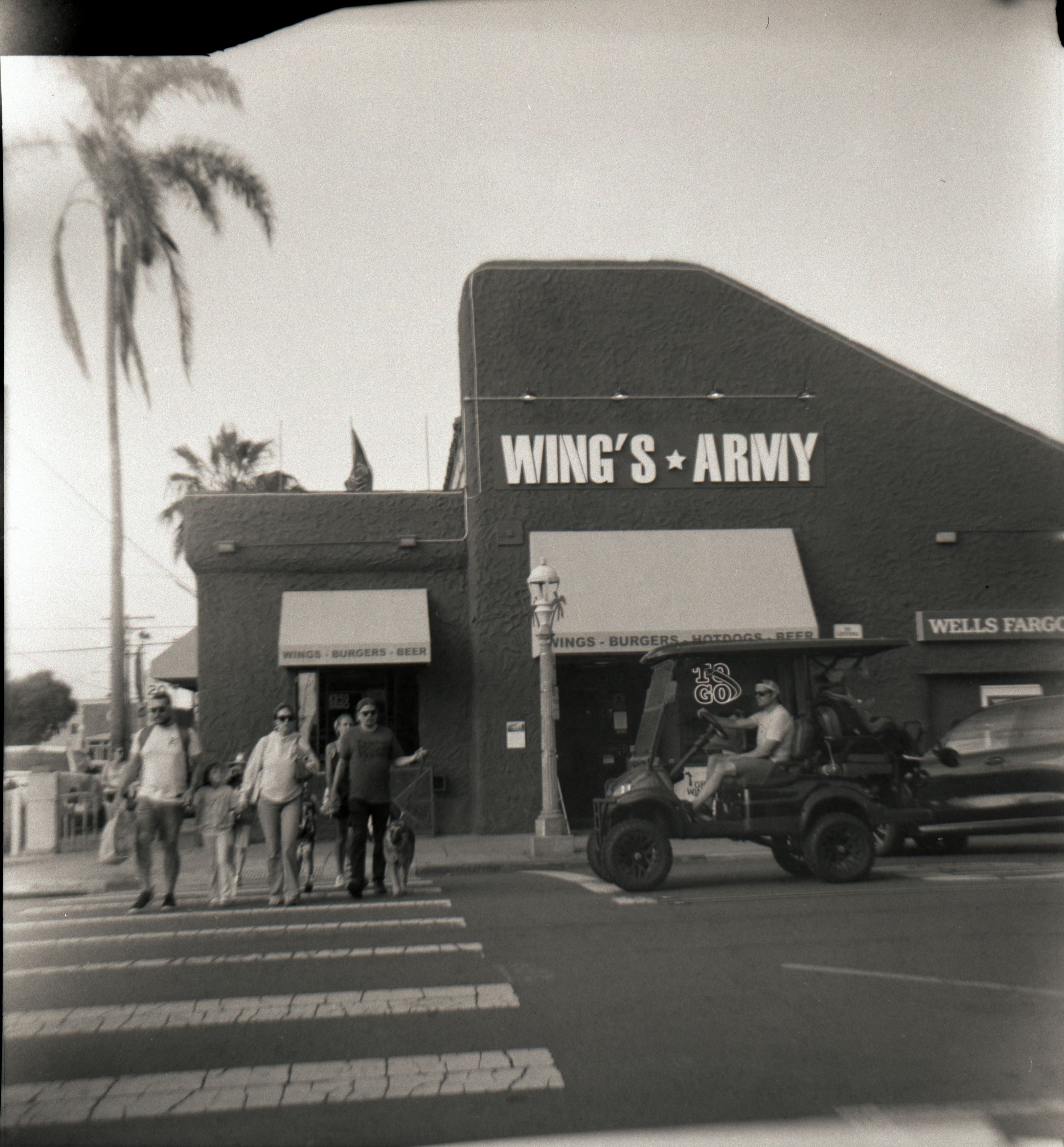
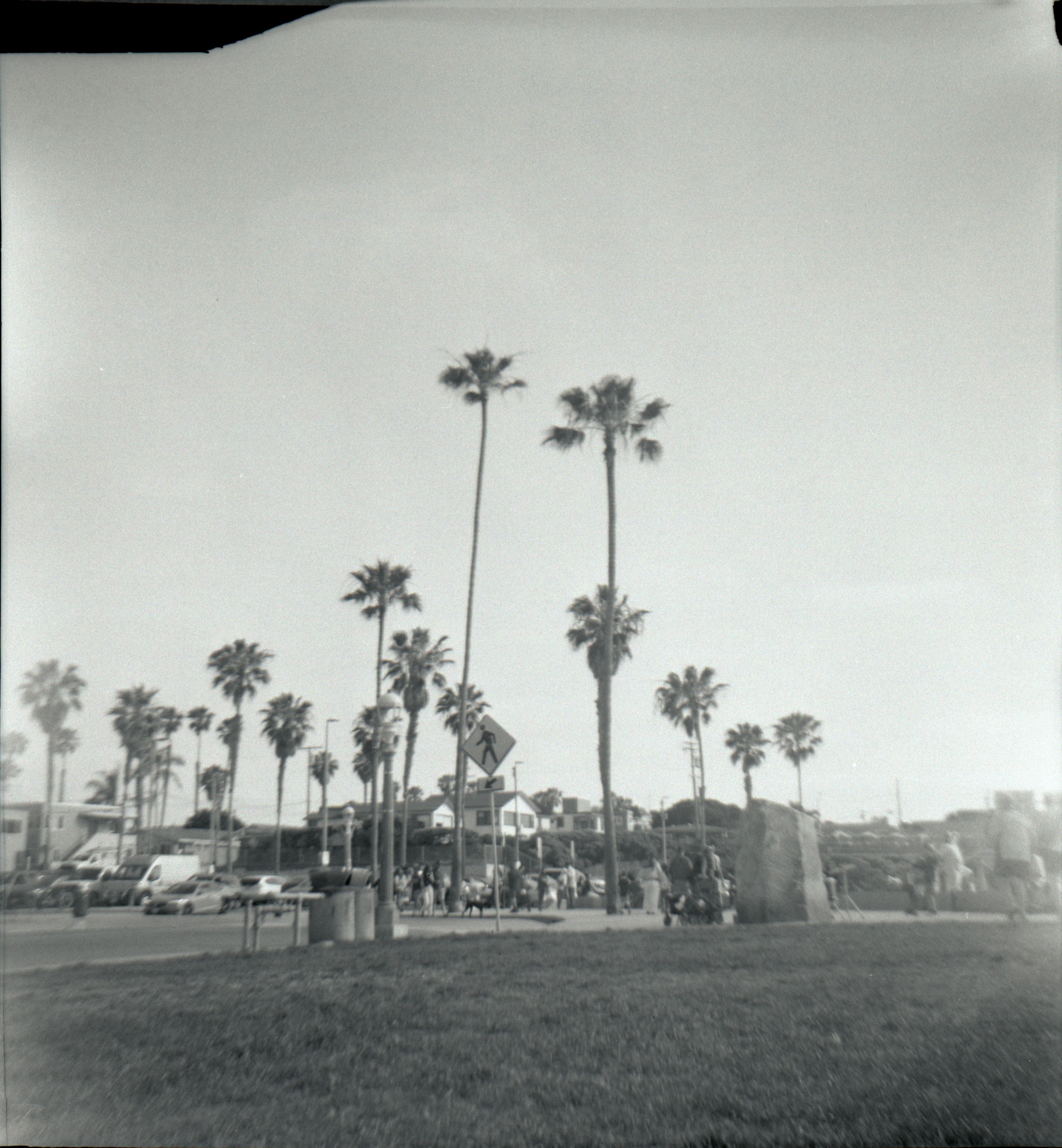
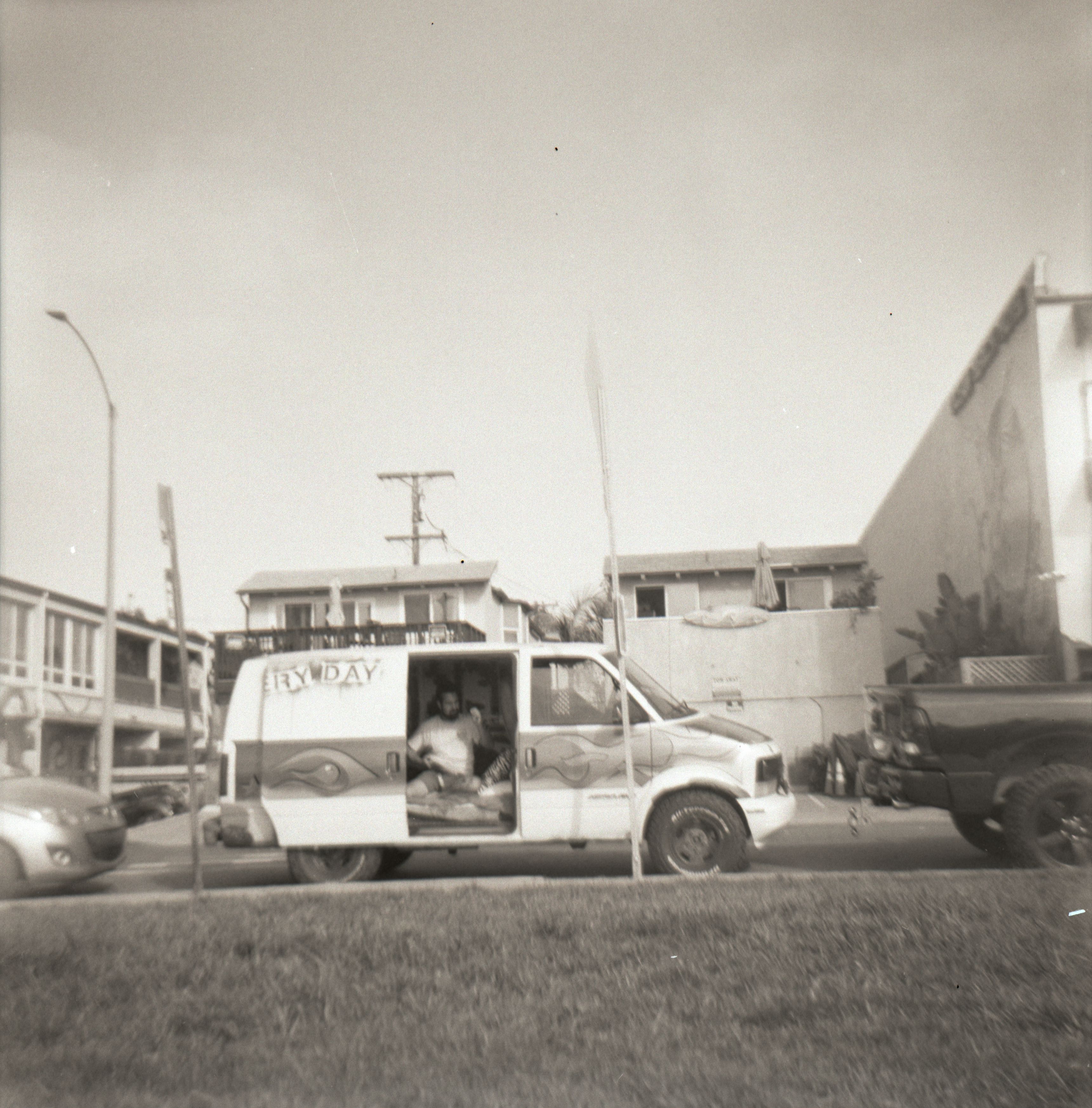
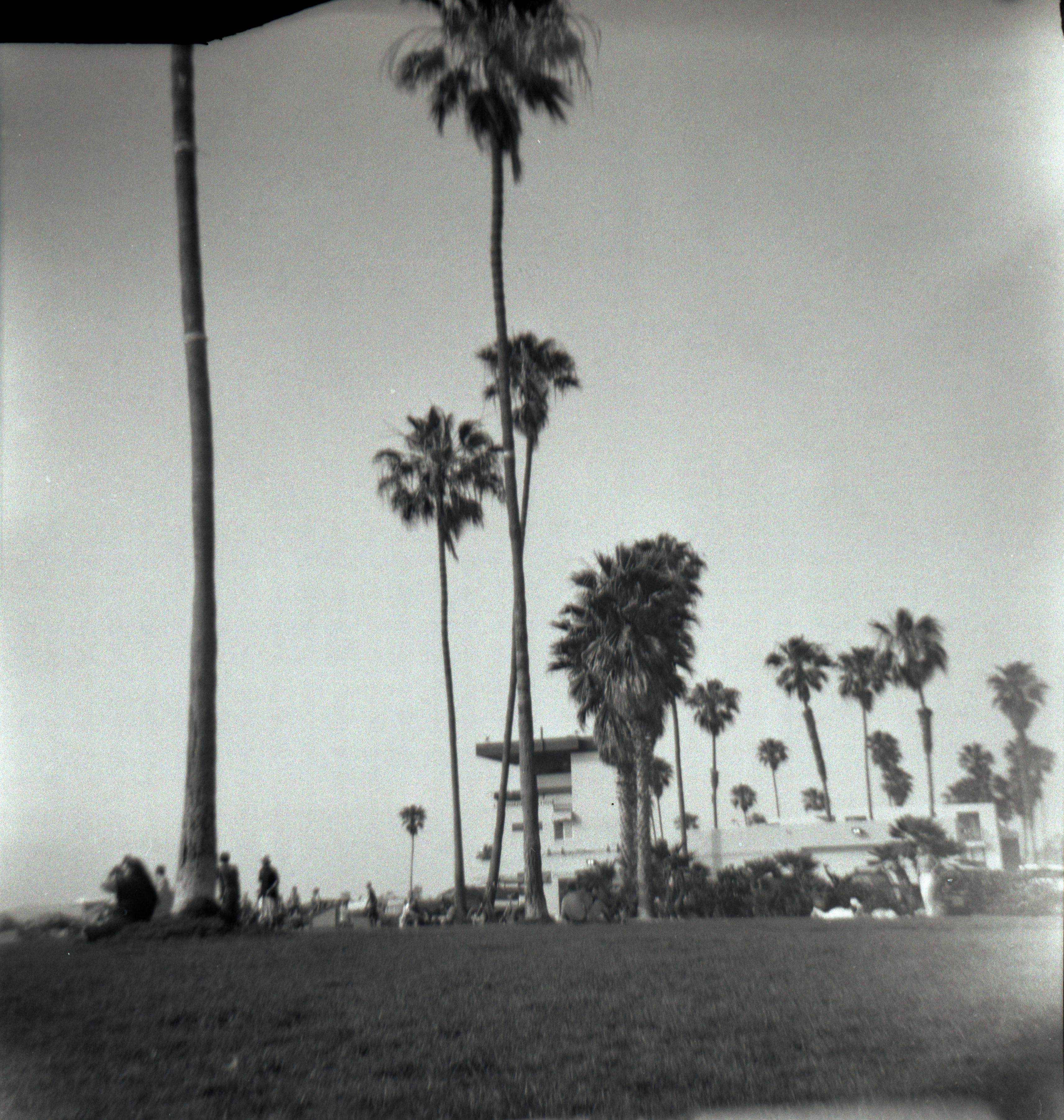
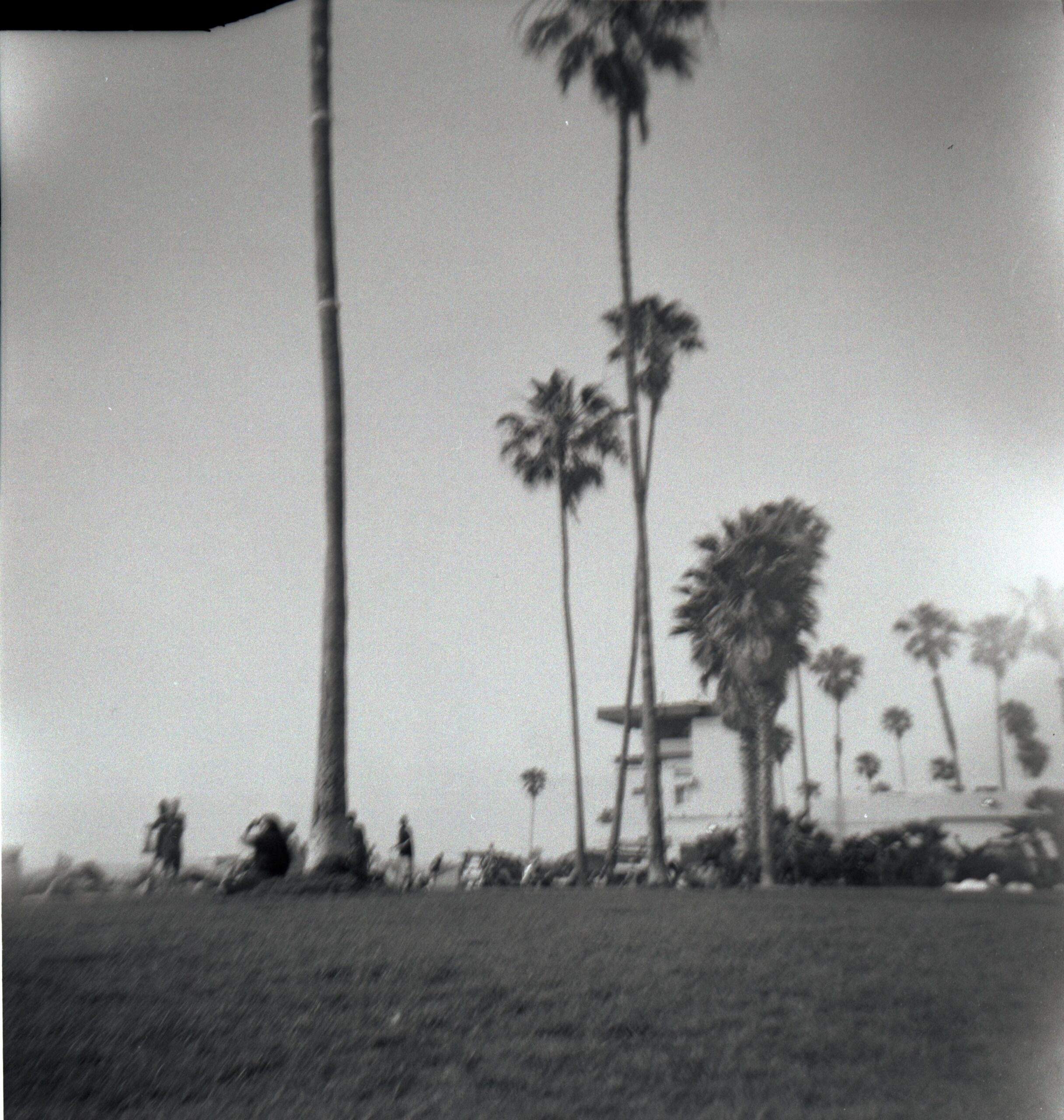
All photos in this post were shot on 620 film through the Kodak Duaflex III and the Argus Argoflex Seventy-Five, around Del Mar and Ocean Beach, San Diego.
Article Overview
- What they are: two cheap 1950s pseudo-TLR box cameras — Rolleiflex looks, none of the Rolleiflex price
- What they shoot: 620 film, which is just 120 film on a smaller spool (more on that below)
- The keeper: the Kodak Duaflex III, for its focusing Kodar lens and sharper photos
- The grab-and-go: the Argus Argoflex 75 — one setting, no focus, minimal work
- What I did: ran a color and a black-and-white roll through each around Del Mar and Ocean Beach
- What it’ll run you: about $10 to $35 for either one
The Backstory
A few months back, my best friend Alex shipped me a box of old cameras. At least ten of them, packed up and mailed down to me from Idaho.
Alex is from a small ski town up there, the kind of place that collects photographers [like myself 😊], and somewhere along the way her family had ended up with a whole pile of cameras they no longer needed, and sent them my way! A very good day indeed, and I was stoked.
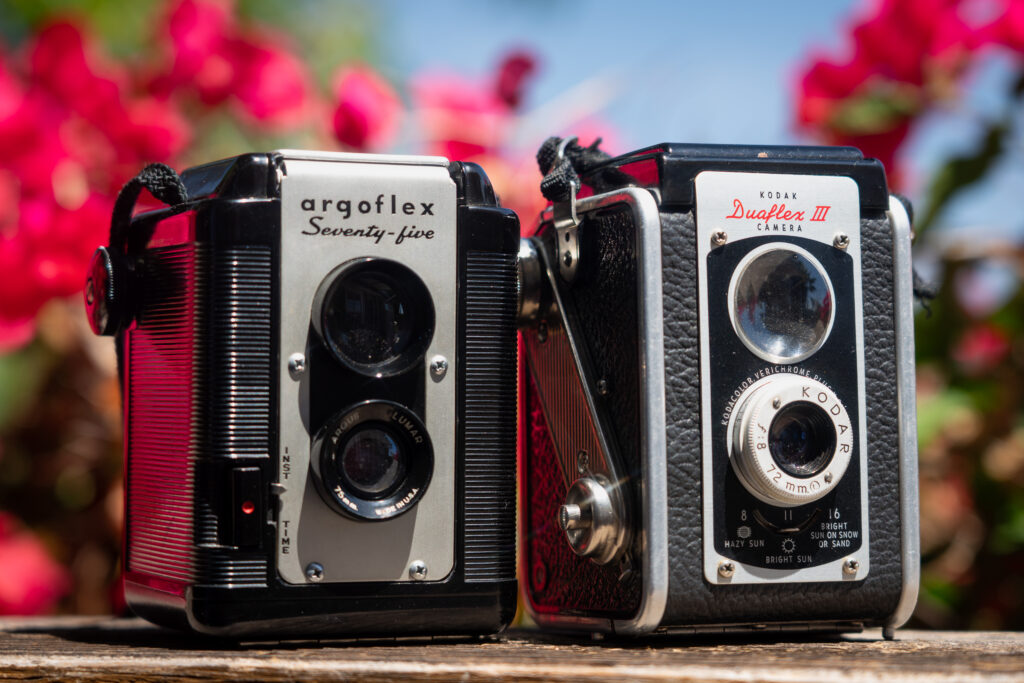
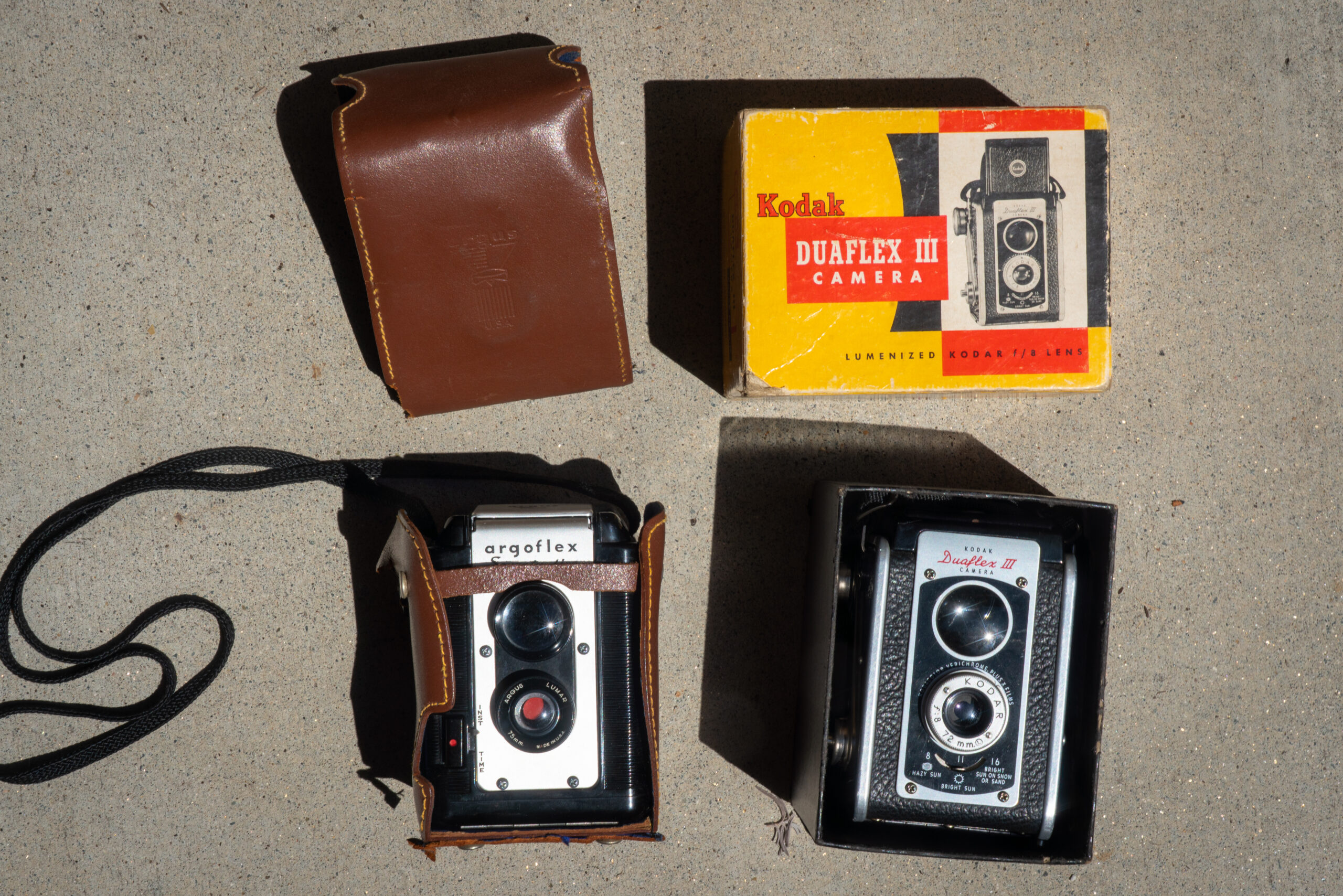
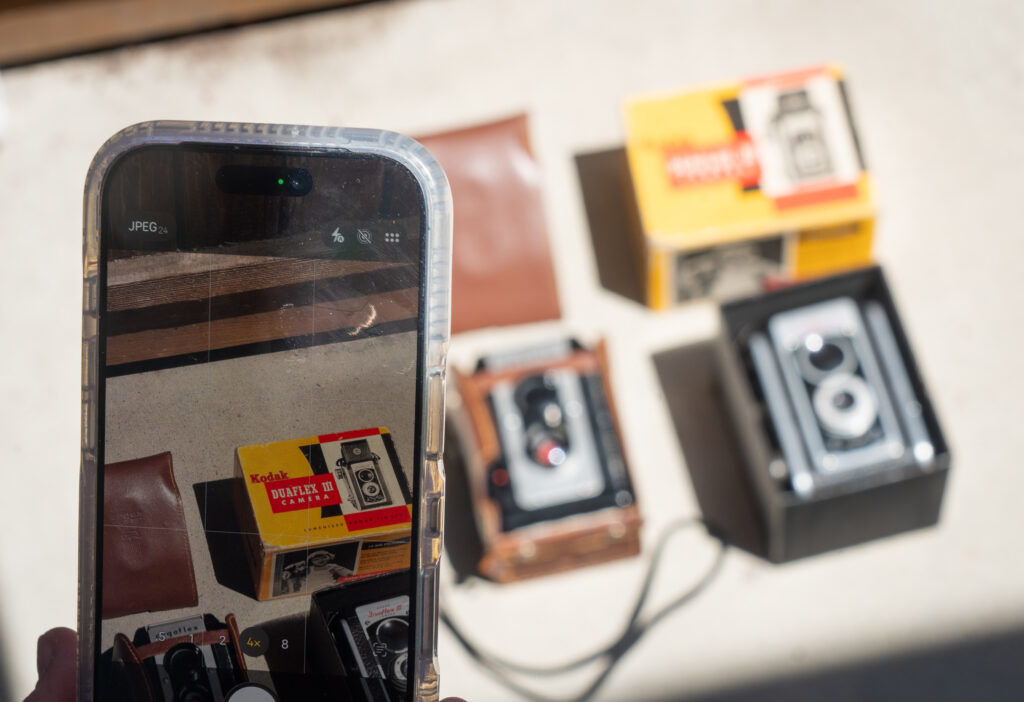
Two of the cameras in that box were these: a Kodak Duaflex III (still in its original box) and an Argus Argoflex Seventy-Five in a deceiving wonderful leather case (it looked nice from the outside, but the front cover cracked clean off the day it arrived). You can see that in the photos below.
It was kind of obvious they were the same idea from rival companies. Two little box cameras built to look like a real twin-lens reflex without actually being one, both shooting 620 film. I respooled film for both of them (more on that below) and fully meant to take them out right away…. But then I didn’t. The right moment to shoot these cameras never came, so they sat on the shelf, kinda just moping around (staring at me) for a rainy day.
The rainy day turned out to be with my bestie, Alex, herself! She’d been back home in Idaho for about a year, and when she finally moved BACK to San Diego, we spent a day at the beach. I put both cameras through their first rolls (B&W and Color, they each got both) around Del Mar and Ocean Beach.
What follows is my first impressions on both, the specs, and all the sample photos, keepers and misses included.
Two twins, two rivals: what a pseudo-TLR box camera actually is
Both of these get called TLRs, and neither one really is.
A true twin-lens reflex has two matched lenses stacked on top of each other: the top one feeds a ground-glass viewfinder for precise focusing, the bottom one takes the picture. A Rolleiflex is the famous example, and it wasn’t cheap.
The Duaflex and the Argoflex 75 are what collectors call pseudo-TLRs. They took the boxy TLR shape and the big top-mounted finder and left out the expensive part — no real focusing screen, just a mirror bouncing light up into a bright bubble of glass so you can frame. Looked like a Rollei from across the room, cost a fraction of the price.
This was mid-century America, and Kodak (Rochester) and Argus (the Michigan challenger behind the famous C3 “Brick”) were chasing the same family budgets. These two are the budget-shelf version of that rivalry: a camera that looked like the expensive thing, for people who were never going to buy the expensive thing.
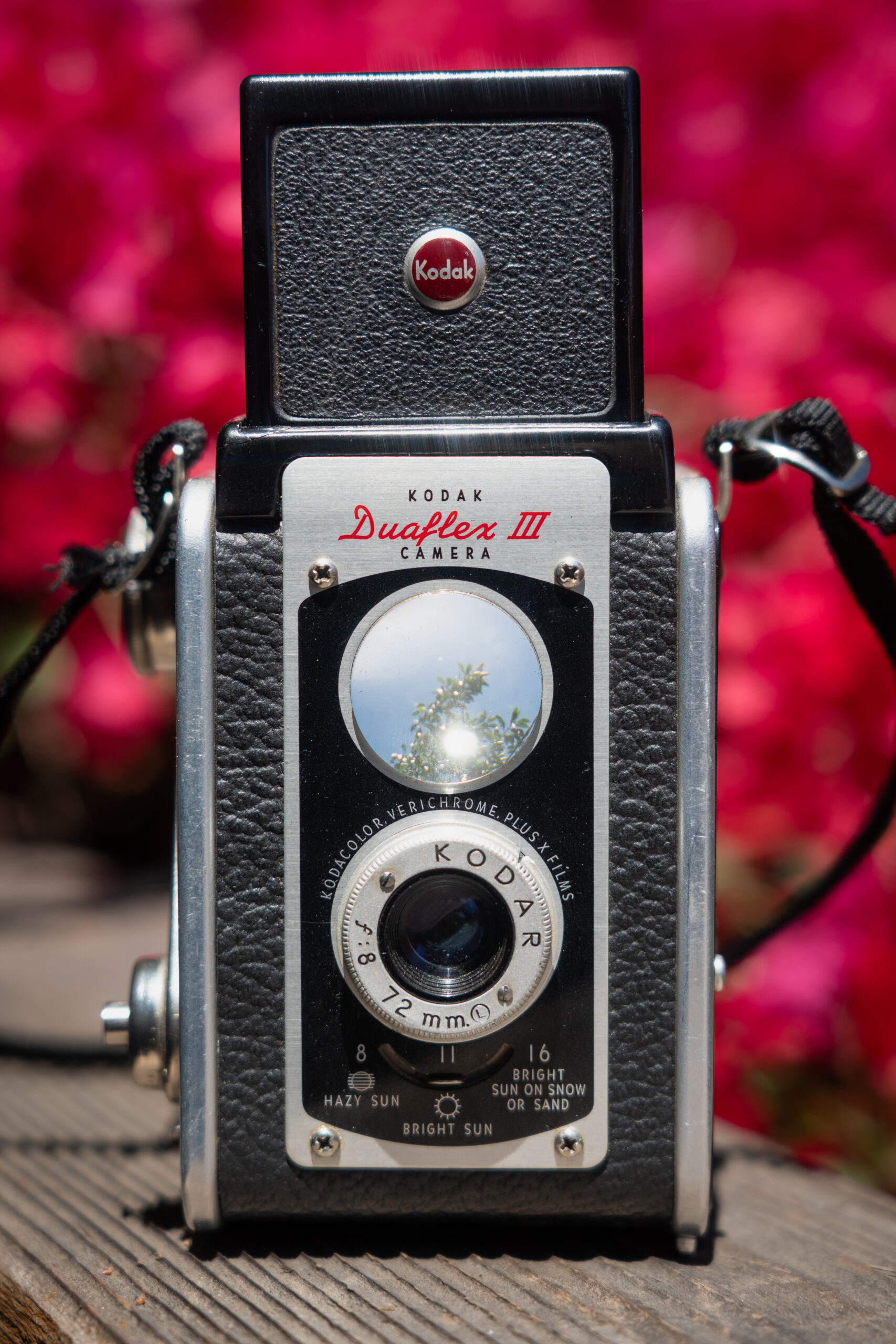
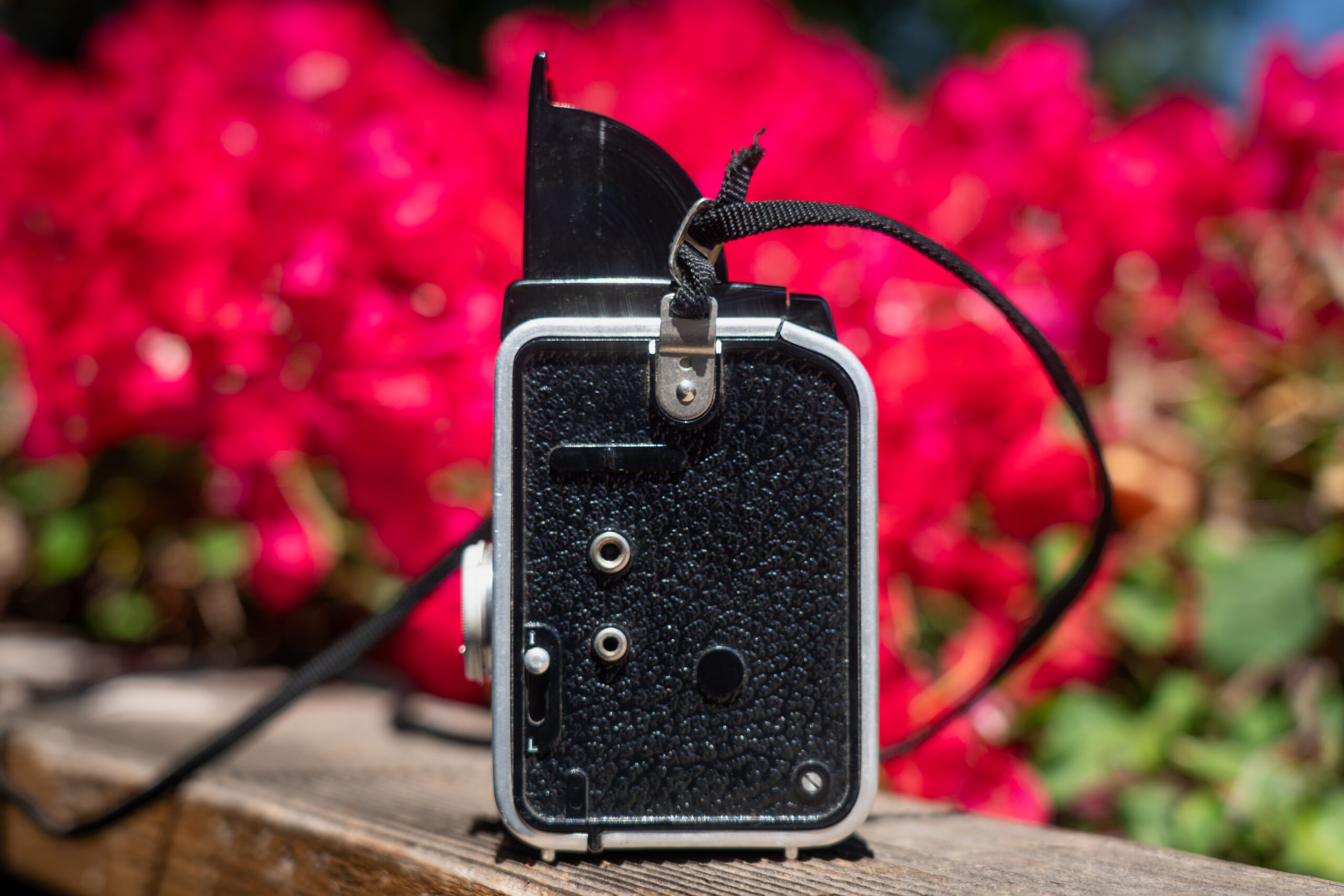
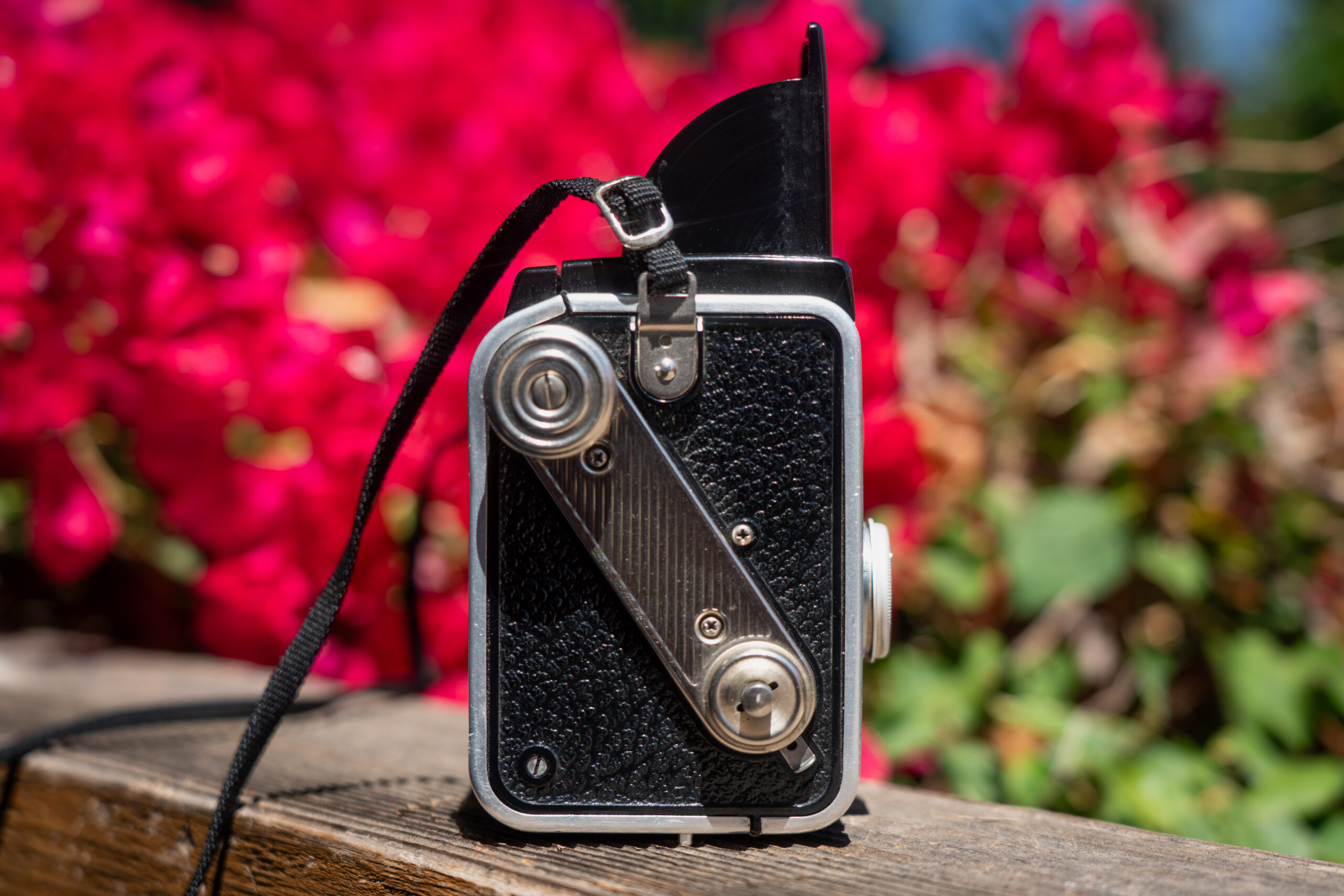
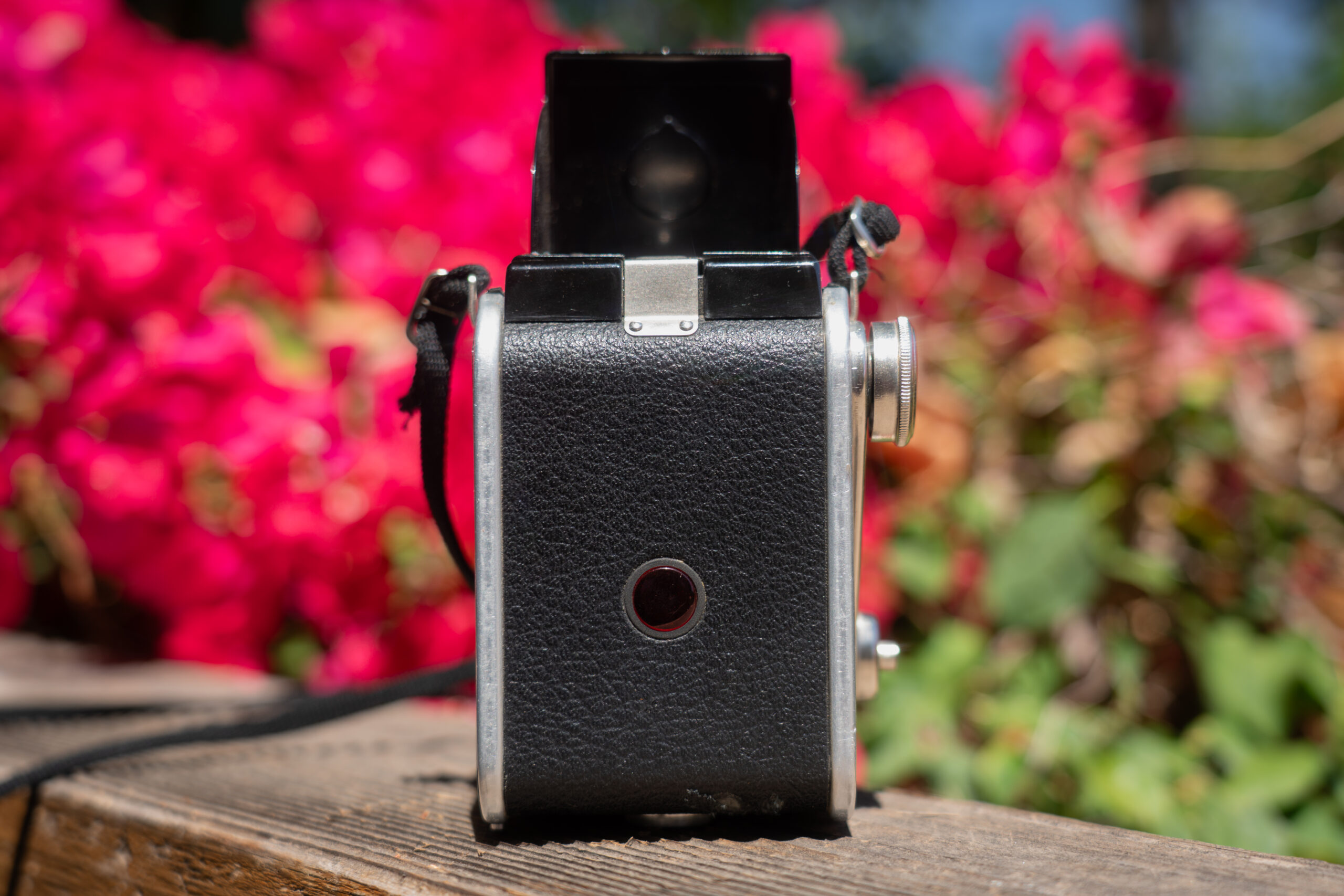
Meet the Kodak Duaflex III
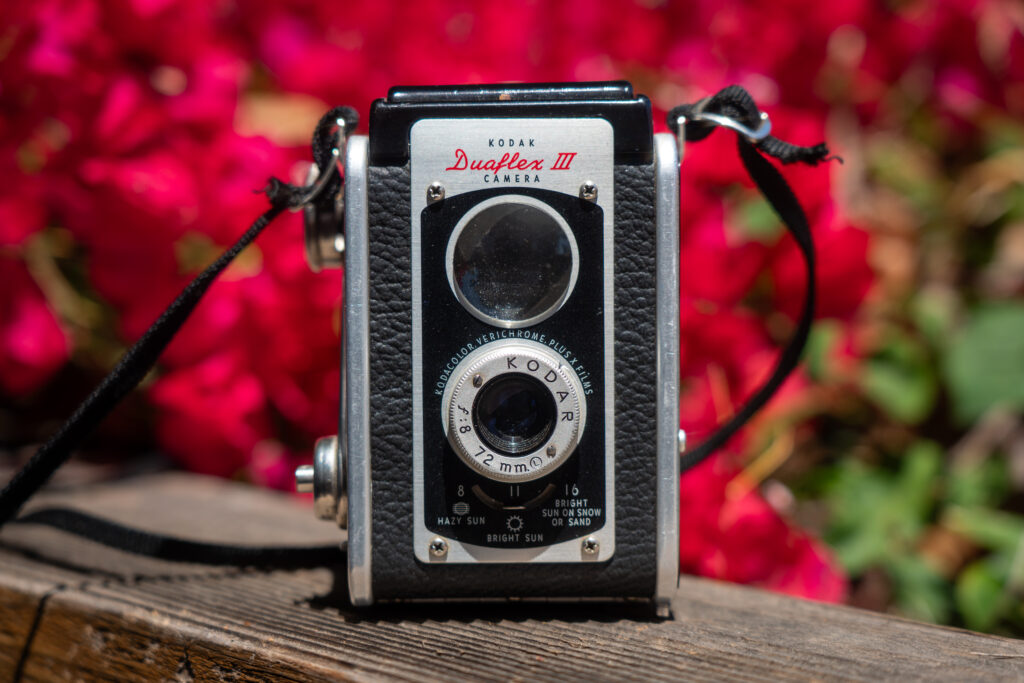
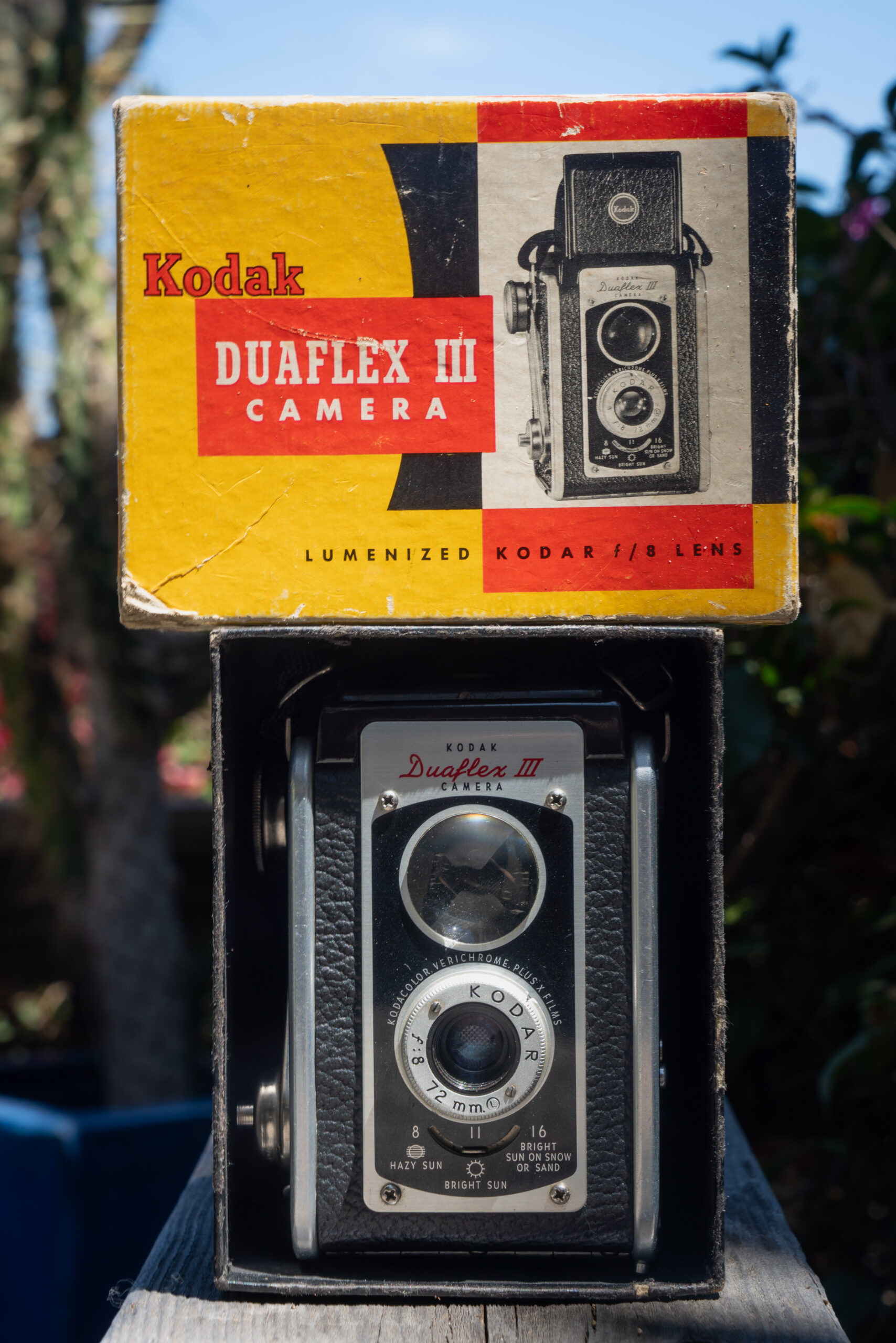
Kodak made the Duaflex line from 1947 to 1960, and the Duaflex III from 1954 to 1957. Mine is the nicer-lensed version, and you can tell from the front: it says Kodar, not Kodet.
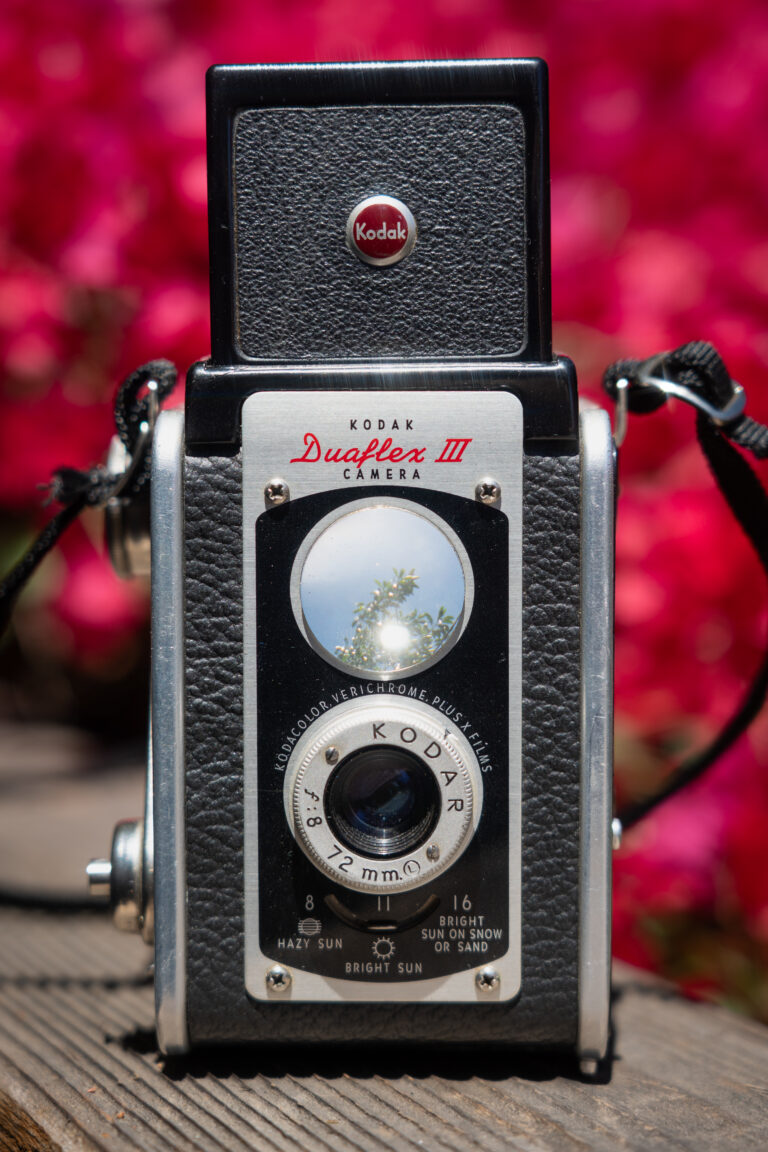
That matters. The base Duaflex shipped with a single-element fixed-focus Kodet; mine has the Kodar, a three-element lens that actually focuses down to about 3.5 feet and stops down through a little weather dial. You’ve seen these markings on old Kodaks: hazy sun, bright sun, bright sun on snow or sand, which map to f/8, f/11 and f/16. Nothing to memorize, just “how bright is it out.”
Kodak Duaflex III specs:
- Lens: Kodar 72mm f/8, three-element triplet, front-element focusing to ~3.5 ft
- Apertures: f/8, f/11, f/16 (marked as weather symbols)
- Shutter: Single leaf shutter, marked “I” (instant, roughly 1/30 sec) and “B” (bulb)
- Film: 620 roll film, 6×6 cm square negatives, 12 exposures
- Viewfinder: Waist-level brilliant “bubble glass” reflecting finder
- Flash: Accepts the Kodalite Flasholder, the same style of Kodalite flash Kodak used across its box cameras
- Body: Aluminum with leatherette covering
- Made in: USA (also built in the UK)
- Scan of the camera manual can be found here
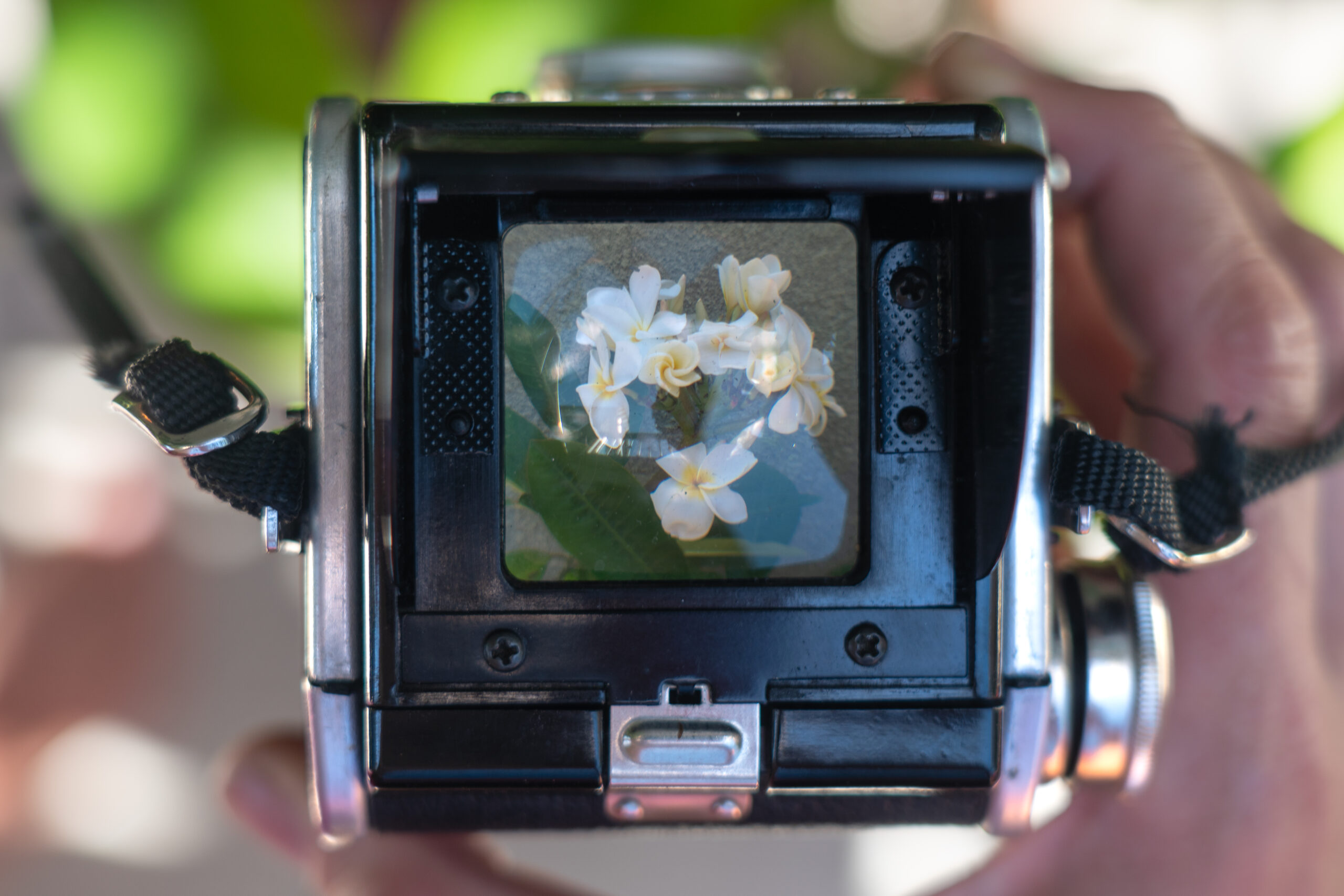
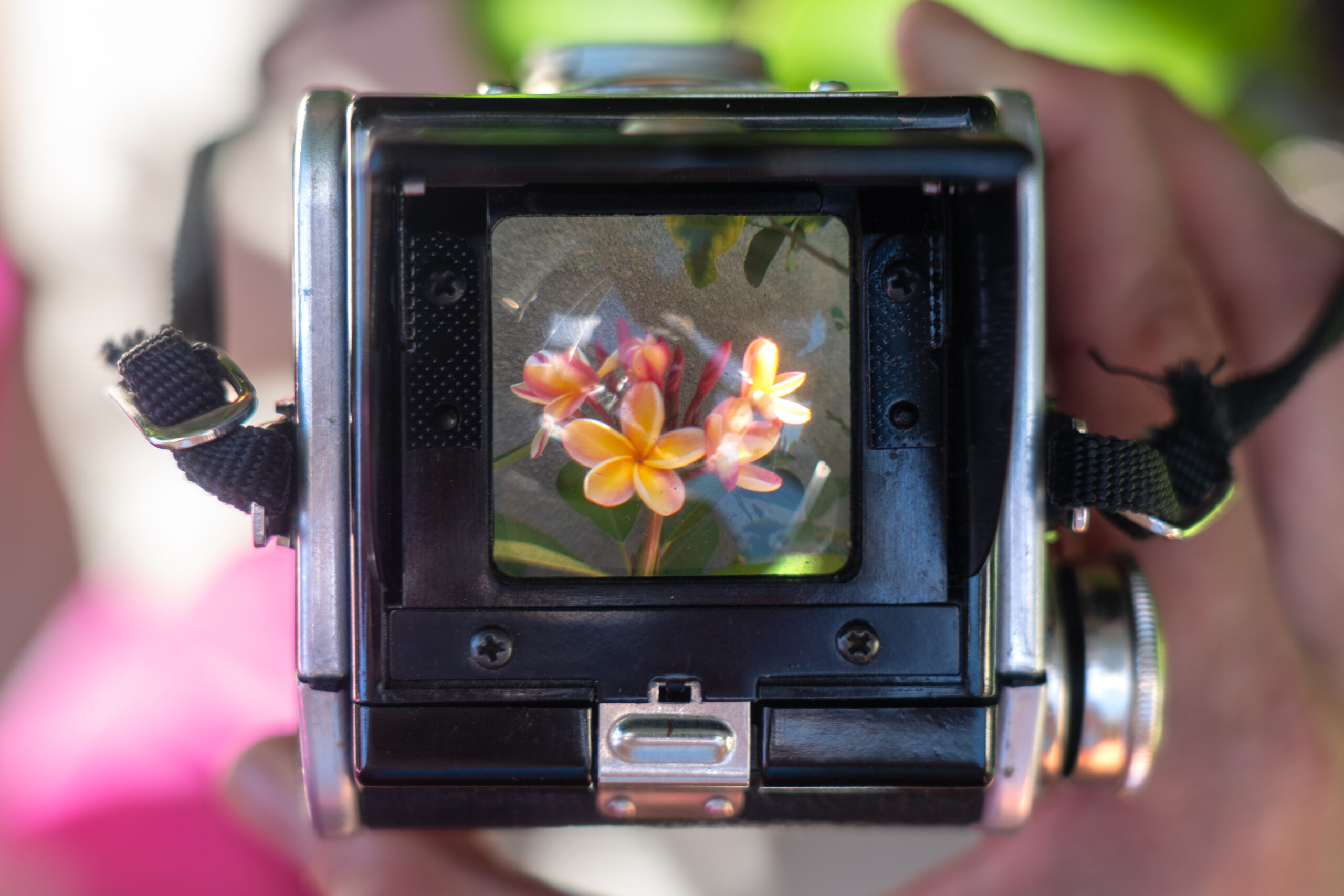
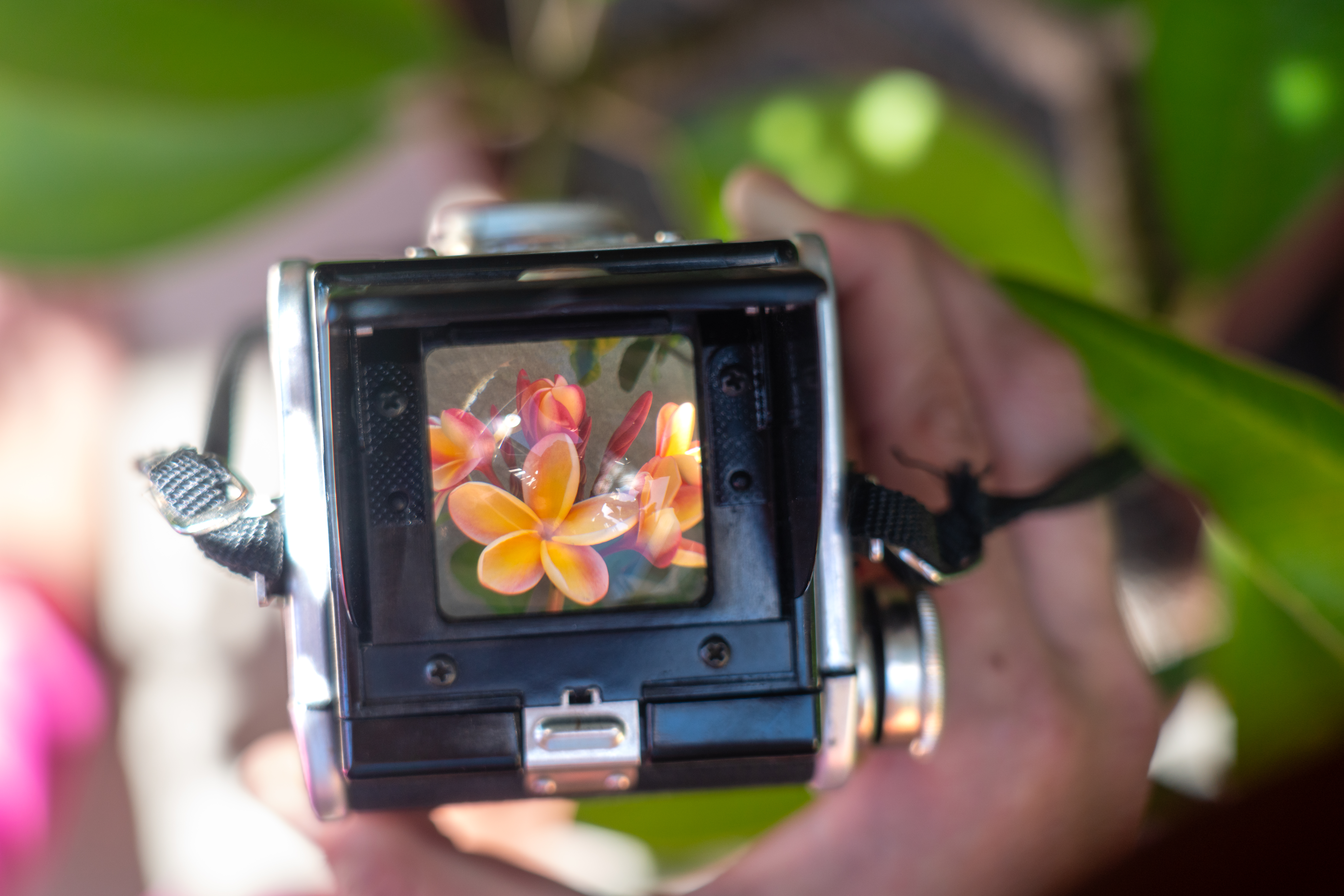
The finder took getting used to. It’s bright, brighter than a real TLR’s ground glass, since you’re looking straight at a mirror. But everything’s flipped left to right, and if your head drifts off to the side the image ghosts and darkens. You end up leaning right over the top of it.
Meet the Argus Argoflex Seventy-Five
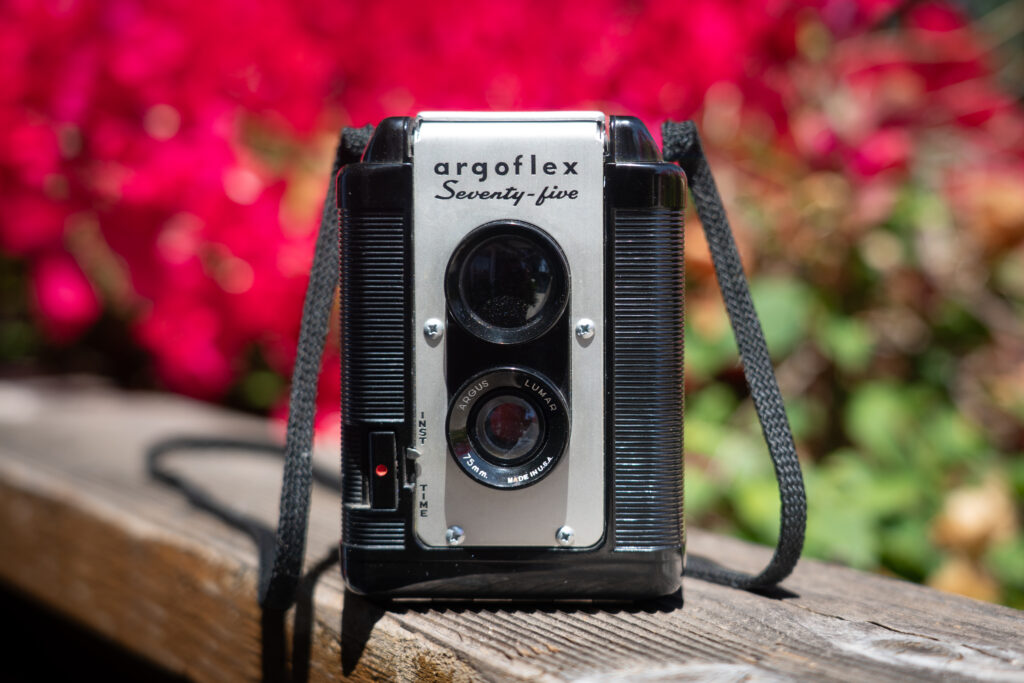
The Argus is the same idea with less to fiddle with. Argus built the Argoflex Seventy-Five in Ann Arbor, Michigan, from about 1949 to 1964 — a fifteen-year run, which tells you how many they sold. Later ones dropped “Argoflex” and just said “Argus Seventy-Five” or “75.”
Where the Duaflex lets you focus and pick an aperture, the Argoflex 75 makes those calls for you:
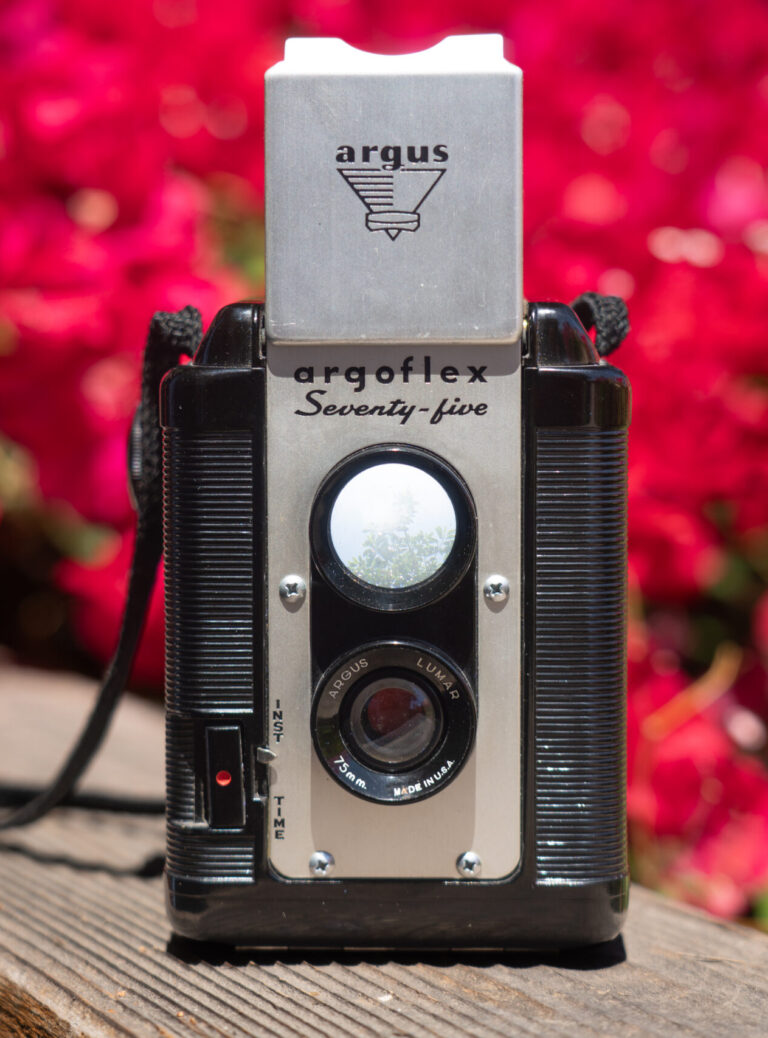
Argus Argoflex Seventy-Five specs:
- Lens: Argus Lumar 75mm, single-element meniscus, fixed focus (~7 ft to infinity)
- Aperture: Fixed, roughly f/11 to f/12 (Argus never officially published it)
- Shutter: Single-speed, about 1/50 sec, with a slider marked “Inst” and “Time” (Time is actually bulb)
- Film: 620 roll film, 6×6 cm square, 12 exposures
- Viewfinder: Big, bright waist-level reflecting finder
- Body: Molded plastic with a painted metal film door
- Made in: USA
- Scan of the camera manual can be found here
Two touches surprised me on something this basic. It won’t let you double-expose (winding cocks the shutter), and a small red blade shows through the taking lens when the shutter is cocked, so a glance at the front tells you it’s ready. Simple, mechanical, and it works.
One warning: the red frame-counter window on the back has no cover — it’s open to light the whole time. With fast film in bright sun, that means fogging and leaks, which is either a problem or exactly why you’re shooting the camera. More on that below.
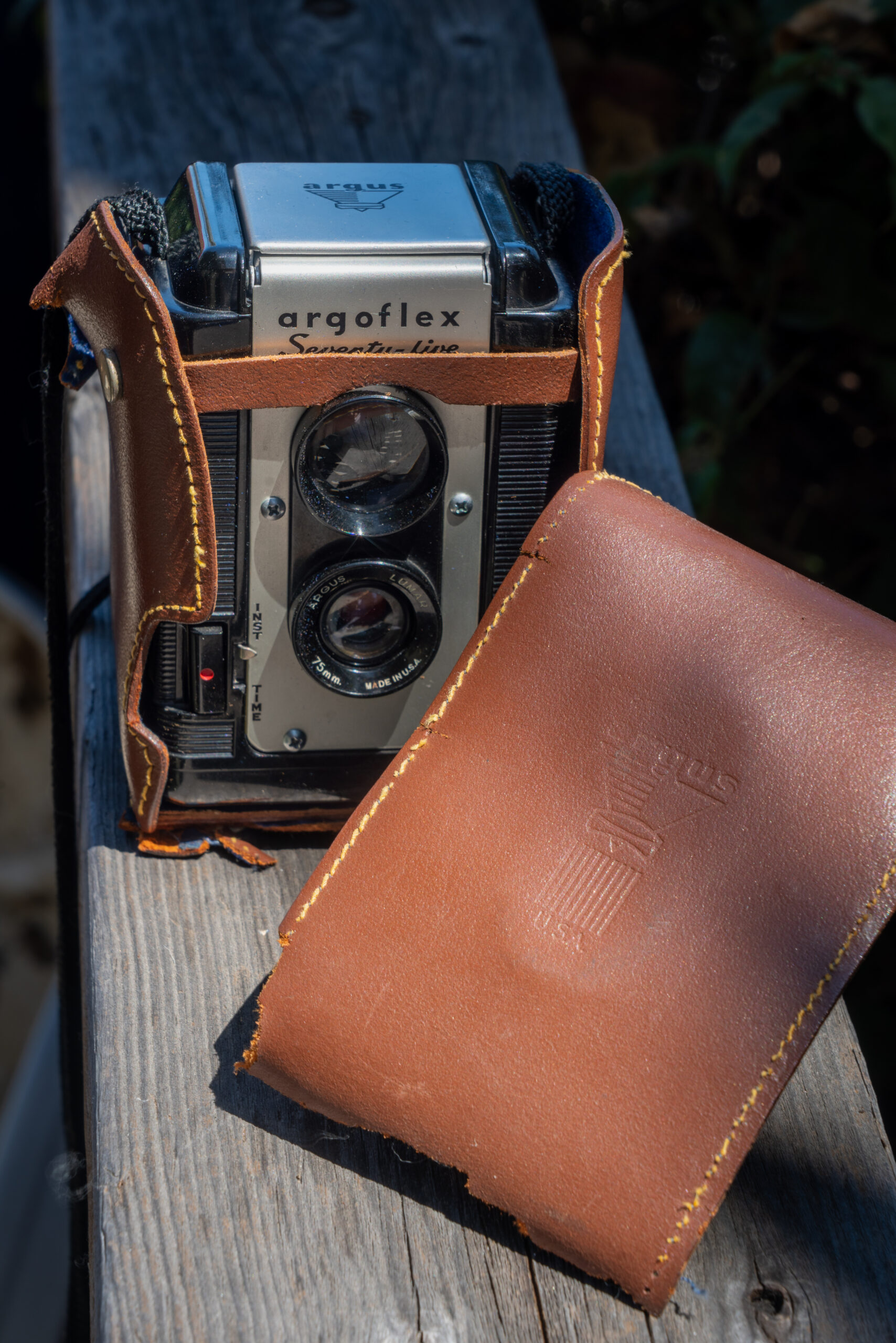
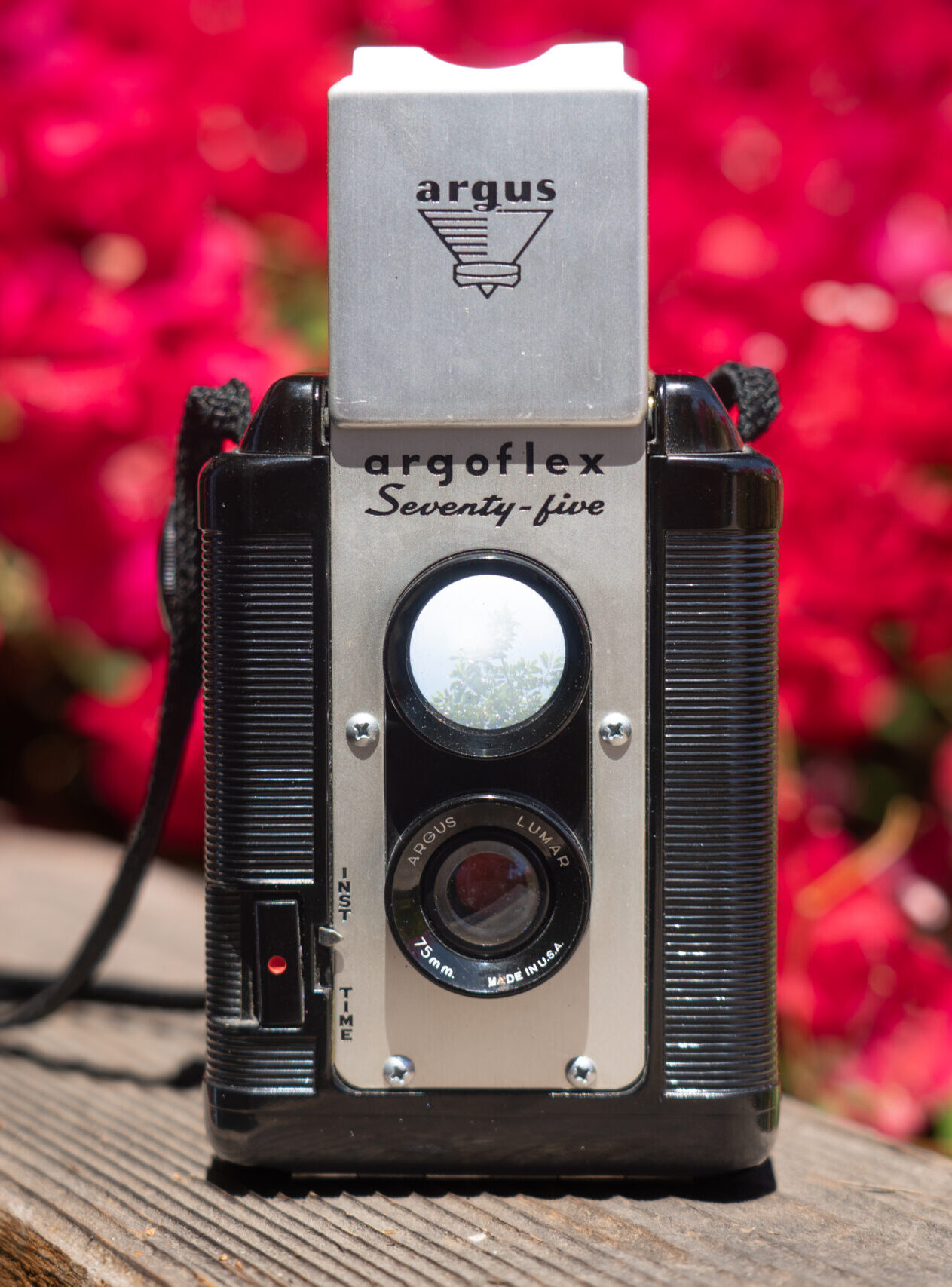
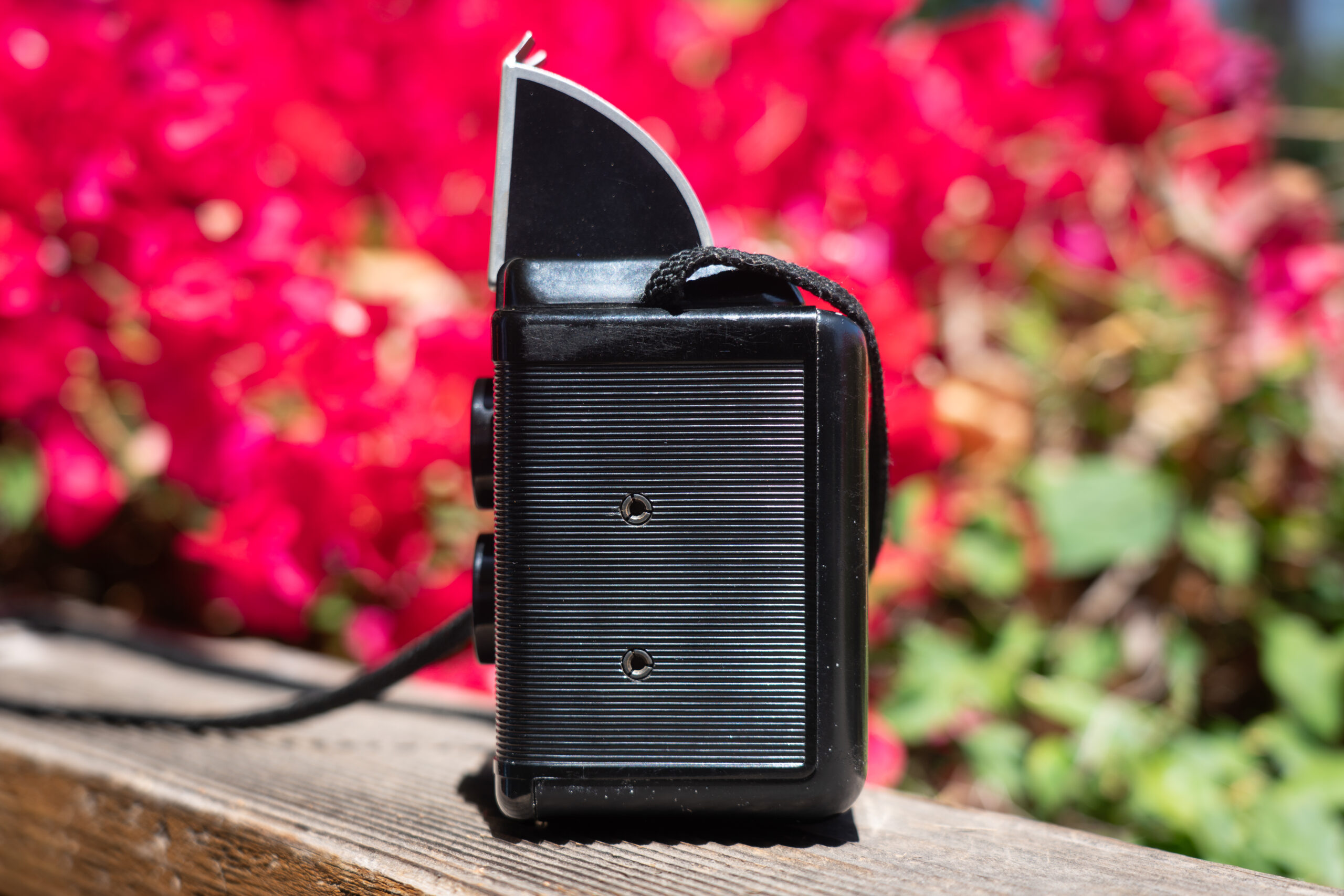
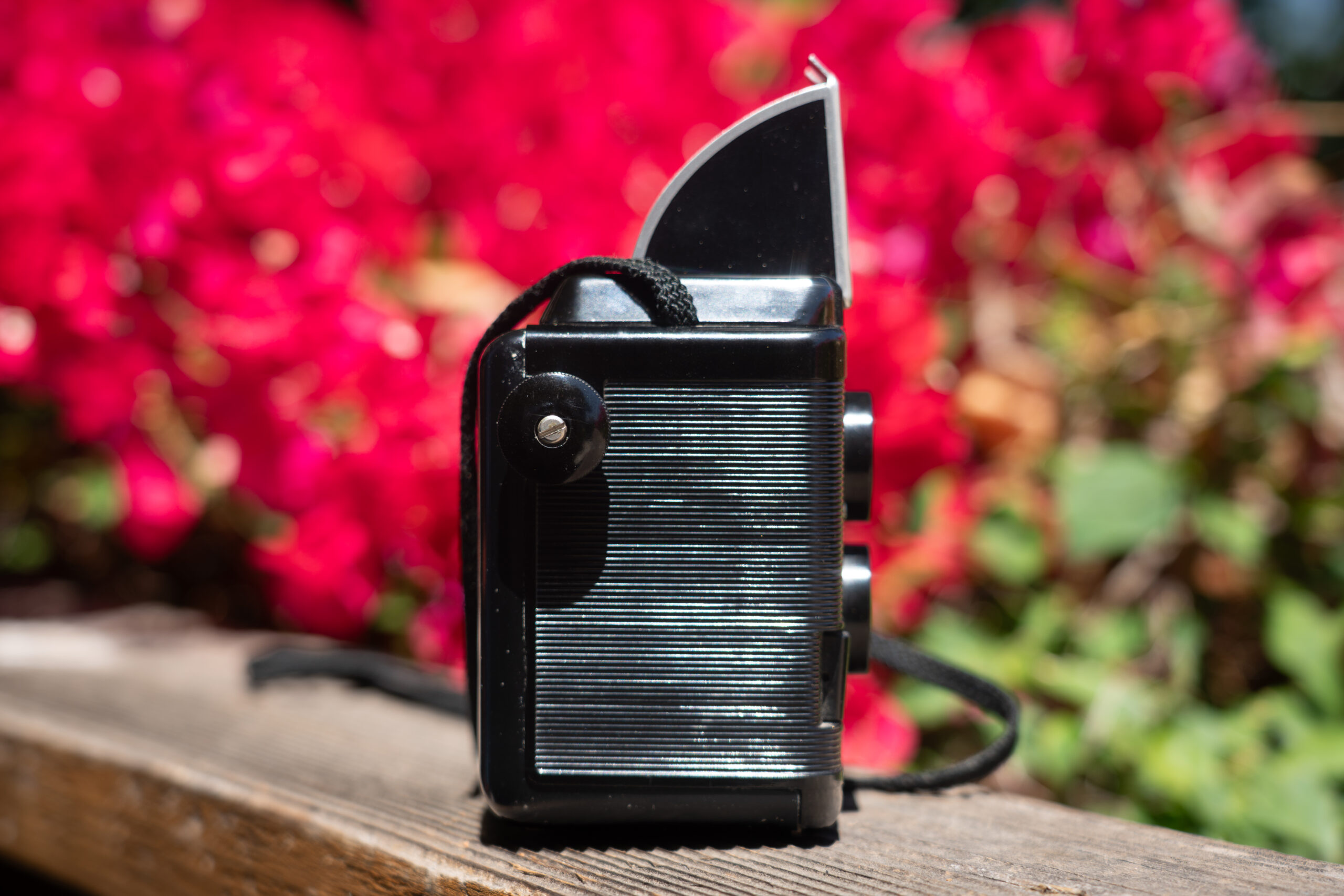
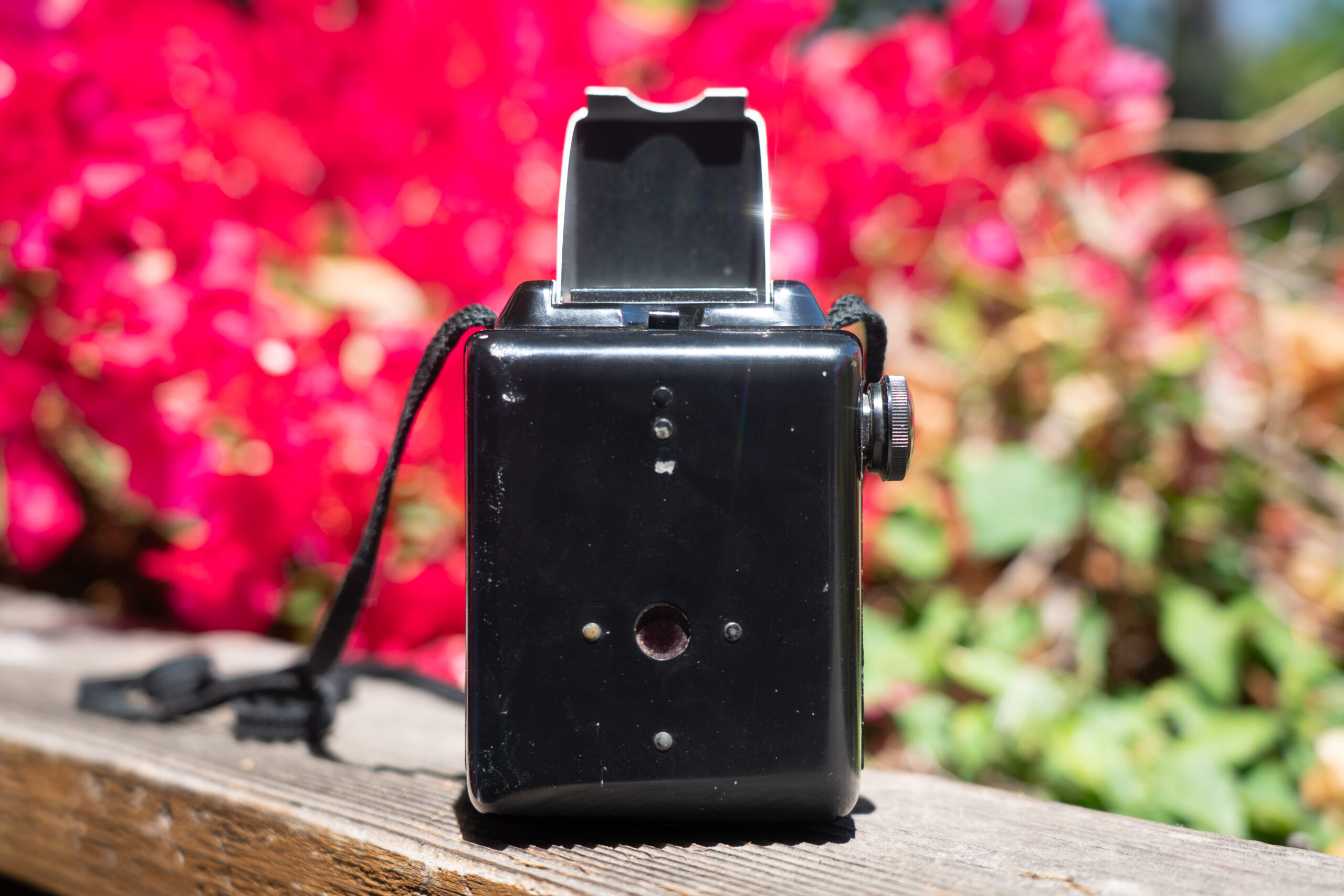
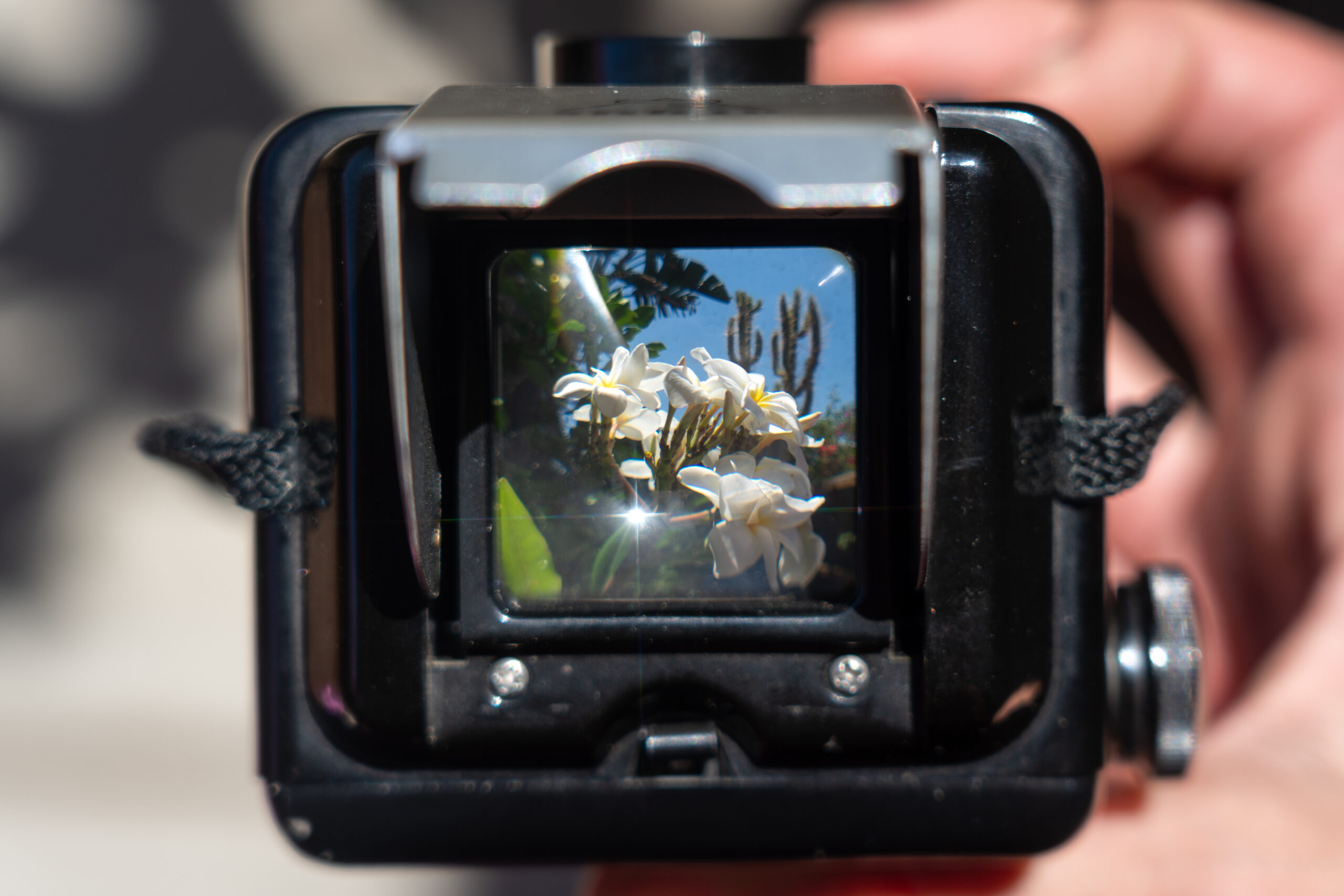
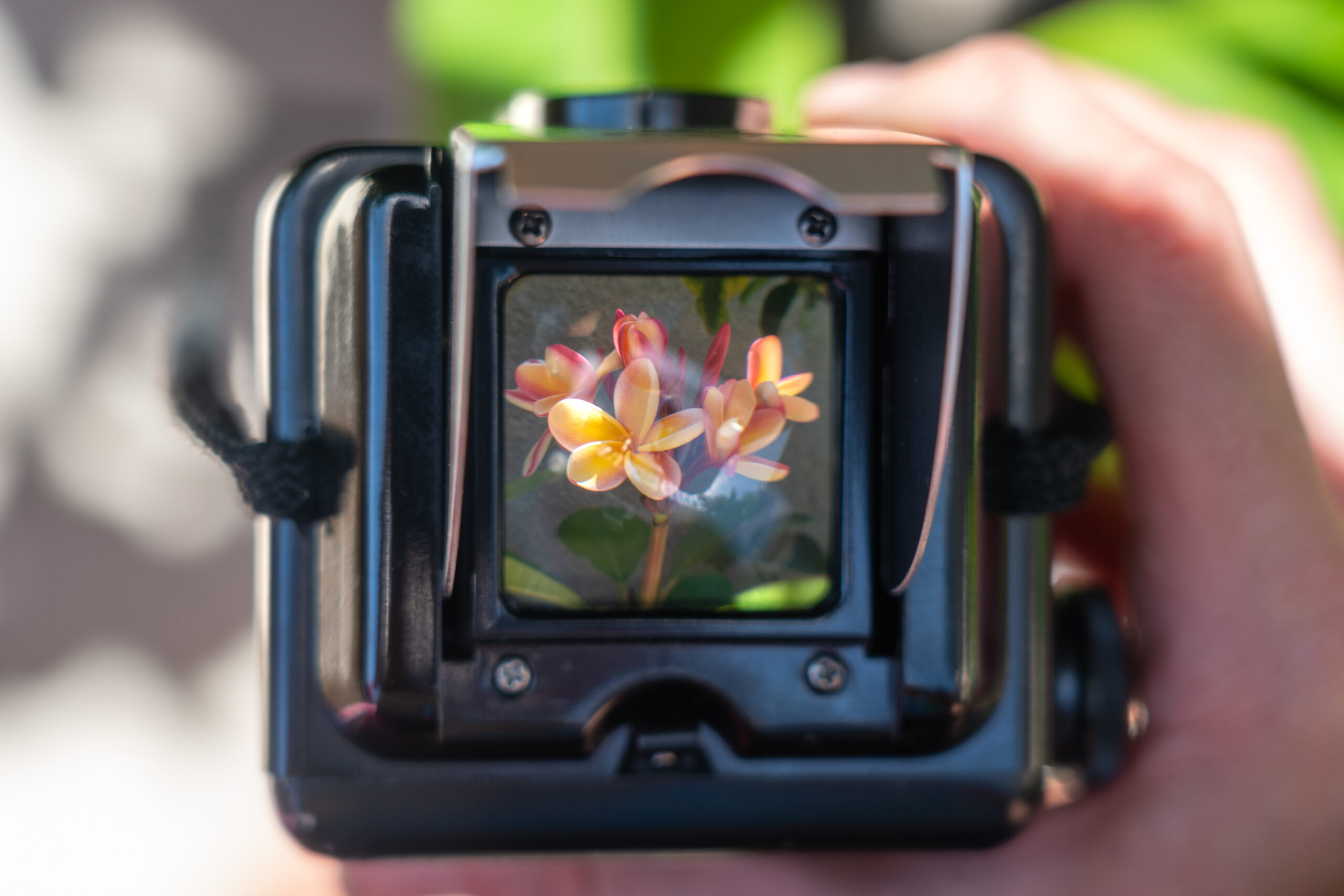
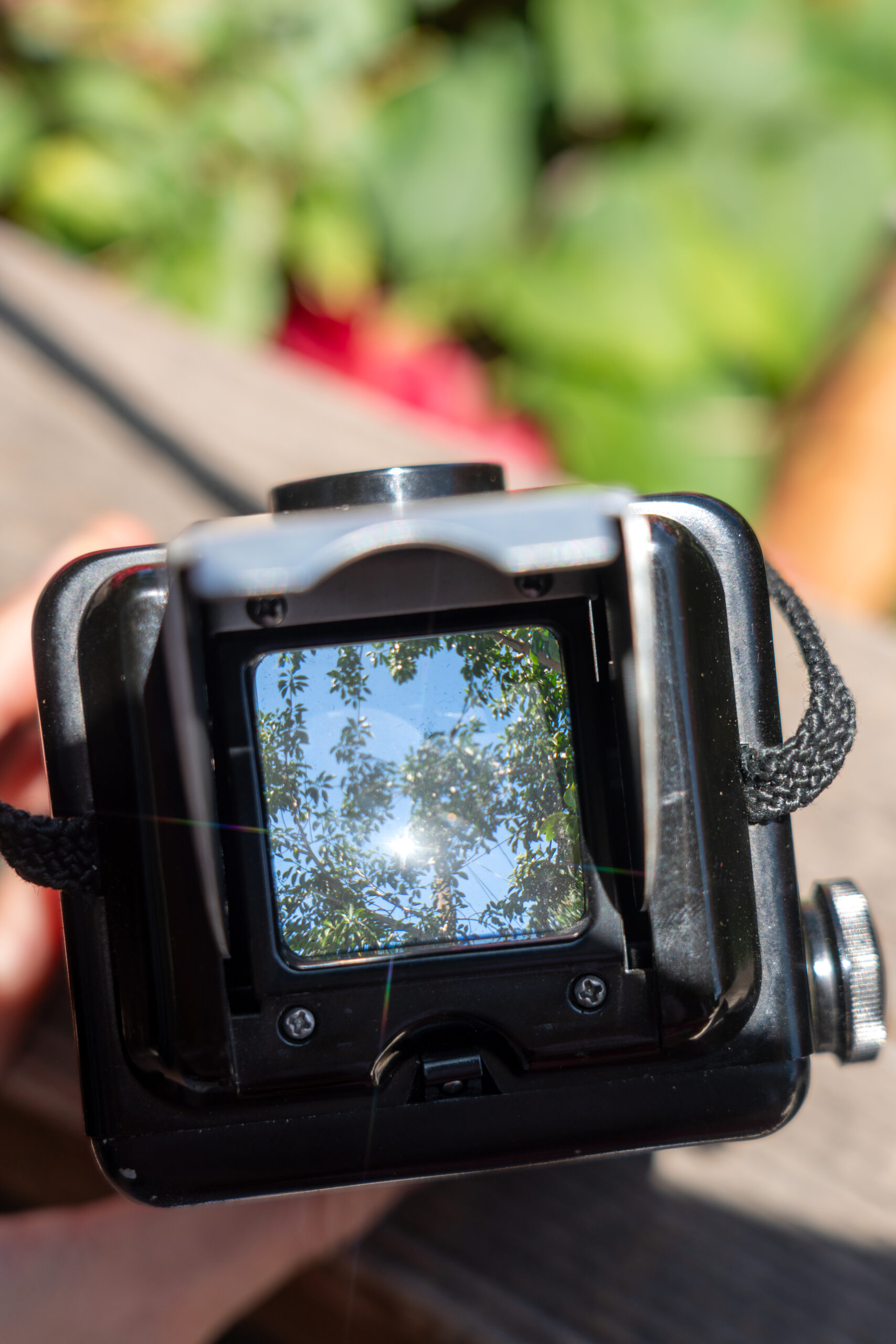
Kodak Duaflex III vs Argus Argoflex 75, side by side
If you just want the verdict: the Duaflex III takes the better photo, and the Argus 75 is the easier camera. Here’s the quick version if you’re deciding between the two, or just trying to tell them apart at an estate sale.
Feature
Maker / city
Years
Lens
Focus
Aperture
Shutter
Red window
Body
Kodak Duaflex III
Kodak, Rochester NY
1954-1957
Kodar 72mm f/8 triplet
Yes, to ~3.5 ft
f/8 / f/11 / f/16
“I” + “B”, ~1/30 sec
Covered
Aluminum + leatherette
Argus Argoflex Seventy-Five
Argus, Ann Arbor MI
1949-1964
Lumar 75mm ~f/11-f/12 single element
Fixed (~7 ft to infinity)
Fixed ~f/11-f/12
“Inst” + “Time”, ~1/50 sec
Always open (light-leak risk)
Plastic + metal door
(Both take 620 film, shoot 6×6, and use the same waist-level bubble finder — the differences are above.)
Same camera in spirit, but the Duaflex gives you a better lens and some control, while the Argus is a point-and-shoot that’s almost impossible to break. Want one keeper? The Kodar-lensed Duaflex. Want to shoot without thinking? The Argus.
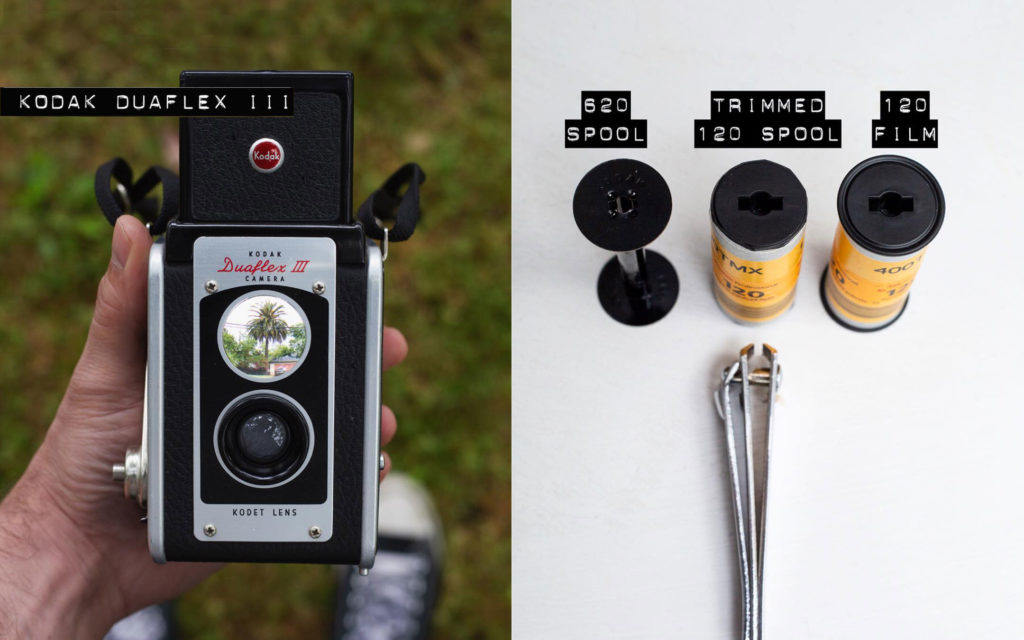
Image Credit: the Darkroom
The 620 film situation (is it the same as 120? can you still buy it?)
Short answer: 620 film is exactly the same film as 120 — same emulsion, same width — just wound onto a smaller spool. So yes, you can absolutely still shoot these cameras. Here’s the catch.
Kodak discontinued 620 back in 1995, so you can’t walk into a shop and grab a roll off the shelf. The spool is the whole difference: a 120 spool is larger with wider flanges, and a 620 spool is thinner and narrower. Same film inside, different reel.
Why two spool sizes for identical film? Kodak’s official line was that the slimmer 620 spool let manufacturers build thinner, more compact cameras. And sure, maybe. But honestly, it was about building a closed ecosystem. Keep the spool just different enough from standard 120 and you force everyone to buy Kodak film for their Kodak cameras.
Either way, you’ve got a few ways to feed these:
- Buy it pre-rolled. The Film Photography Project sells film already spooled onto 620. Easy button, and no darkroom needed.
- Respool it yourself. If you’ve already got 120 lying around and want to save money, grab a few empty 620 spools (easy to find — Amazon, FPP, B&H all carry them) and respool your 120 onto them inside a dark bag. Fiddly the first time, second nature by the third. On the Argus you can even skip most of that with the feed-side trick: a 120 spool fits the supply side, and you only need a 620 spool for take-up.
- Clip the spool. The other DIY route: instead of respooling, take heavy-duty nail clippers to a 120 spool and trim its wider flanges down until it drops into the 620 side. Plenty of photographers swear by it, and it saves you the dark-bag dance. Fair warning though — you’ll usually still need a real 620 spool for the take-up side, stray plastic shavings can sneak into the camera (smooth the edges and keep them off the film), and a spool trimmed unevenly can wind stiff or leak light. Personally I just spent the couple bucks on 620 spools and reuse them roll after roll, which skips all of that. But if you’re handy and comfortable, clipping absolutely works.
Here’s what each camera got this round, one color and one black and white:
- Kodak Duaflex III: Kodak Ektar 100 and Kodak T-Max 100, both respooled from 120.
- Argus Argoflex Seventy-Five: Kodak Portra 160 (respooled) and the Film Photography Project’s own pre-spooled 620 black and white.
Developing? Good news again: since 620 is just 120, most labs that develop 120 can develop your 620 too. I sent mine to Nelson Photo here in San Diego. One warning though — if you ever pull an ancient, mystery roll of 620 out of a thrifted camera, take it to a shop that specializes in old or delicate film, not your standard lab. Decades-old film of unknown storage is its own gamble and deserves careful hands.
One tip regardless of how you feed them: hang onto every 620 take-up spool you get. They’re reusable and worth keeping.
Shooting the Duaflex III and Argoflex 75
Shooting a waist-level box camera changes how you move. You hold it at your stomach and look down, and the scene shows up mirrored and bright in the finder. I like how (anonymous?) it is… people don’t really notice what you’re doing so you can get some really sick candid shots.
The Duaflex rewarded a little more care. With the focus set and the right weather symbol picked, the center came back sharp, with the warm, soft rendering you get from an old uncoated lens and never quite get from digital. The Duaflex wasn’t totally innocent either — my color roll picked up a few vertical streaks down one edge, which looks more like a sloppy respool than the camera. Still cleaner than the Argus, just not spotless.
The Argus asked for nothing and gave back about what you’d expect: soft, square, a little dreamy, sharpest around ten feet, corners falling off gently. The open red window did its thing, especially on the black-and-white roll (soft fog and streaks across most of those frames). In bright sun that little window is basically a slow light leak.
Sample photos: both cameras on 620 film
$ So which one should you actually buy? $
Get the Duaflex III if you care most about the photo, or the Argoflex 75 if you want dead-simple point-and-shoot. Both if you stumble on the pair cheap. Here’s why.
Both are cheap and easy to find, usually $10 to $35 depending on condition and whether the box or case comes with it. Neither has batteries to corrode or electronics to fail, so a “for parts” listing is often just dusty, not broken.
Get the Duaflex III if you want the better photo — the focusing Kodar lens and three apertures give you more sharpness and control, and the covered window means fewer surprise light leaks. It’s the one I’d keep.
Get the Argoflex 75 if you want the simplest version of this: one aperture, one speed, no focus, nothing to set. Throw it in a bag and see what comes back, light leaks included.
Get both if you come across the pair. They’re cheap, they’re basically twins, and shooting them side by side (with my bestie!) was the whole fun of this.
FAQ
What film does a Kodak Duaflex or Argus 75 use?
Can you use 120 film in a Kodak Duaflex III or Argus Argoflex 75?
Are the Duaflex and Argus 75 good for through-the-viewfinder (TtV) photography?
What is a Kodak Duaflex or Argus Argoflex 75 worth?
Where can I get 620 film developed?
How do you load or respool 620 film?
Resources & Further Reading
These were the most useful, most accurate sources I leaned on while researching these two:
- Camera-wiki: Kodak Duaflex — concise, factual reference. https://camera-wiki.org/wiki/Kodak_Duaflex
- Kodak Duaflex III manual (PDF) — the original factory instructions, scanned. https://www.cameramanuals.org/kodak_pdf/kodak_duaflex_iii.pdf
- Camera-wiki: Argus Argoflex Seventy-Five — the canonical spec source. https://camera-wiki.org/wiki/Argus_Argoflex_Seventy-Five
- Argus Argoflex 75 manual (PDF) — the original factory instructions, scanned. https://www.cameramanuals.org/argus/argus_argoflex_75.pdf
- Mike Eckman, “Argus Seventy-Five (1955)” — the deepest write-up out there, including a shutter teardown. https://mikeeckman.com/2015/10/argus-seventy-five-1955/
- Myles Katherine, “Kodak Duaflex 620 Camera Review” — great on the 620 film question and where to buy it. https://www.myleskatherine.com/blog/2024/8/4/kodak-duaflex-620-camera-review-with-sample-photos-in-portugal
- Wikipedia: Through the Viewfinder photography — background on TtV and the cameras used for it. https://en.wikipedia.org/wiki/Through_the_Viewfinder_photography
- The Brownie Camera Page: respooling 120 to 620 — the classic illustrated how-to. https://www.brownie-camera.com/respool/respool.shtml
- The Darkroom: “Resurrect Old 620 Film Cameras With 120 Film” — the quick illustrated guide to the nail-clipper spool-trimming hack. https://thedarkroom.com/resurrect-old-620-film-cameras-with-120-film/
Shot on 620 film around Del Mar and Ocean Beach, San Diego. Come find me on Instagram: @sunsets.n.chill