Today I’m diving into research on a different kind of lens than my usual cameras and photography topics.
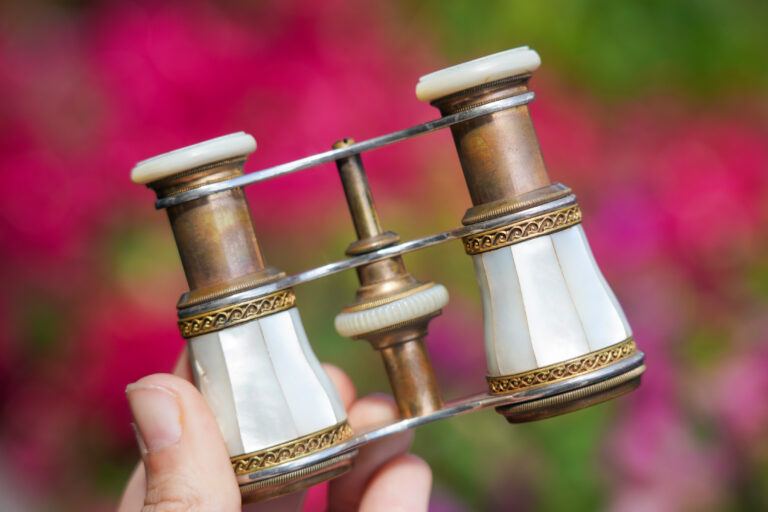
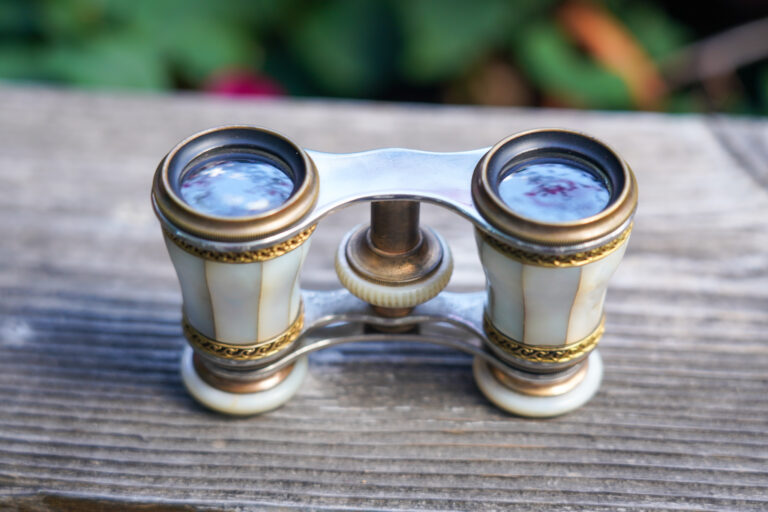
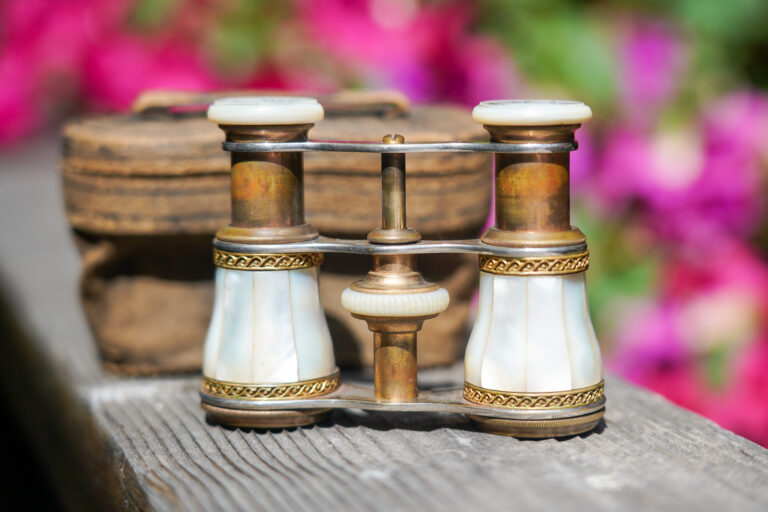
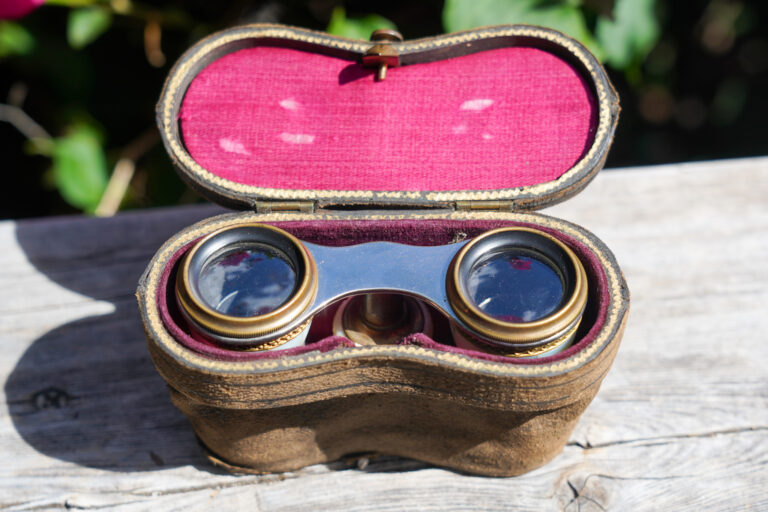
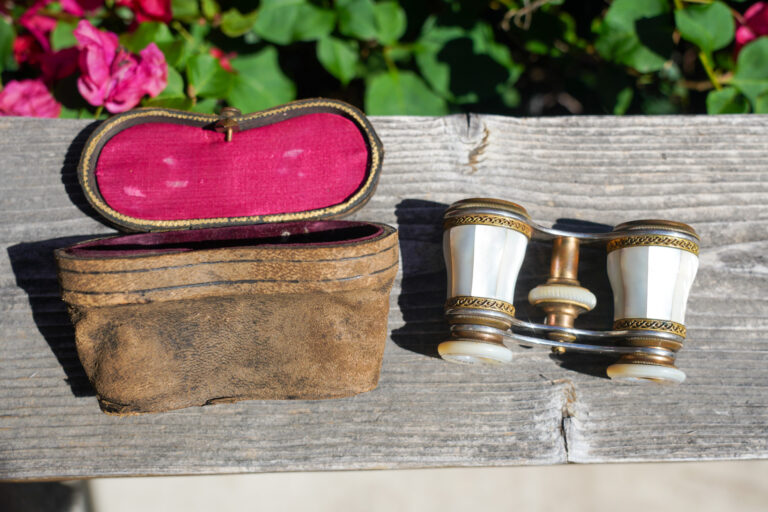
A few weeks ago I found a pair of Le Roque Paris mother of pearl opera glasses at a local antique store for only $60 — and they came with the original case. Mother of pearl barrels, ornate gilt brass scroll banding, a silver-toned bridge, and an aged leather case with red silk lining and a tiny stag pressed into the metal clasp button. Absolutely gorgeous.
Comparable pairs in good condition go for $150 to $400+. Mine isn’t quite there — the left-hand eyepiece is missing the eye lens (the small lens closest to your eye that helps focus the view). Sad! But other than that, this thing is full of history and I can’t stop looking at it. The right barrel still focuses smoothly after over a hundred years.
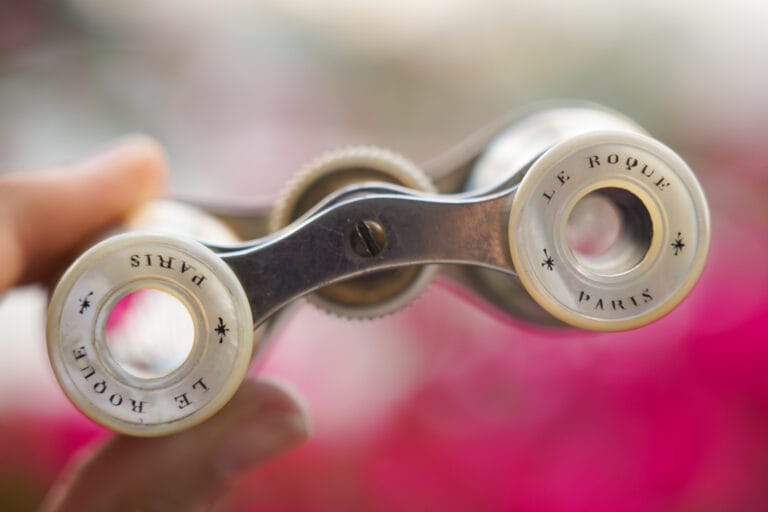
And stamped into the MOP eyepiece rings: Le Roque / Paris.
Here’s a closer look at the glasses and case before we get into the history:
I’d never heard of them. I figured I’d find some nice Wikipedia article about a beloved 19th-century Parisian optical house. Instead I found… basically nothing. A couple eBay listings. A Facebook Marketplace post. That’s it.
I tried everything. Google searches. Reverse image search. I even threw it at AI and asked Claude to dig through auction databases, French trade directories, and Paris Exposition records going back to 1889. You know what all of that turned up? A couple eBay listings and a Facebook Marketplace post. Apparently Le Roque has successfully evaded the entire internet. Geeeeesh.
So I went down the rabbit hole.
Who even is Le Roque?
Le Roque left almost no archival trace. I searched major auction databases, specialist antique dealers, museum collections, French trade directories, Paris Exposition records from 1889 and 1900. Nothing. Only a handful of marketplace listings confirm the brand existed at all.
The most likely explanation is that Le Roque wasn’t a manufacturer at all — just a small Parisian retail optician that had glasses made by one of the big workshops (most likely Lemaire or Colmont) and stamped with their own name. This was totally standard practice. Lemaire supplied glasses sold under the names of American importers. Colmont produced pieces engraved for Belgian retailers. A small Paris shop doing the same thing would have been completely unremarkable.
The biggest clue is actually in the stamp itself. The major manufacturers always included “FABT” (short for Fabricant, meaning maker) in their eyepiece markings — Lemaire read “LEMAIRE FABT * PARIS *”, Colmont used “FT.” Le Roque just says the name and city. That’s how a retailer signs something, not a manufacturer.
When were these made?
The style points to the late 1800s, but the real dating clue is stamped right on the metal bridge: “Made in France.”
In 1891, the US McKinley Tariff Act required imported goods to show their country of origin. But the specific phrasing — “Made in” followed by the country — was a separate US requirement that didn’t kick in until 1914. So the full “Made in France” stamp means these were exported to America sometime after 1914, putting manufacture at roughly 1890-1920.
These glasses crossed the Atlantic. Someone in the US bought them, used them, kept them for decades. They ended up at an antique store in San Diego. Now they’re on my desk in Ocean Beach.
What were opera glasses actually for?
This is the fun part.
In Belle Époque Paris, you didn’t go to the opera just to watch the opera. The Palais Garnier, inaugurated in 1875 and the most opulent theater in the world, was designed as much as a social stage as a performance venue. Proust called the subscriber boxes “many little suspended salons.”
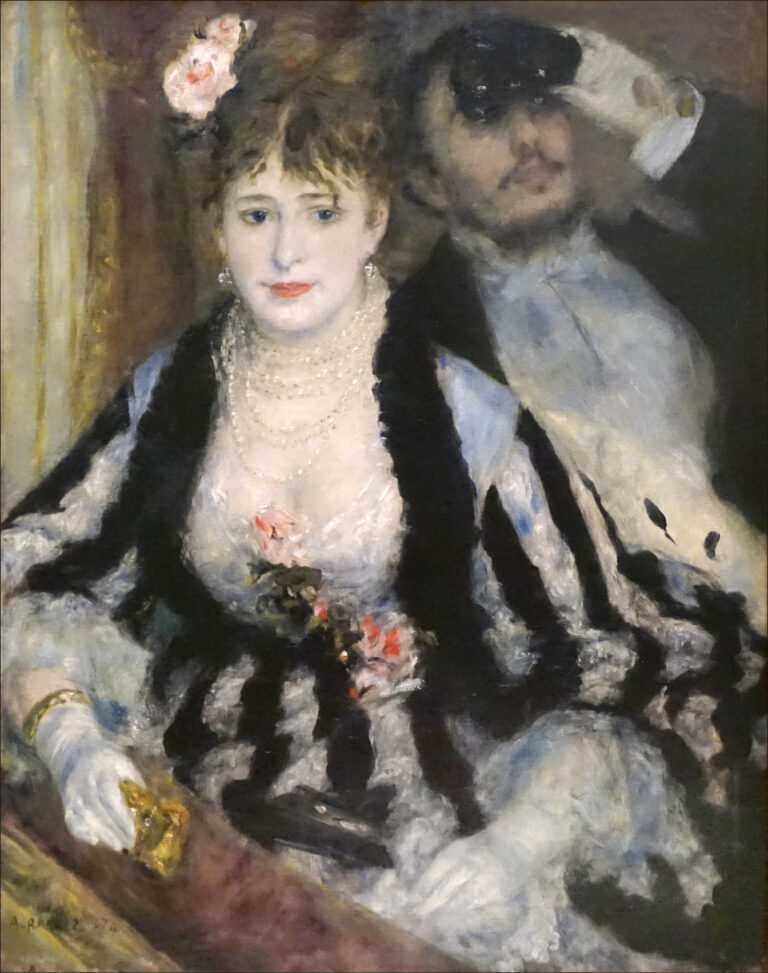
Opera glasses served a dual function. The word lorgnette comes from the French verb lorgner — literally “to ogle” or “to eye furtively.” These were tools of social surveillance as much as optical instruments. Women used them to scrutinize rivals’ dresses and spot companions across the room. Men used them to scan for acquaintances and business contacts. Renoir’s La Loge (1874) captures it perfectly: the woman in the theater box is the subject, while the man behind her trains his binoculars at the audience, not the stage.
La Loge ('The Theatre Box'), an 1874 oil painting by Pierre-Auguste Renoir.
Owning a beautiful mother of pearl pair was a social statement. It said: I belong here, I have taste, I come to the opera regularly. These were given as wedding gifts. They were part of what it meant to be a certain kind of person in a certain kind of world.
In other words? People were there for the tea. Who’s sitting with who, what she’s wearing, whether he looked over. The opera was just the background noise.
That world is long gone. But somehow this little pair made it to a San Diego antique store and into my hands for sixty dollars. The history doesn’t just live in the records — it lives in the brass and the nacre and the worn leather case and the tiny stag on the clasp you have to look closely to even notice.
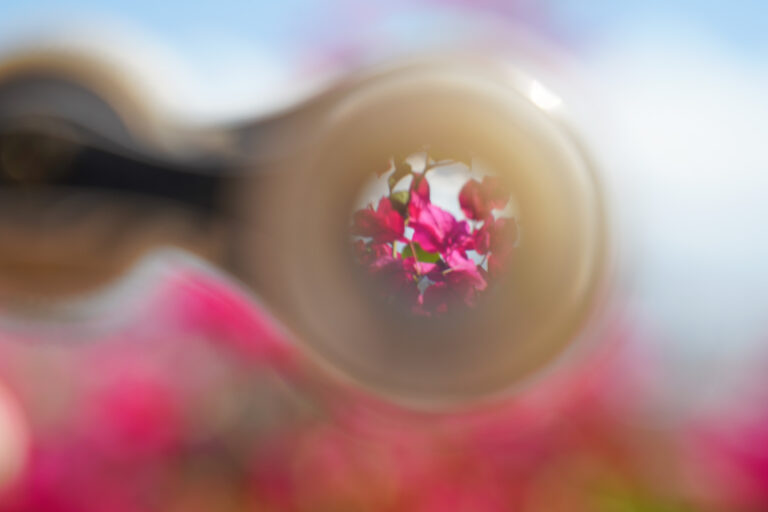
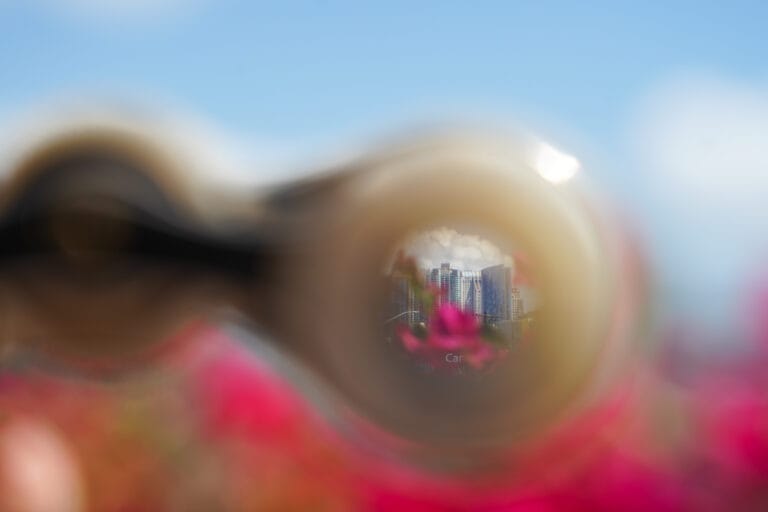
And this is what over a hundred years of Belle Époque Paris actually looks like through one lens:
If you know anything about Le Roque, antique opera glasses, or even just have a pair sitting in a drawer somewhere, drop a comment or find me on instagram @sunsets.n.chill. I want to know everything!