I collect a lot of old things. Cameras & magazines, mostly. But sometimes I walk into an antique store, and something very odd & curious strikes me. And, sometimes, I don’t fully understand why until I take it home and I’m knee-deep in a research spiral at 2am three days later.
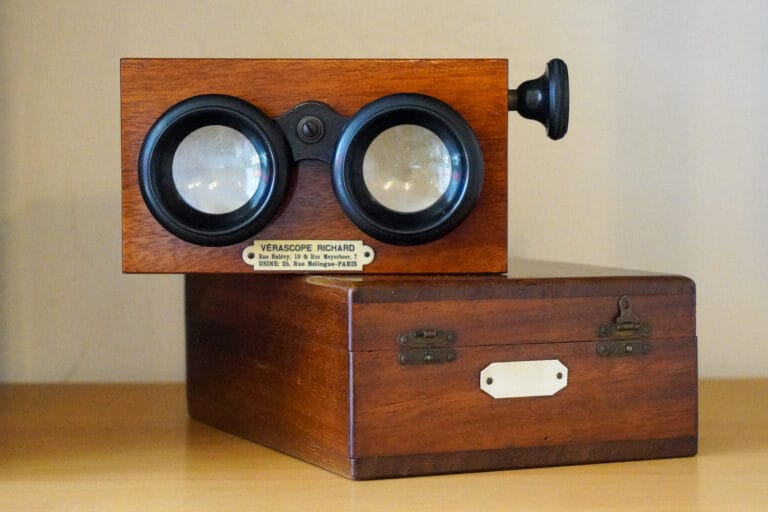
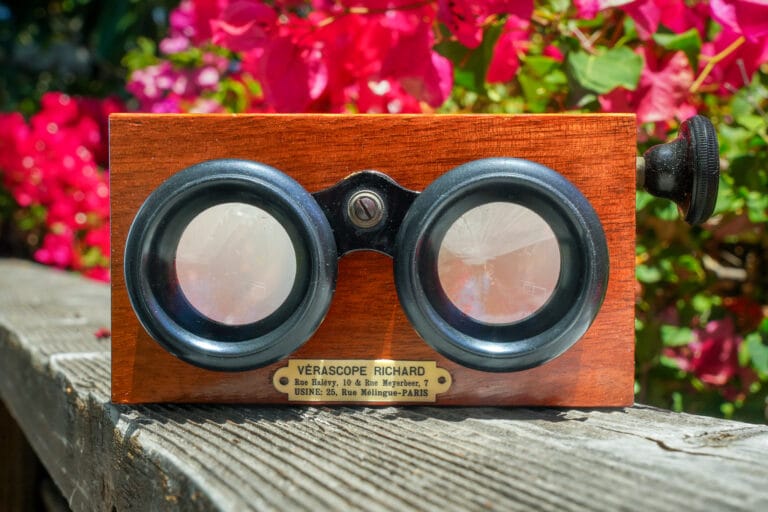
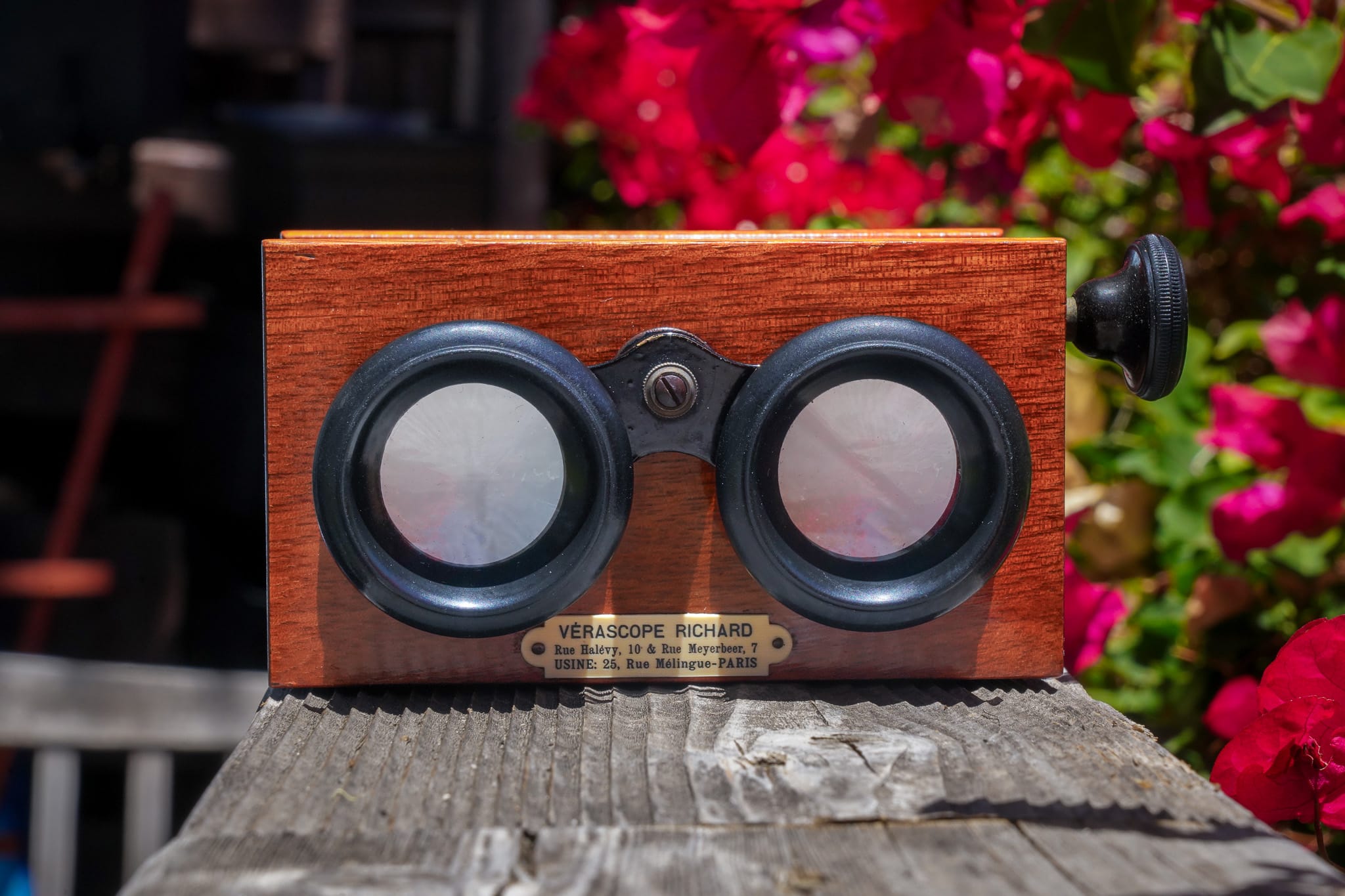
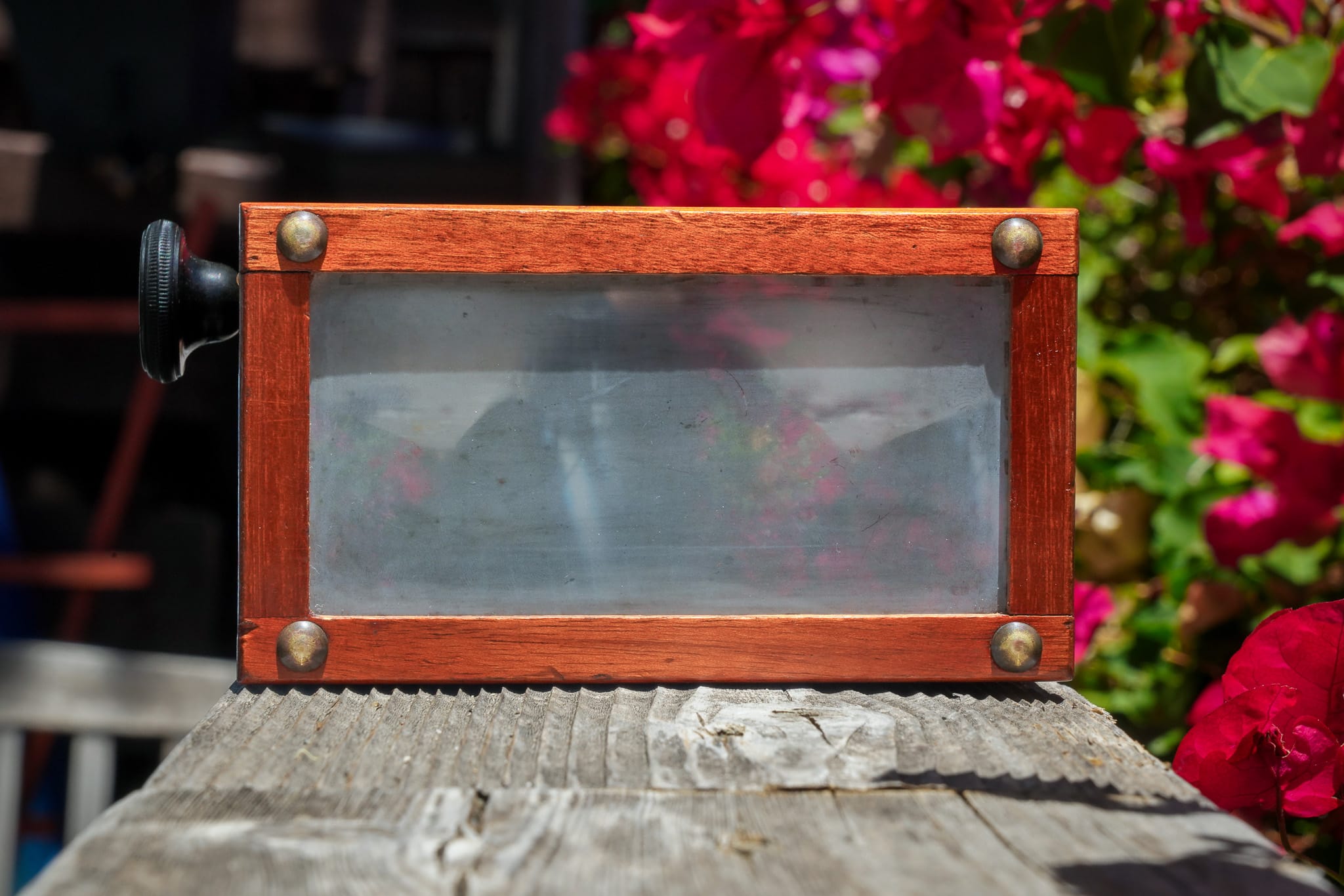
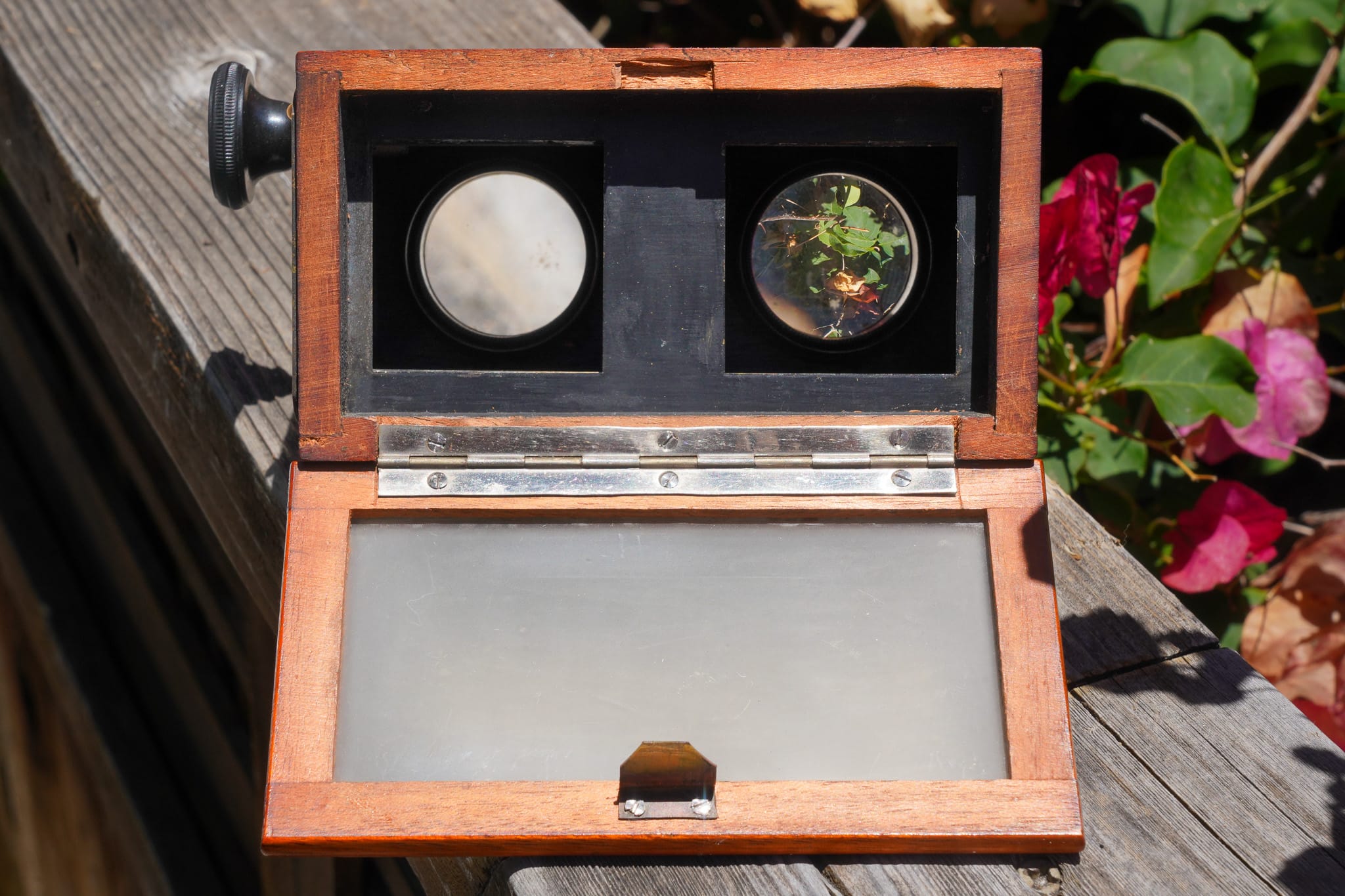
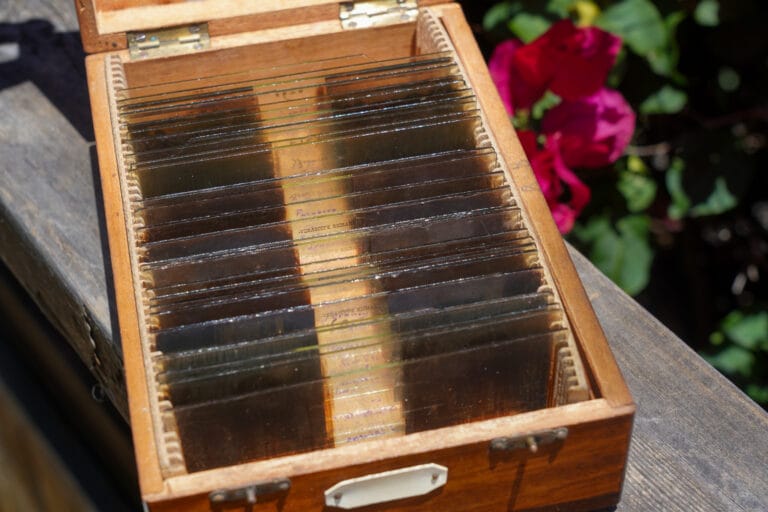
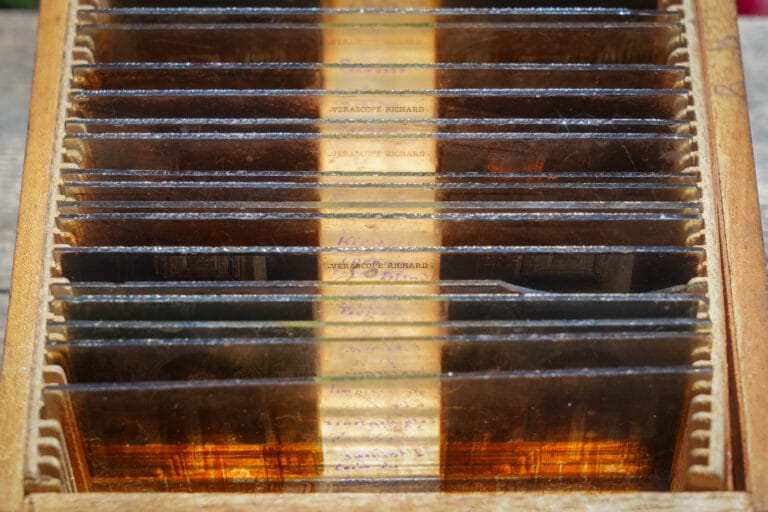
In Brevard, North Carolina, I came across a Vérascope Richard stereoscopic viewer, a wooden “3D photo viewer” from ~1900, along with a storage box full of 45x107mm glass stereo slides. These were clearly very old, and much more interesting than the paper stereo cards I’m used to finding at antique stores. It was listed at $575, but the store had a sign up that said “We are very full, please make an offer!” So I did. Talked them down to less than half, threw in a few vintage magazines I’d been eyeing (to sweeten the negotiating a bit), and it probably didn’t hurt that I had Maui with me… the staff absolutely loved him!
At that point I thought I’d gotten a great deal on a cool vintage stereo viewer and some interesting old glass plates. I did not yet know what I was actually holding: possible firsthand photos of the French Imperial Family after Napoleon III died, and they left France for England.
Article Overview
- A Vérascope Richard stereoscopic viewer and 27 antique glass stereo slides (45x107mm format) found at an antique store in Brevard, North Carolina
- The slides are likely original photographs — a personal archive, not commercial products
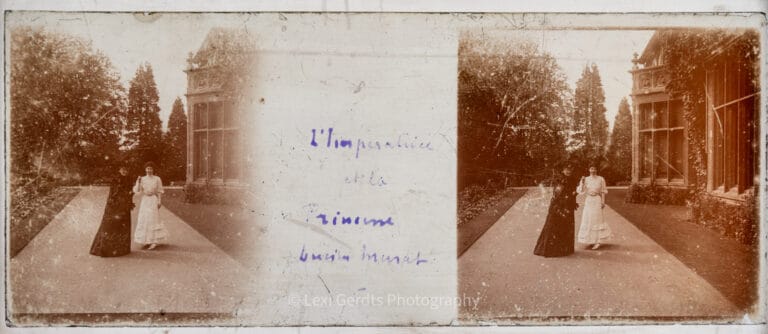
- Handwritten captions reference Empress Eugénie (wife of Napoleon III) by name, including “L’Impératrice et la Princesse Lucien Murat” and a portrait caption identifying the Empress and her sister
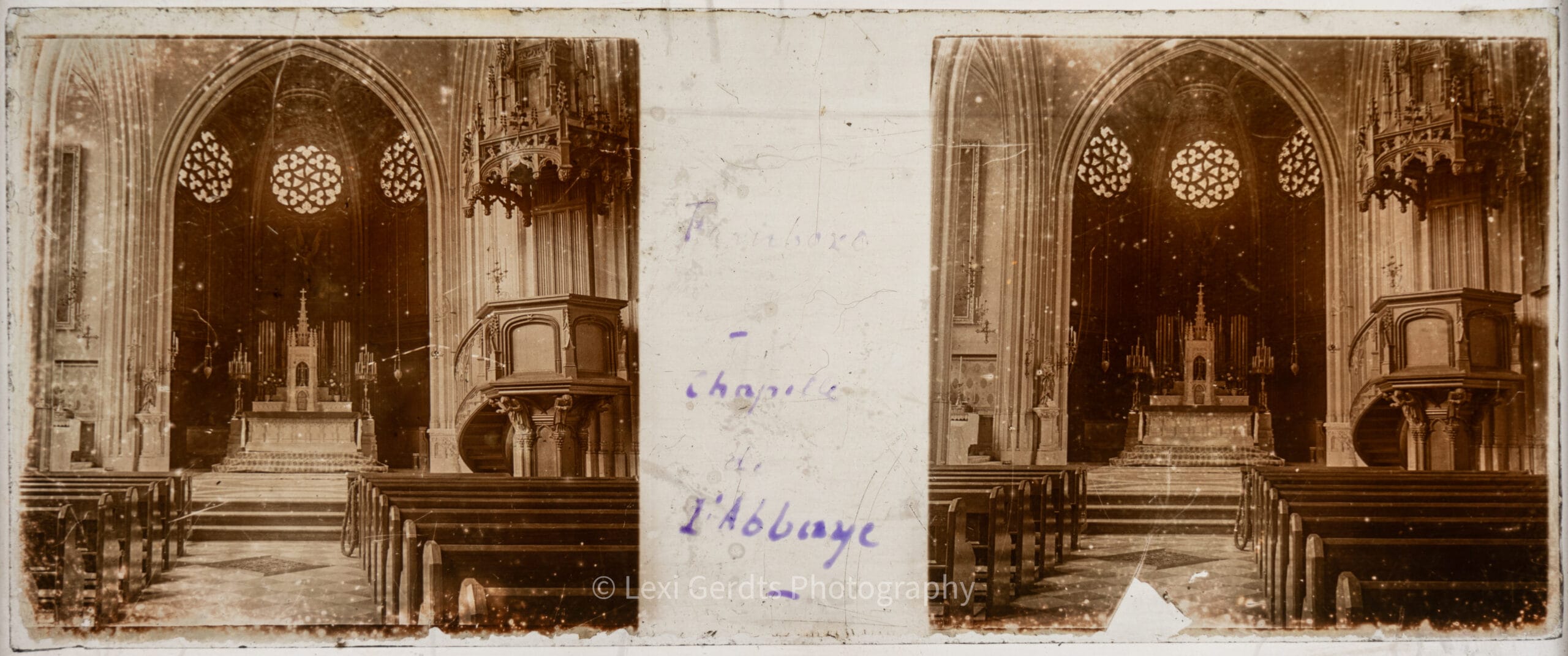
- Slides depict Farnborough Hill interiors (Eugénie’s estate, 1880–1920), Napoleon III’s sarcophagus at Saint Michael’s Abbey, and travel locations across Spain, Gibraltar, Scotland, India, and Japan
- Dating window: c. 1907–1920, based on deep research, context clues & the viewer’s plaque address. However, it’s very possible viewer + slides were combined as a pair in later years.
- I sought out a stereoscopic archivist expert — and found Denis Pellerin. He is a Sorbonne-trained photo historian, stereoscopic expert, and come to find out, he’s Brian May‘s archivist. He’s also the author of books on the Imperial Family of France, amongst many others. He independently confirmed the Farnborough connection and identified the sarcophagus.
- Evaluation and formal appraisal are ongoing, but as a deep research professional myself, I’m running out of reasons to believe these aren’t real.
So what is a Verascope Richard?
Quick background for anyone who hasn’t gone down the stereoscopic rabbit hole yet.
In 1893, a French instrument maker named Jules Richard introduced a compact stereo camera system called the Vérascope. His family had been making barometers and scientific instruments in Paris since 1845, but Jules saw something in photography. His idea was to shrink stereoscopic imaging – which at the time required huge, expensive glass plates and basically professional-level equipment — into a format small enough for regular people to use.
The format he created was 45x107mm: two small side-by-side images on a single glass plate that produce a 3D effect when viewed through a stereoscope. It worked. The Vérascope became the best-selling stereo camera of its era, with an estimated 52,000 to 100,000 cameras produced. Richard built an entire ecosystem around it — cameras, viewers, developing tools, accessories — and production continued into the 1950s. The company still exists today as JRI, though they’re back to precision instruments.
Basically, this was the turn-of-the-century version of a VR headset. Rich French families buying a gadget so they could look at 3D photos in their living rooms. Same energy, different century.
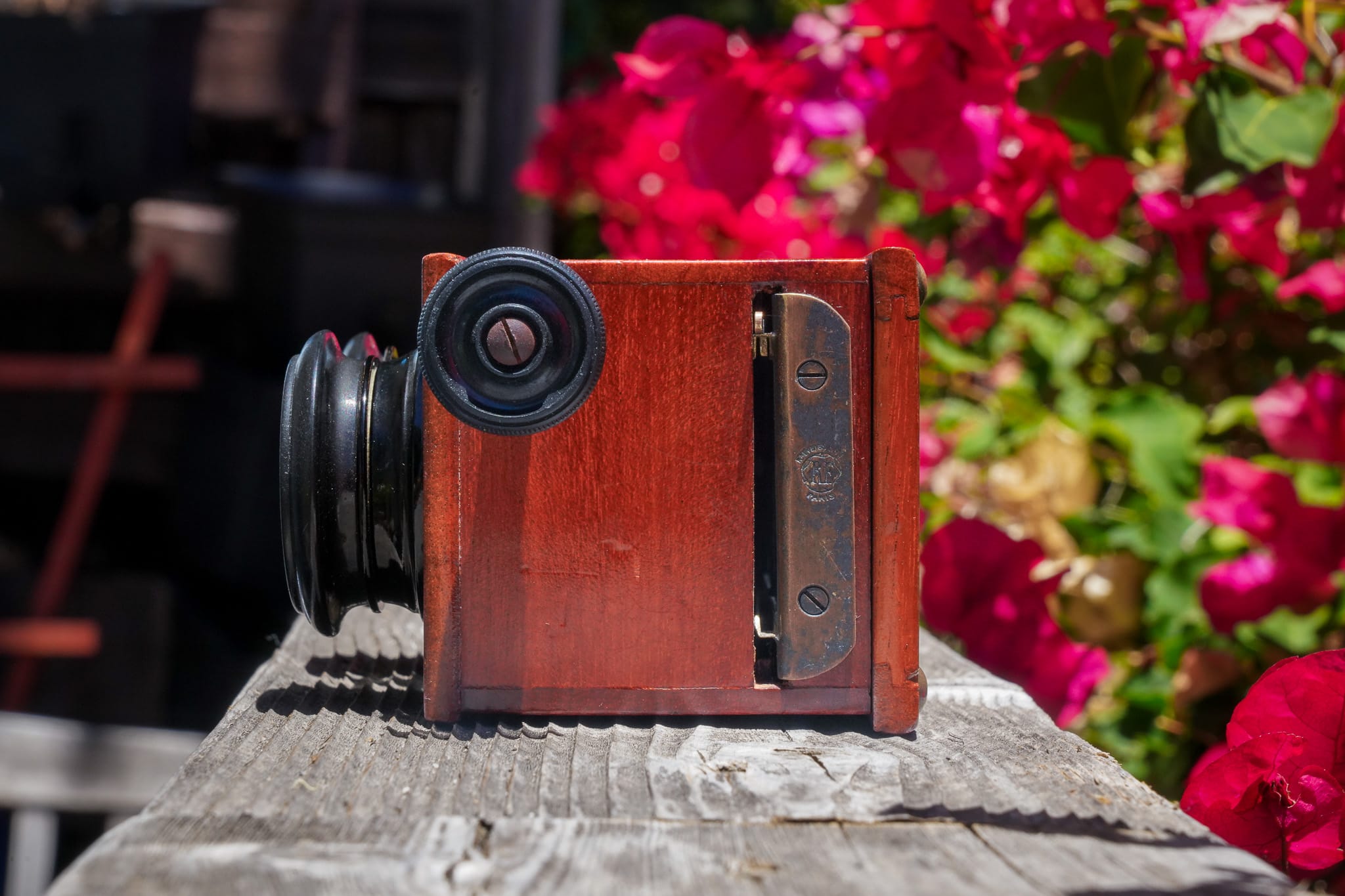
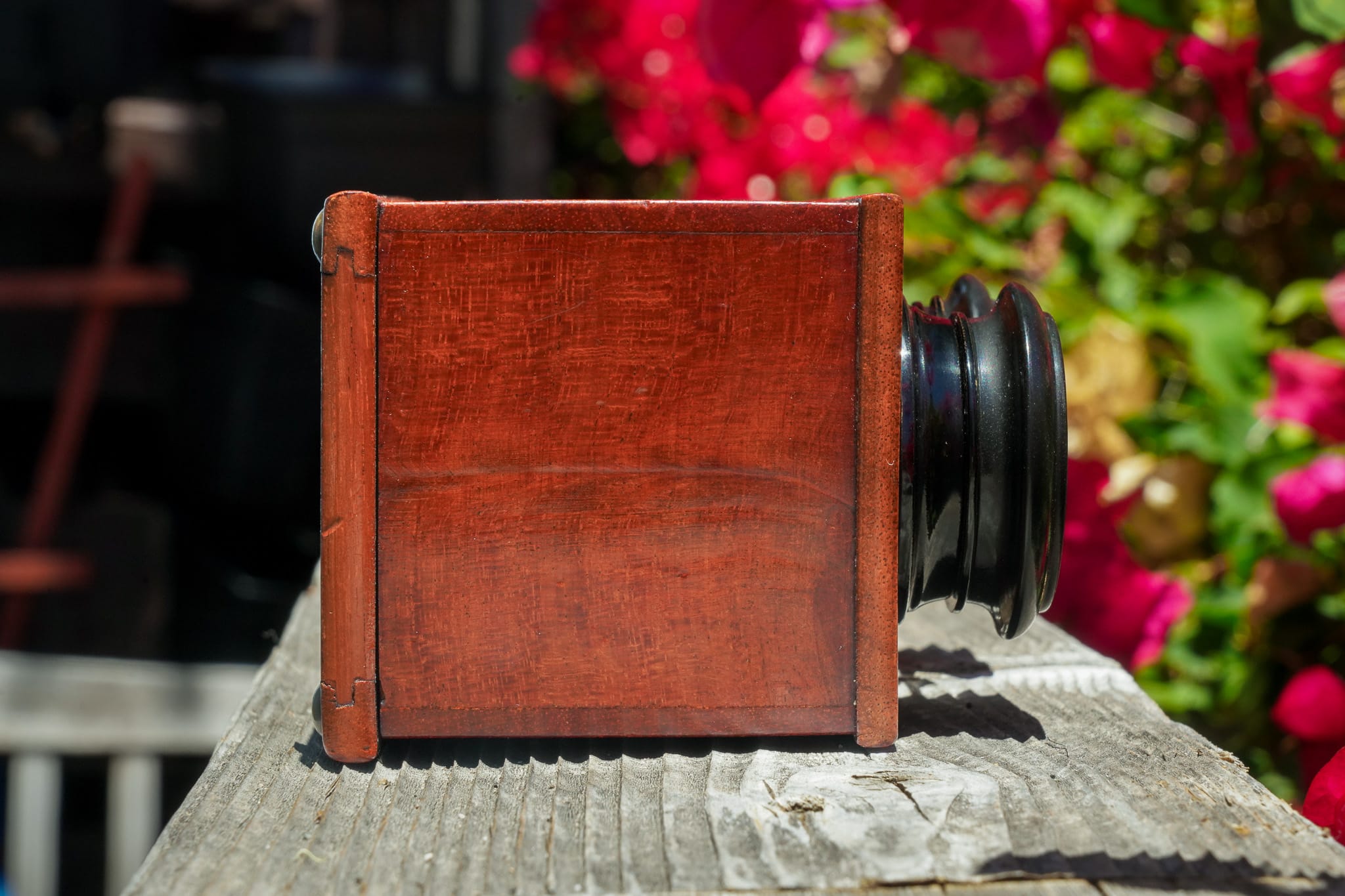
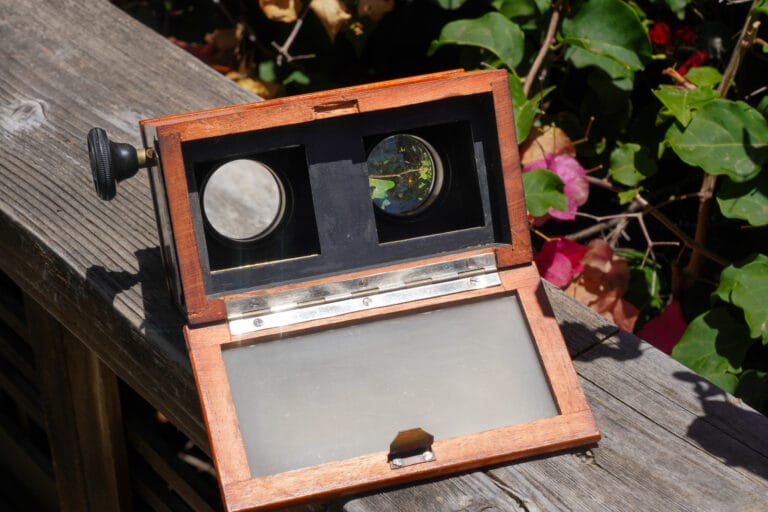
The viewer I found is part of that system. Wooden and metal construction, rack-and-pinion focusing lenses, and a hinged rear door with ground glass that diffuses light through the slides from behind. You slide a glass plate in, adjust the lenses to your eyes, and the image pops into three dimensions. Over 120 years old and it still works like a charm.
These aren’t commercial photos
Here’s where it gets interesting.
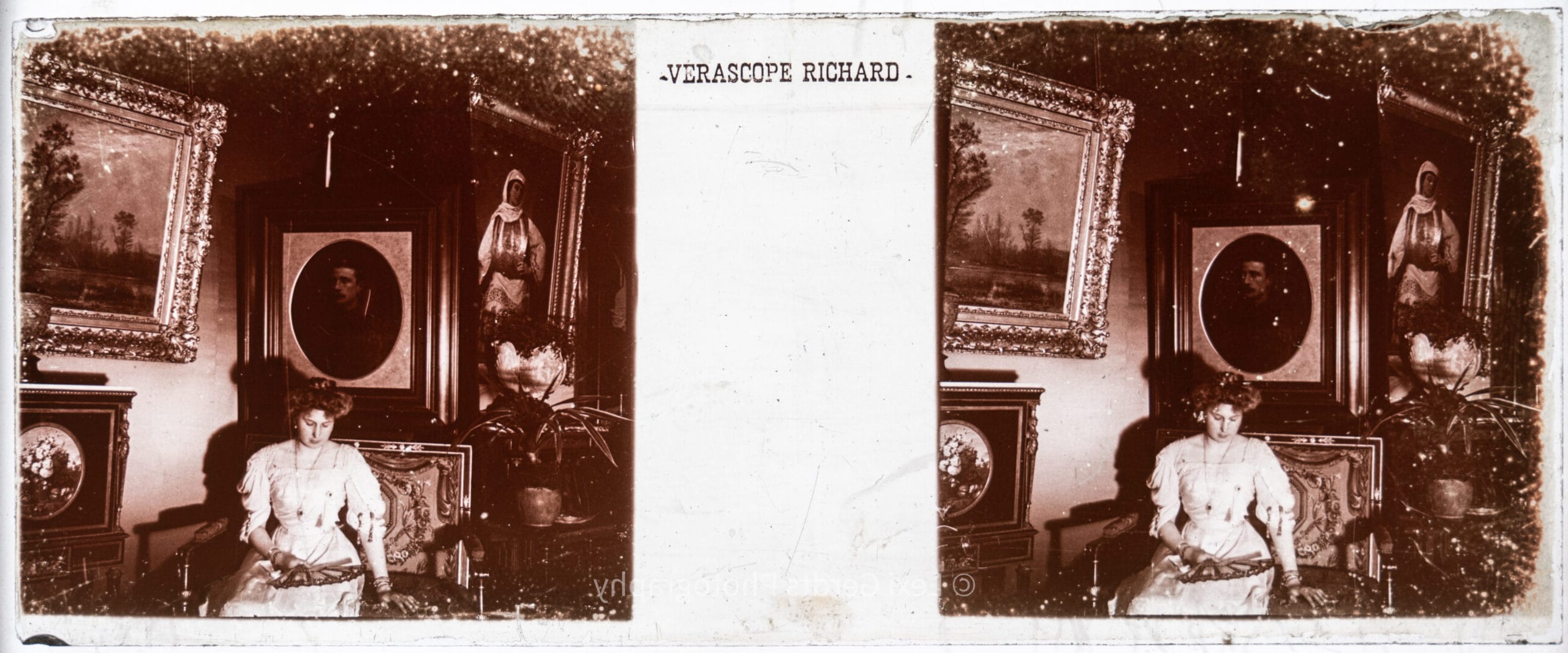
When I started going through the slides more carefully, I noticed something. Richard sold branded blank glass plates to amateur photographers for use in their Vérascope cameras — plates printed with “VÉRASCOPE RICHARD” but with no catalog number. At first I assumed all my slides were commercially produced views, like 3D postcards. Turns out that’s wrong.
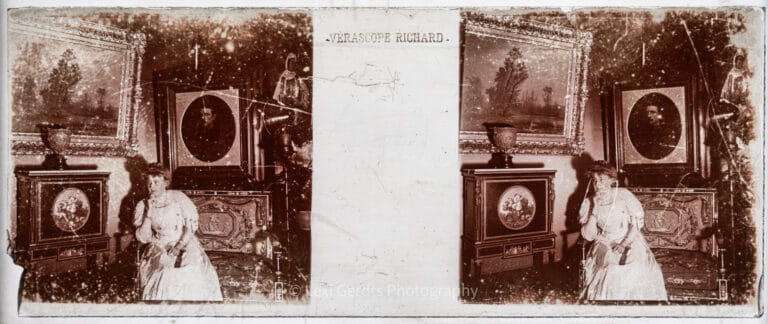
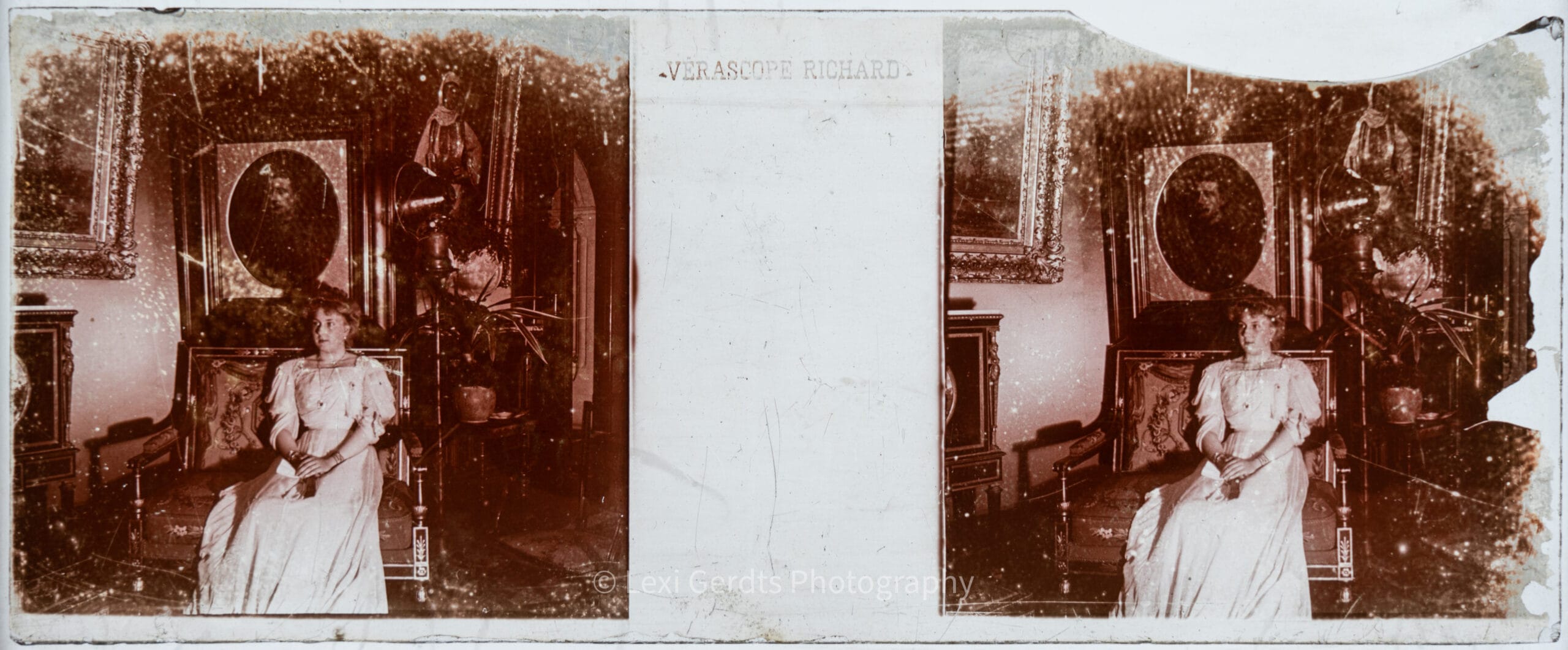
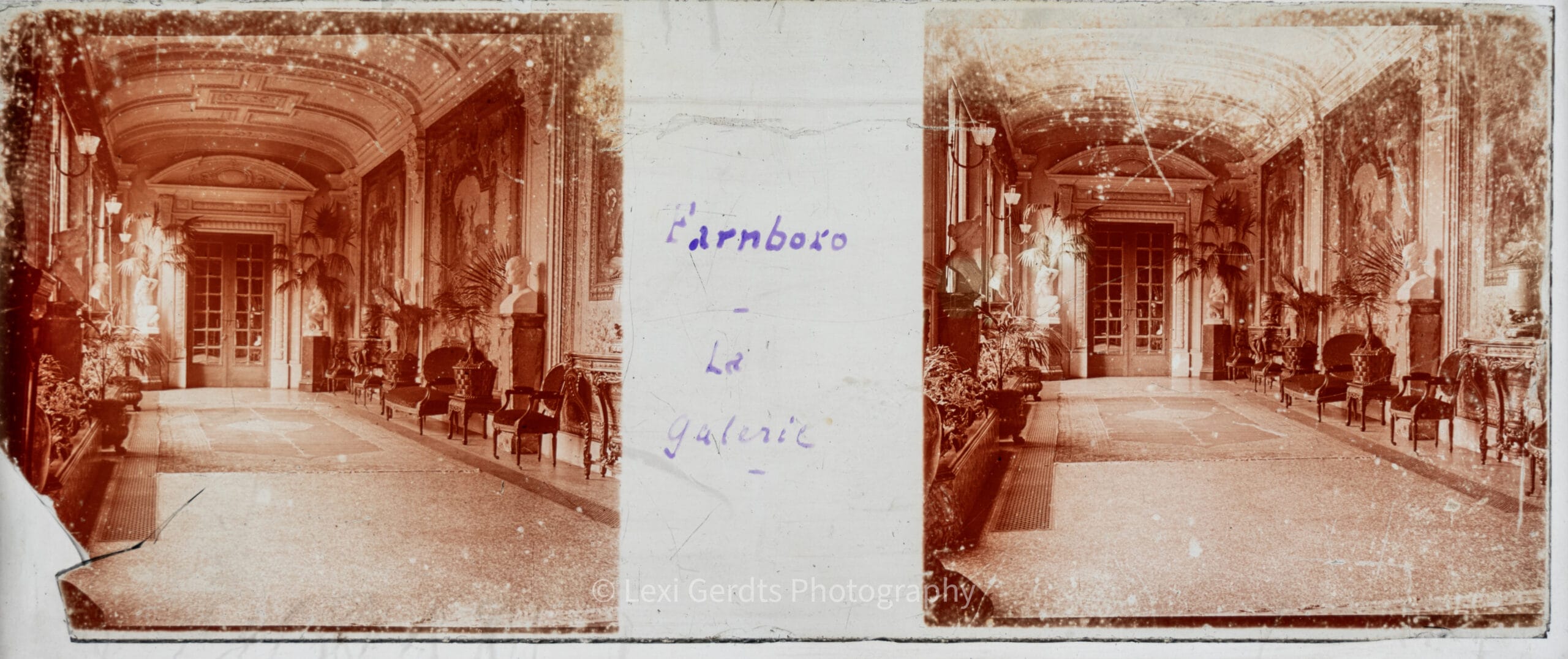
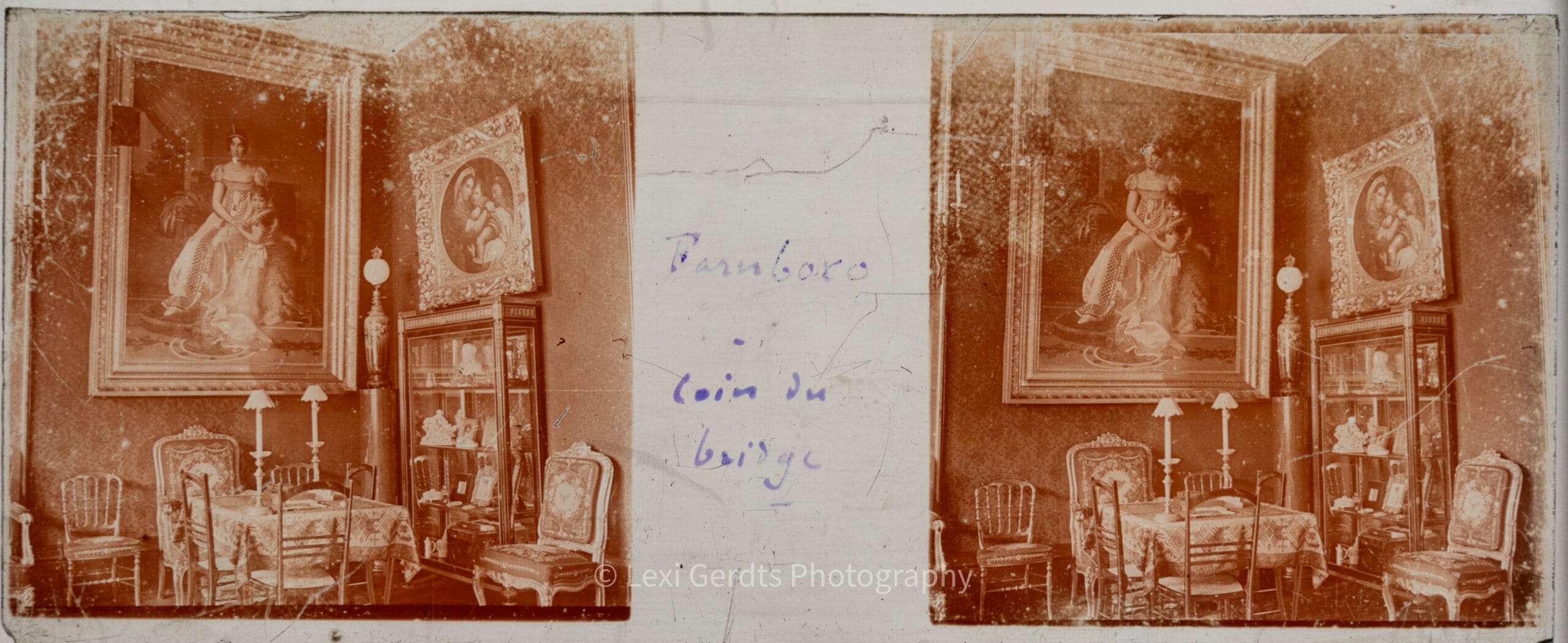
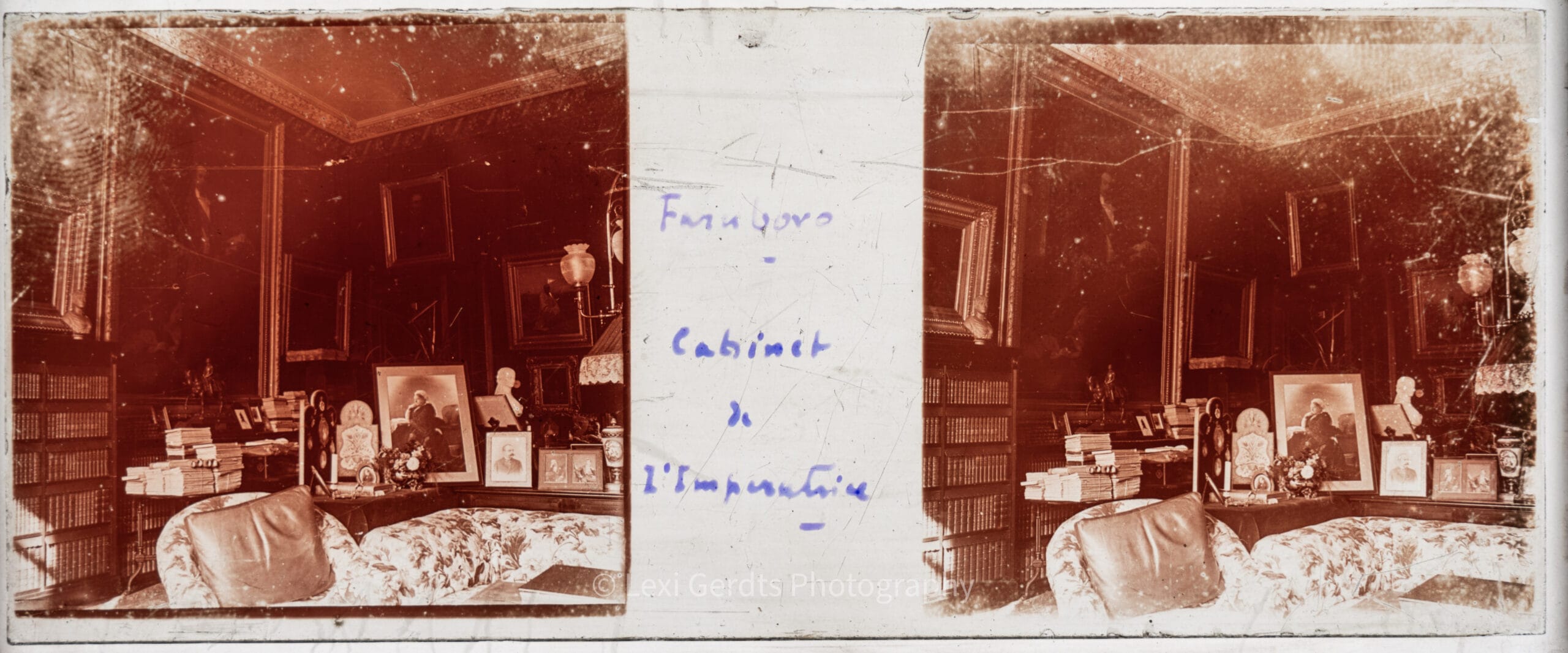
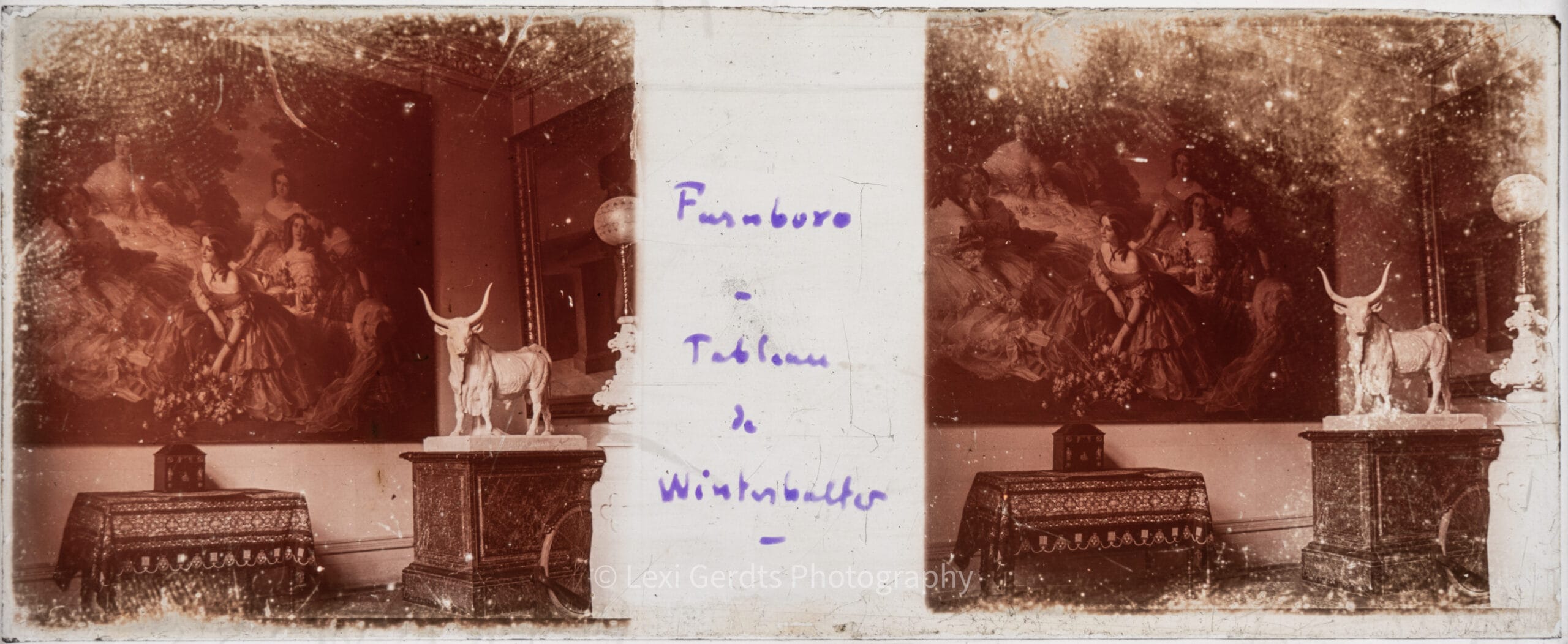
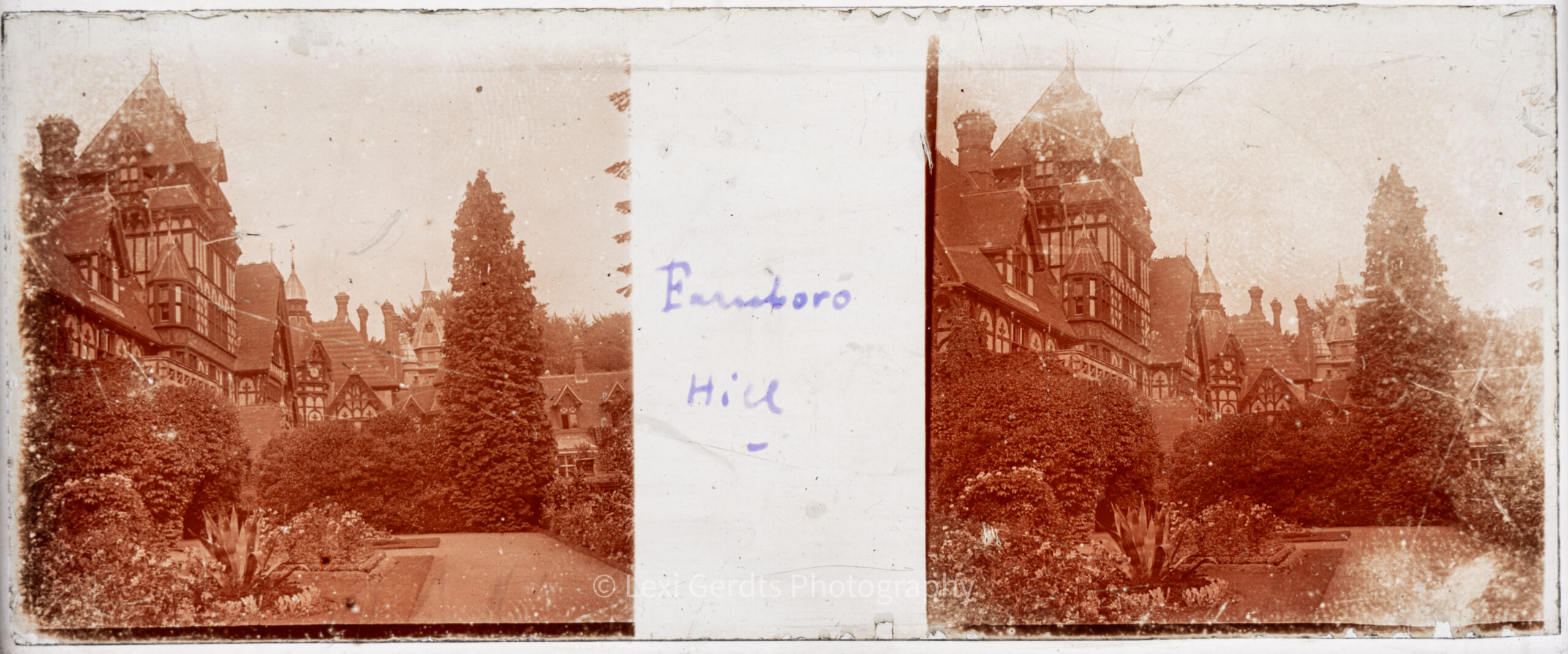
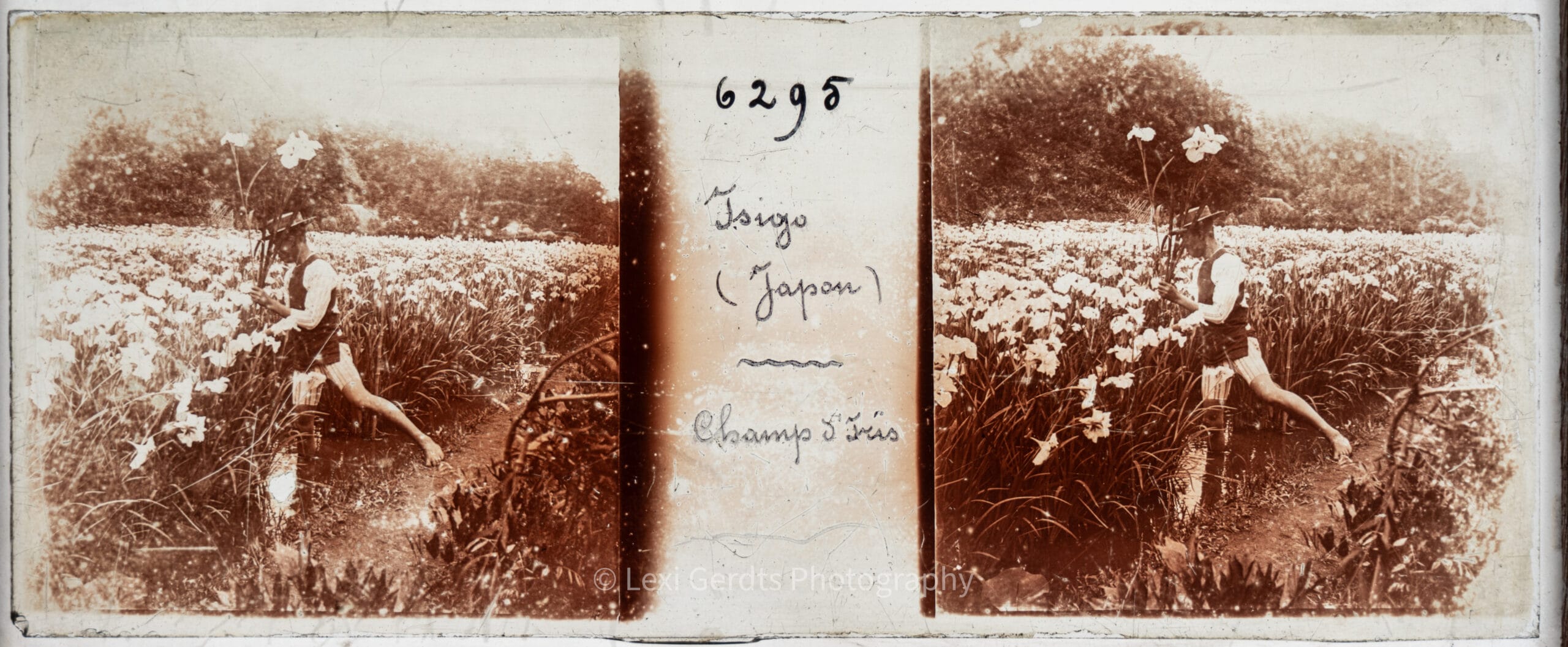
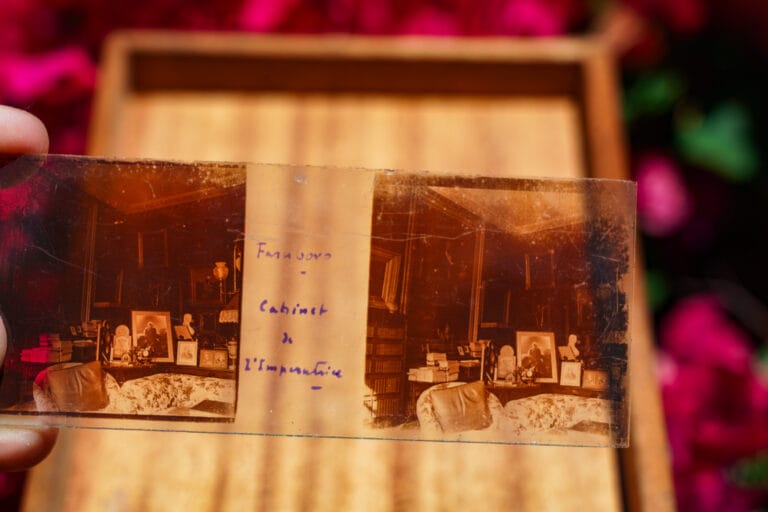
Out of 27 total, only two have catalog numbers that might indicate commercial production. The rest are personal originals. Some have amateur, hand-written captions in violet ink — and the Farnborough slides are captioned in both English and French, which is exactly what you’d expect from a French household living in England.
This is most likely a household’s personal photo archive, not a set of travel souvenirs someone picked up at a gift shop.
So the question became: whose?
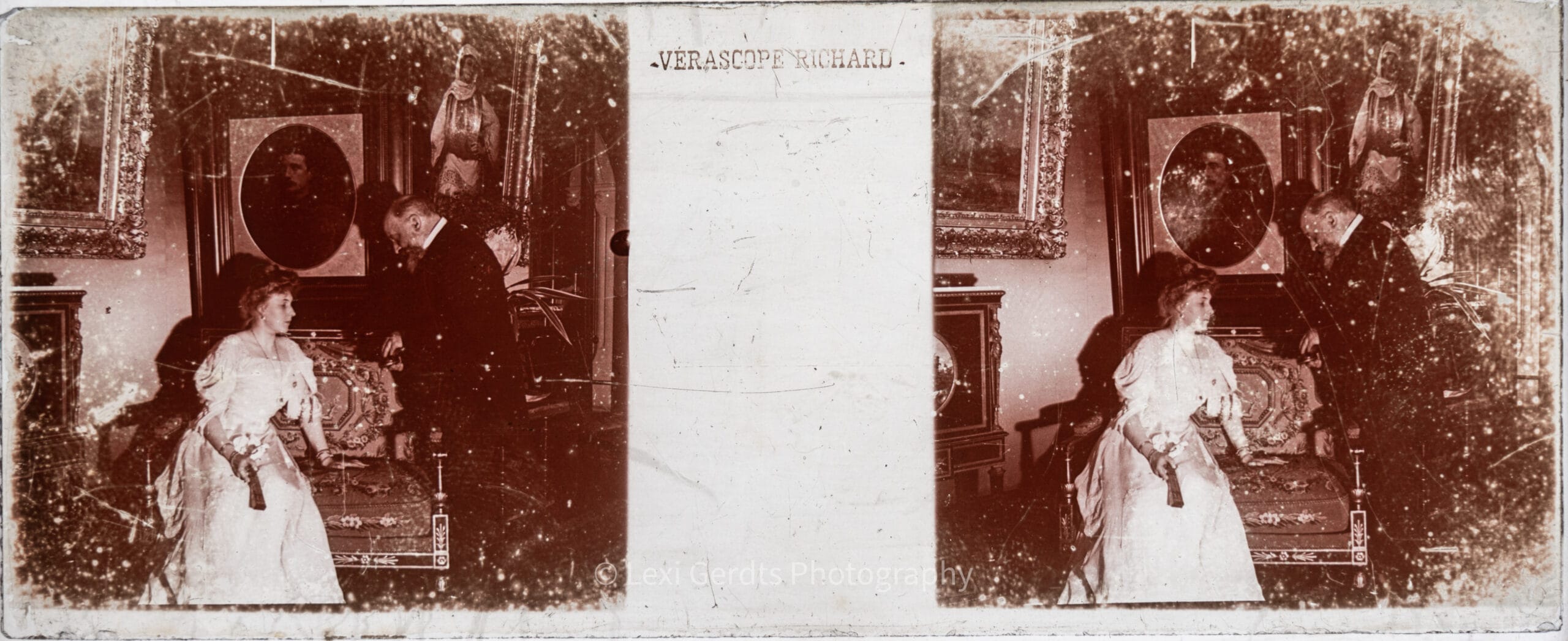
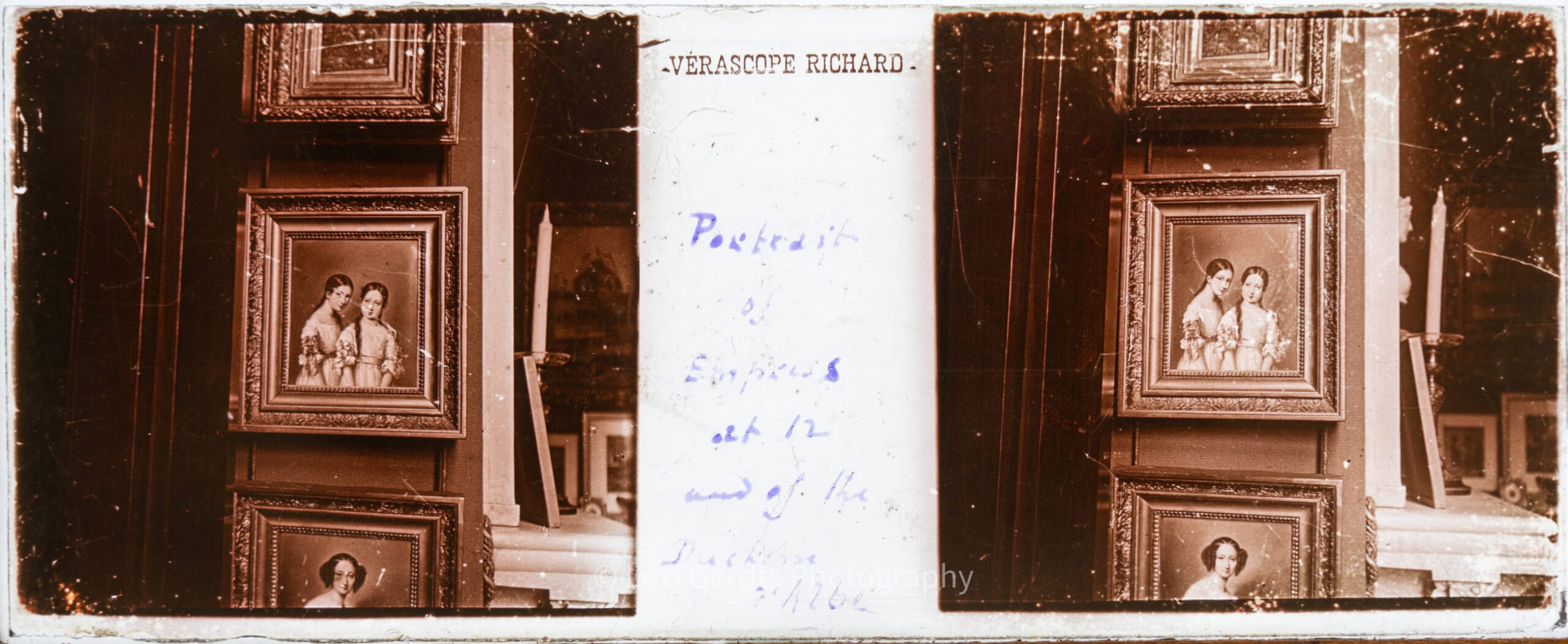
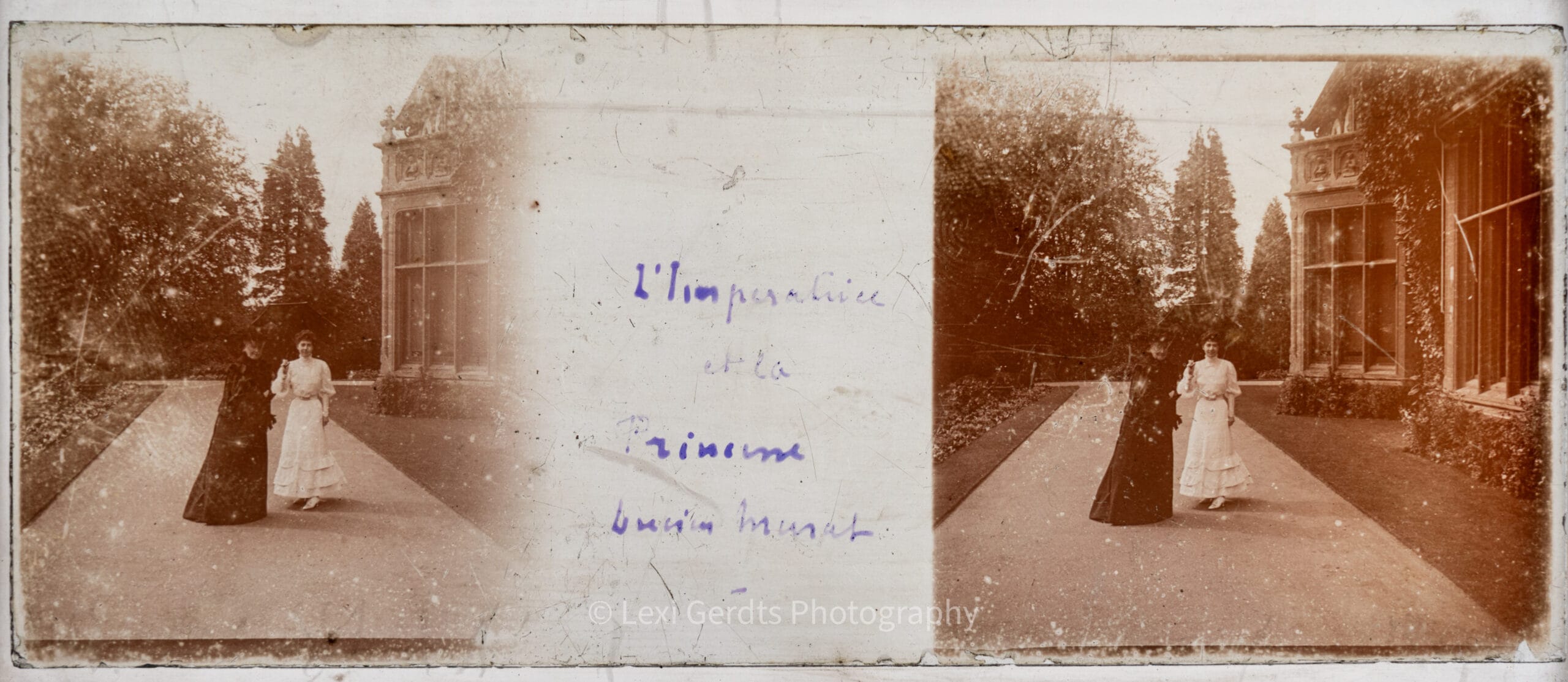
Two of the captions stopped me. One reads “Portrait of Empress at 12 and of the Duchess d’Albe” — a photo of a painting showing a young Eugénie de Montijo and her sister. Another, in that same violet ink: “L’Impératrice et la Princesse Lucien Murat.“
The Empress and the Princess Lucien Murat.
I had to sit with that for a minute.
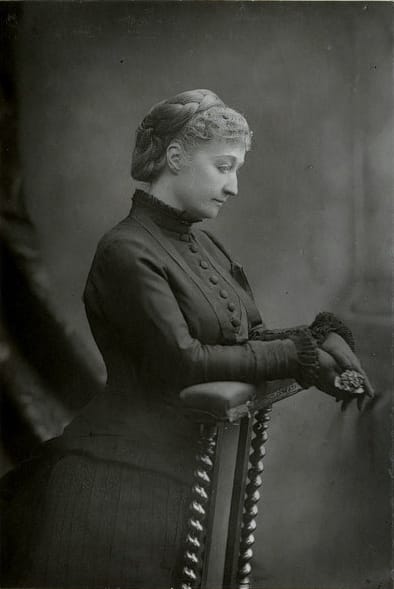
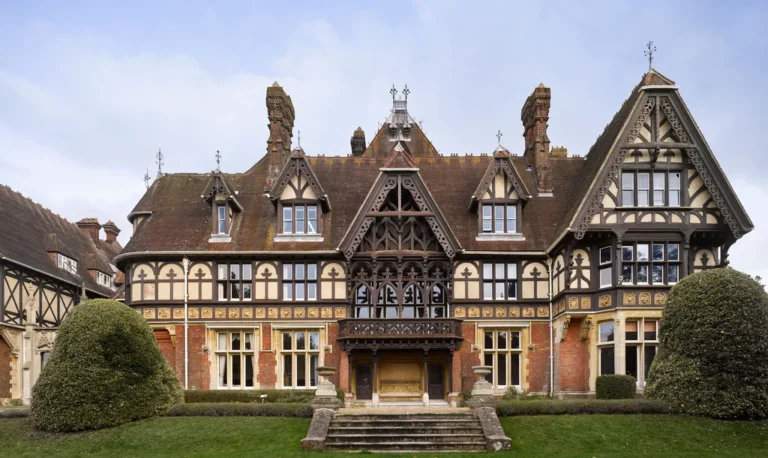
Empress Eugénie — born Eugénie de Montijo — was the wife of Napoleon III, the last Emperor of France. After the fall of the Second Empire in 1870, she fled to England. After Napoleon III died in 1873, and then her son was killed in the Anglo-Zulu War in 1879, Eugénie adopted lifelong mourning dress. Dressed in black, every day, for nearly fifty years. She bought Farnborough Hill in Hampshire in 1880, built Saint Michael’s Abbey in the grounds as a mausoleum for her husband and son, and lived there until her death in 1920. Her visitors ranged from Queen Victoria to supporters of women’s suffrage.
The Murat family has deep Napoleonic roots. Joachim Murat was Napoleon I’s brother-in-law and King of Naples. His son Lucien Murat was recognized as a prince under the Second Empire by Napoleon III himself. The Princesse Lucien Murat referenced in the caption would have been part of the Bonapartist circle that surrounded Eugénie in exile.
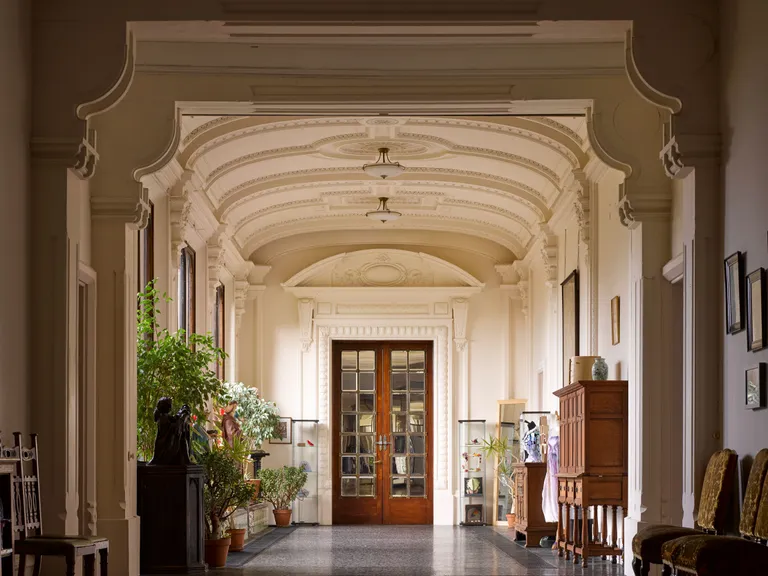
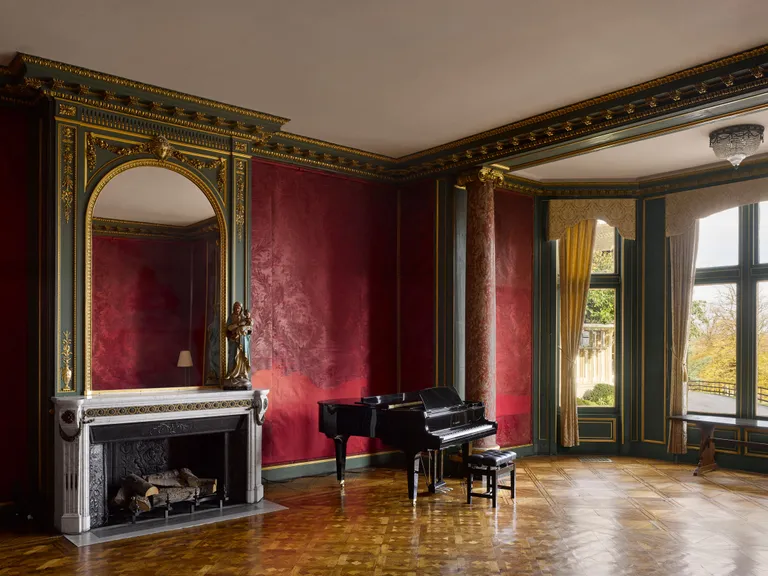
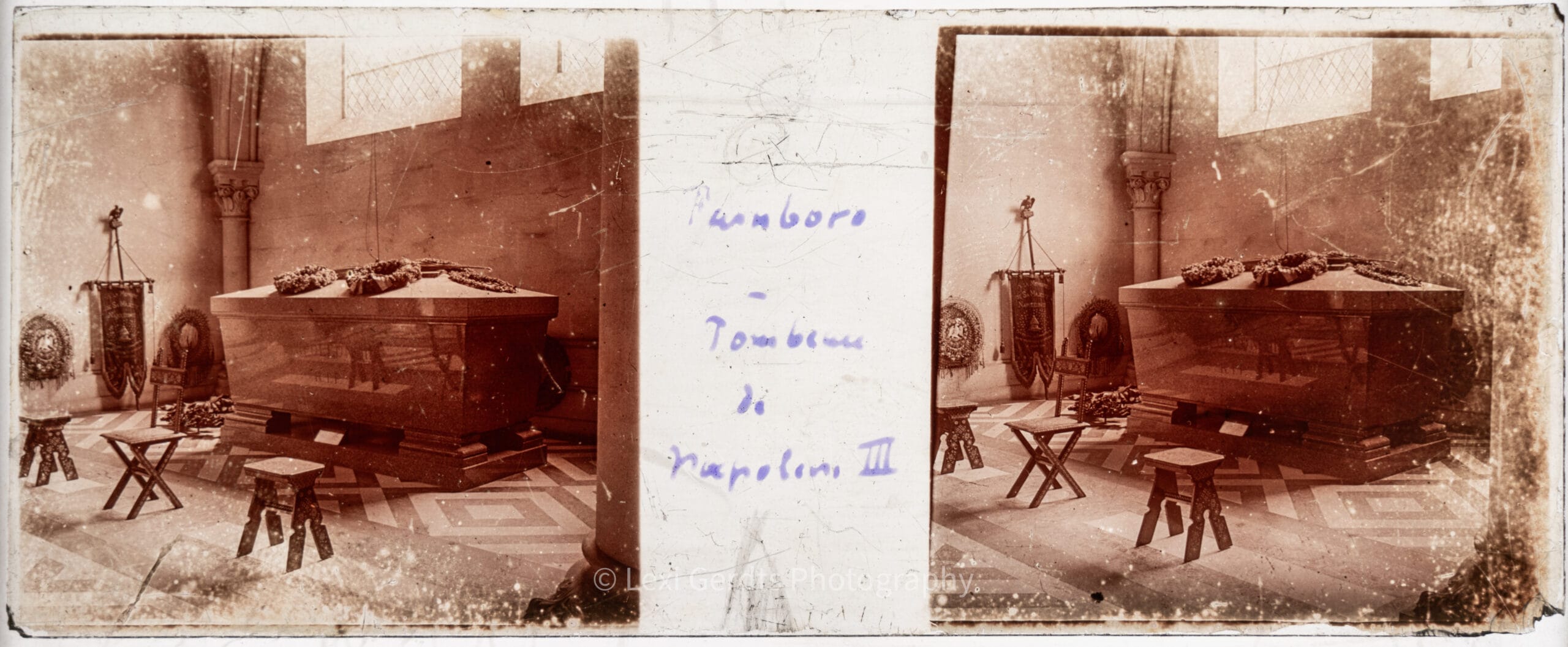
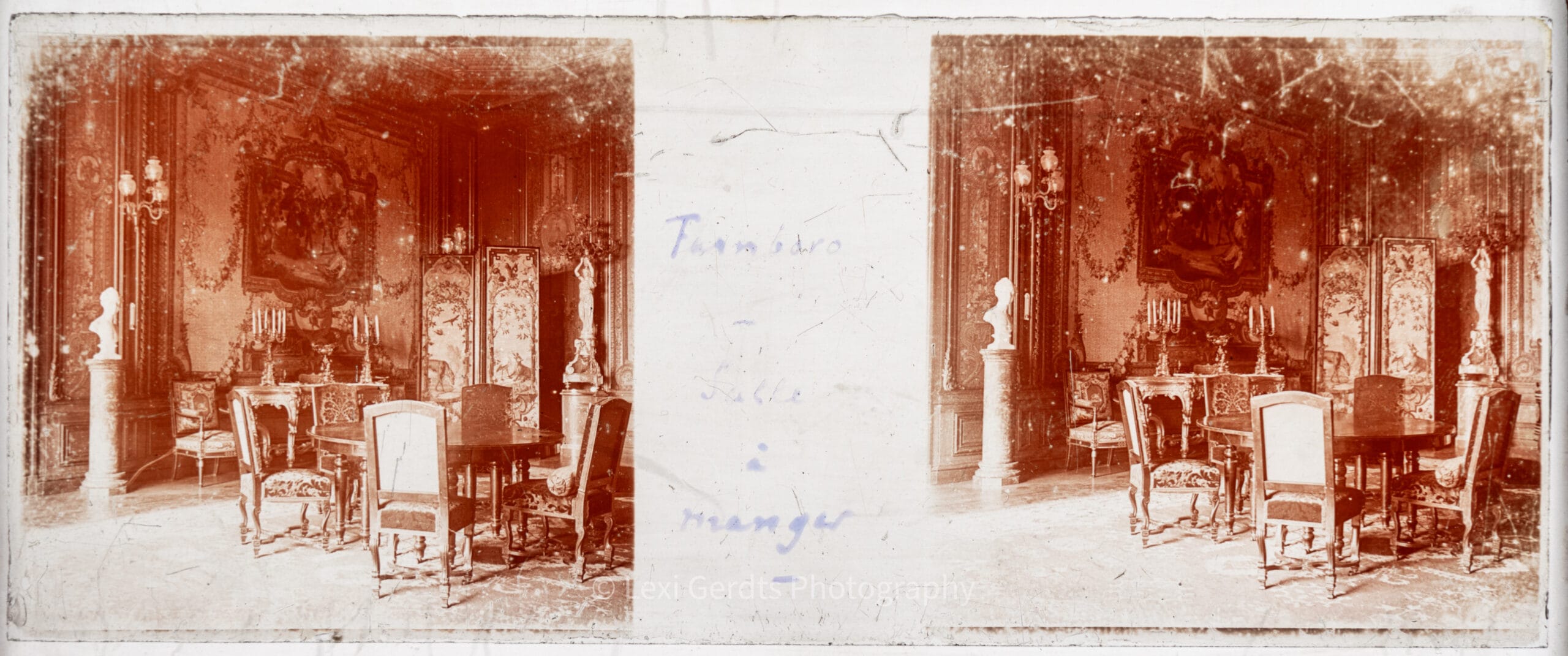
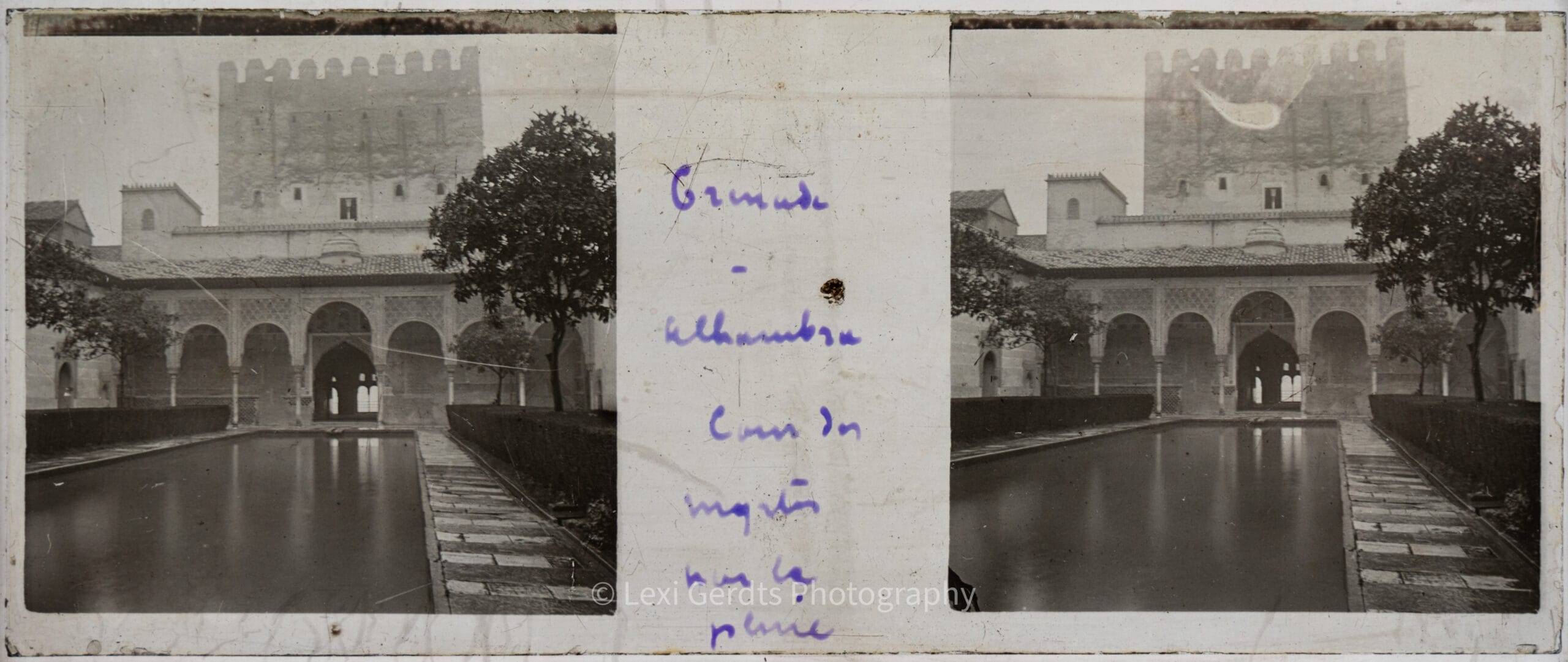
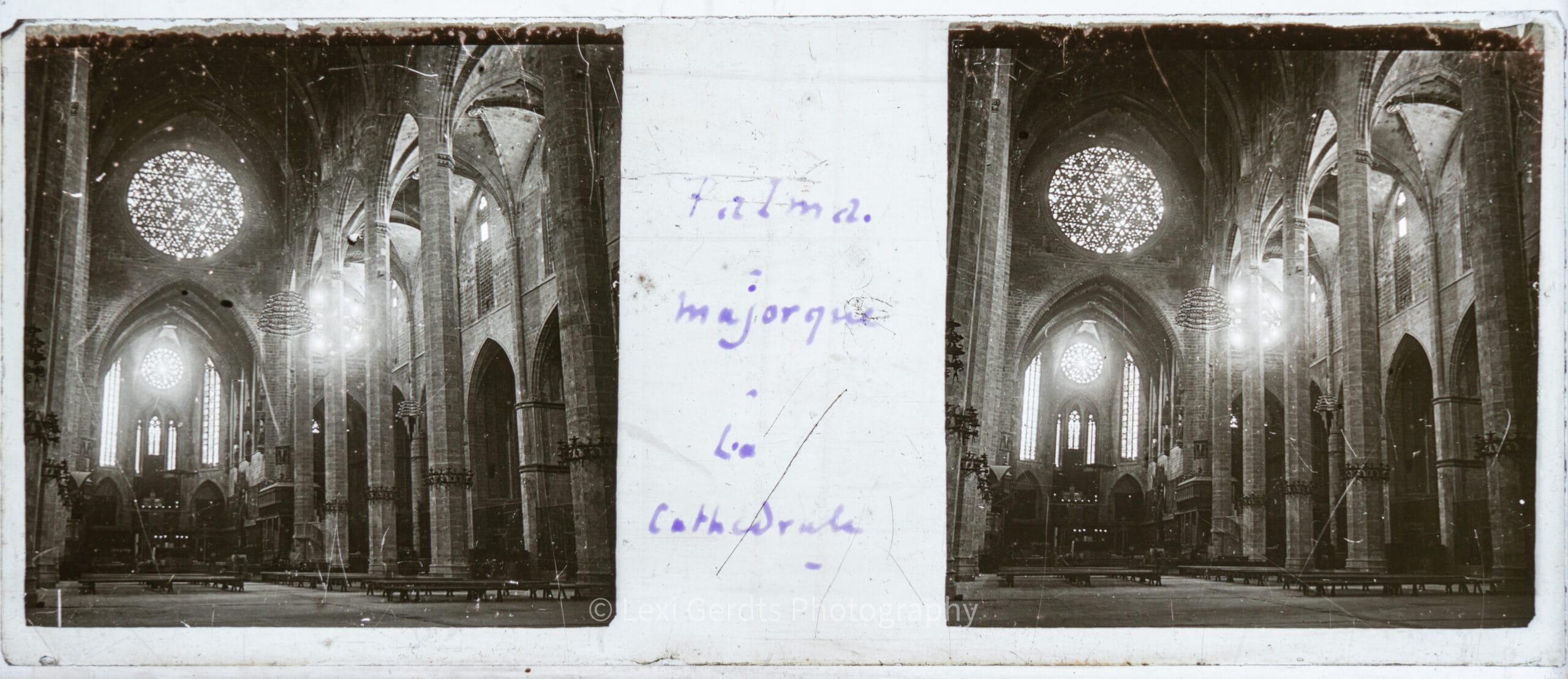
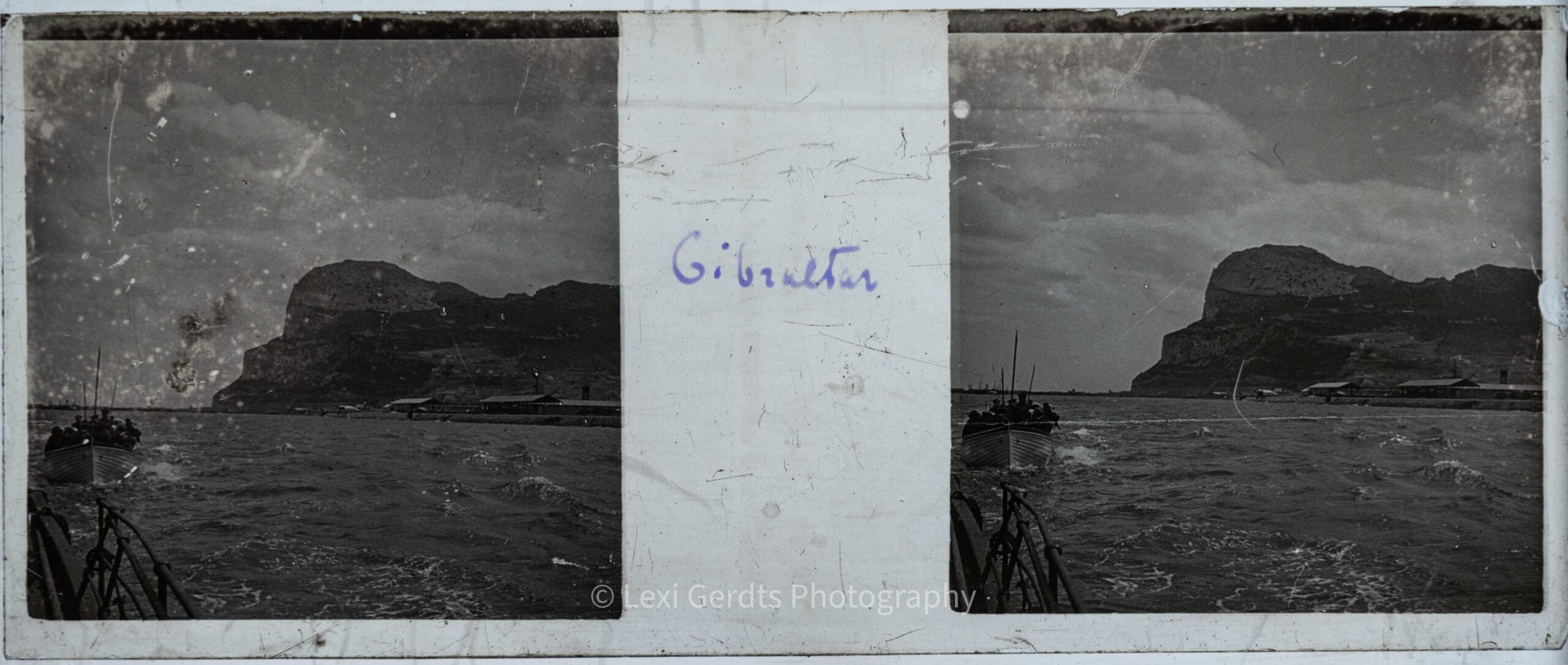
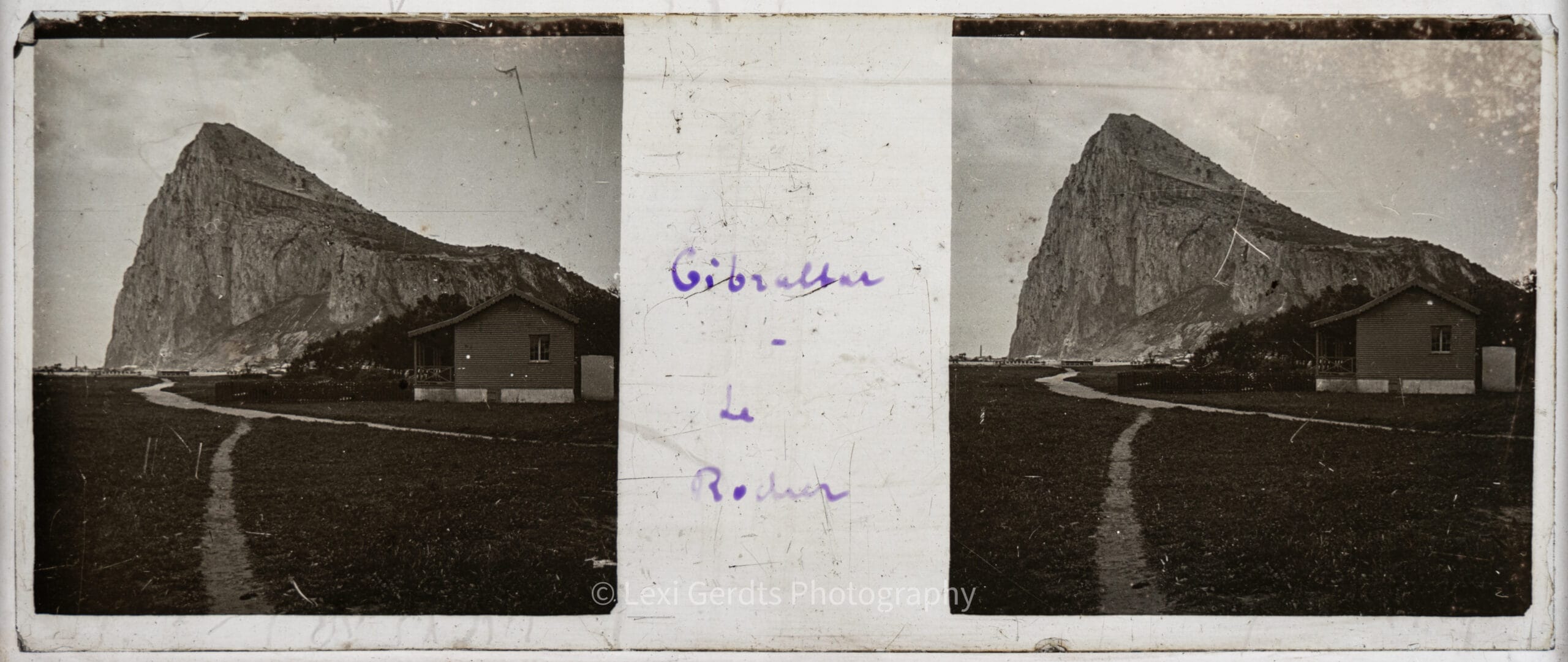
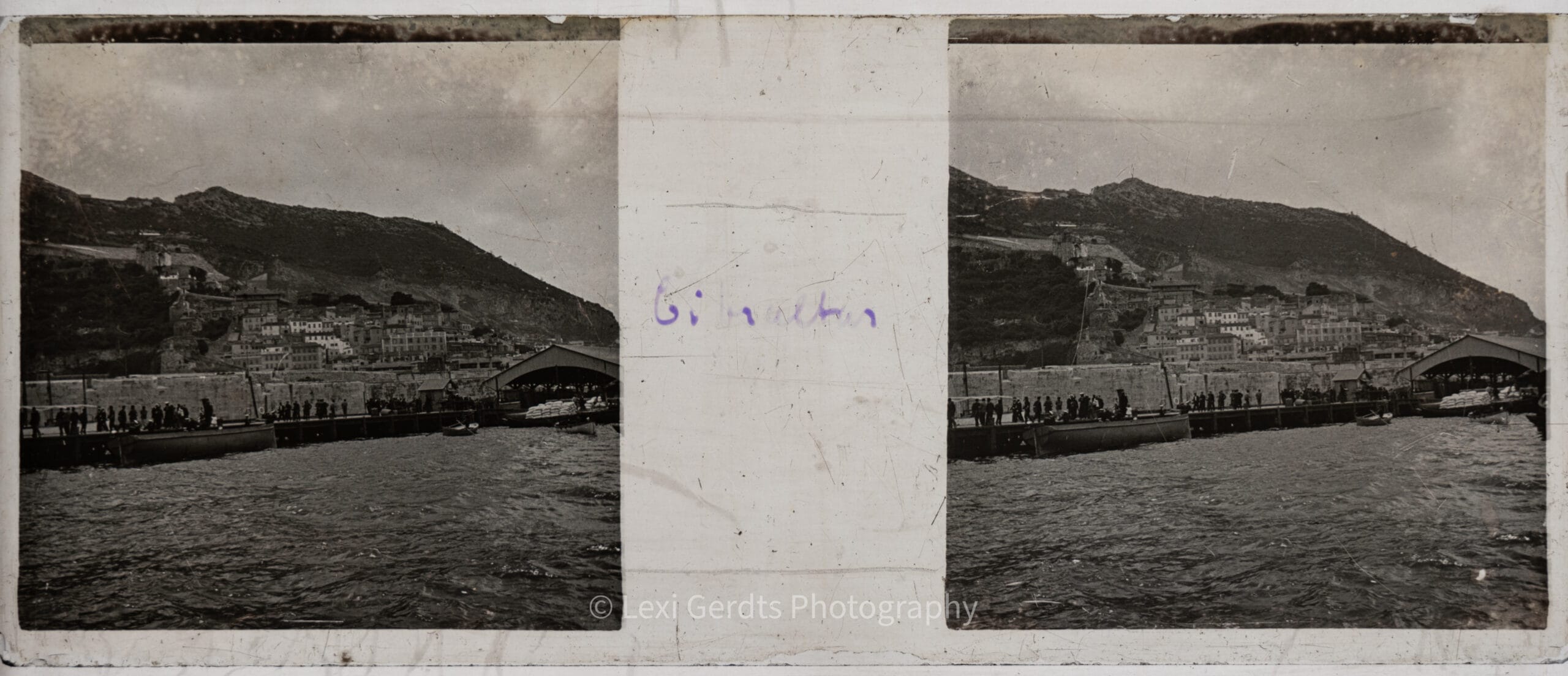
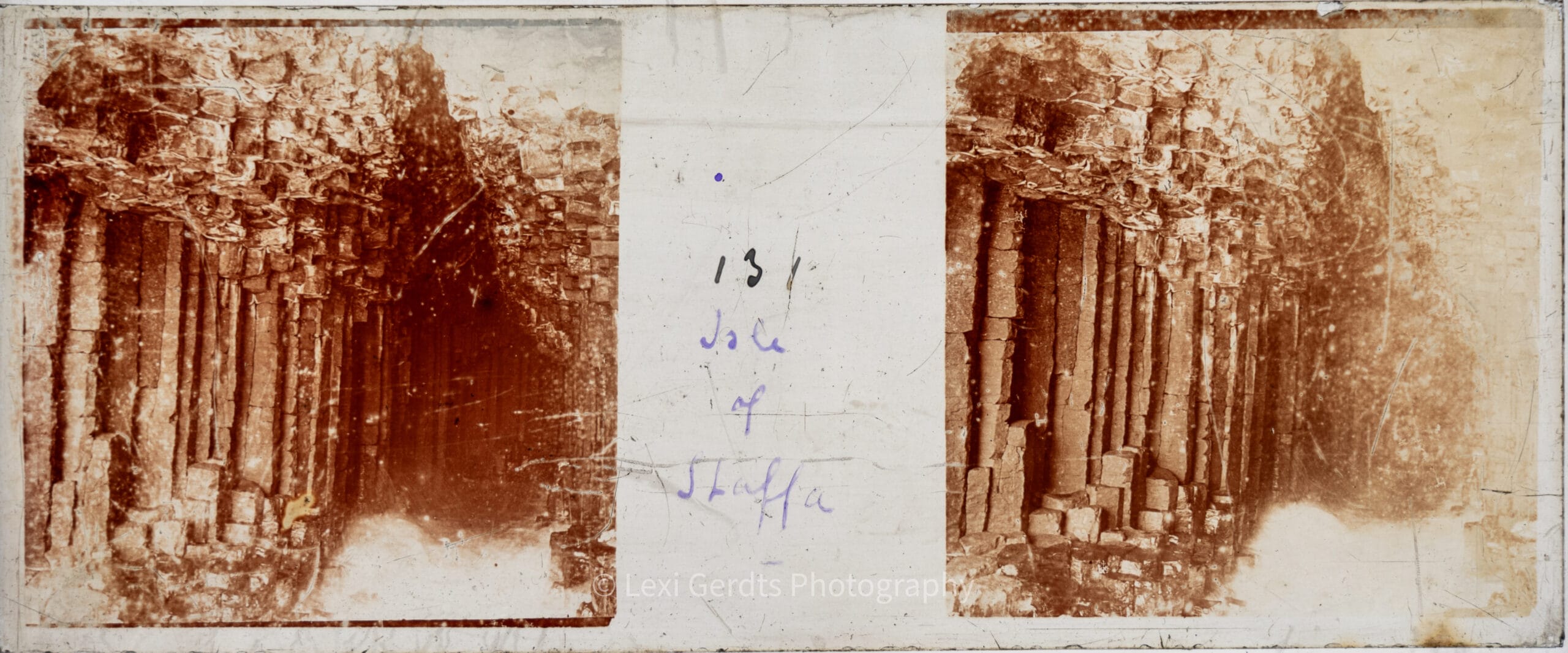
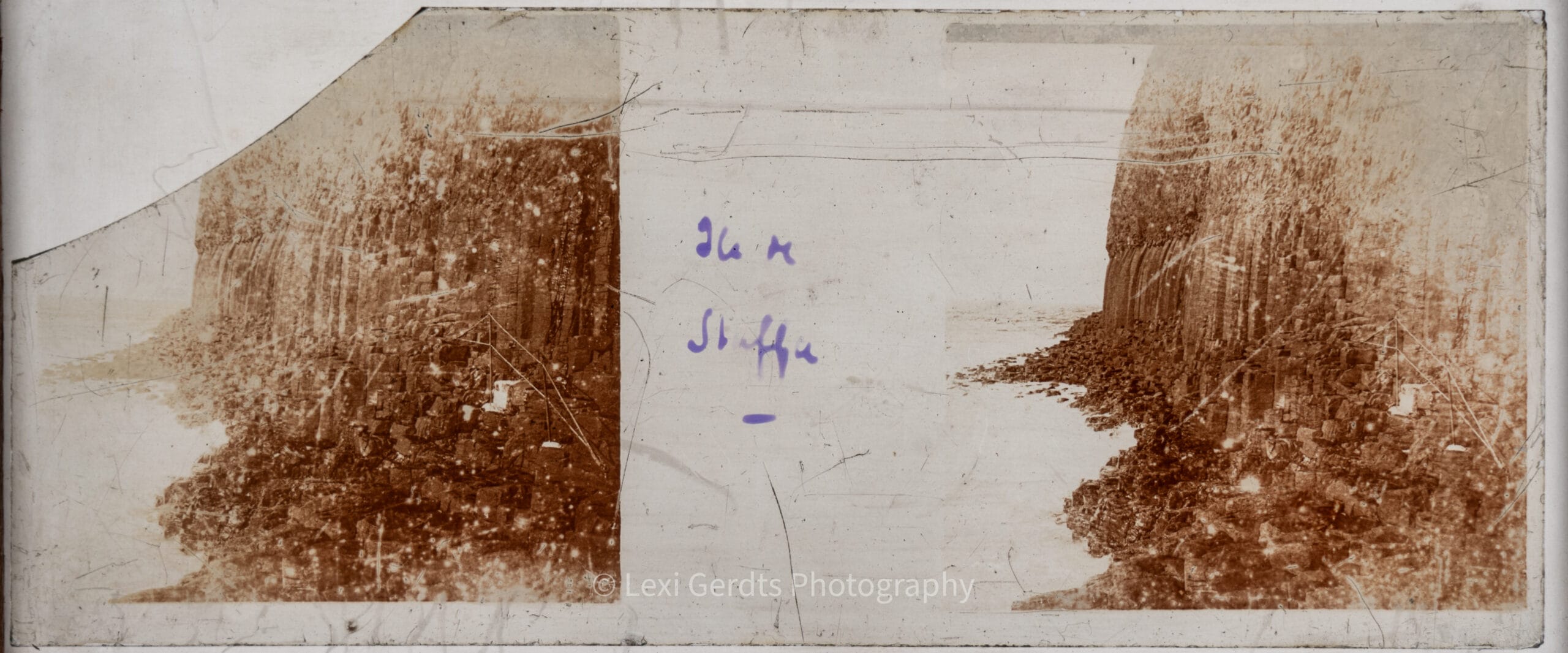
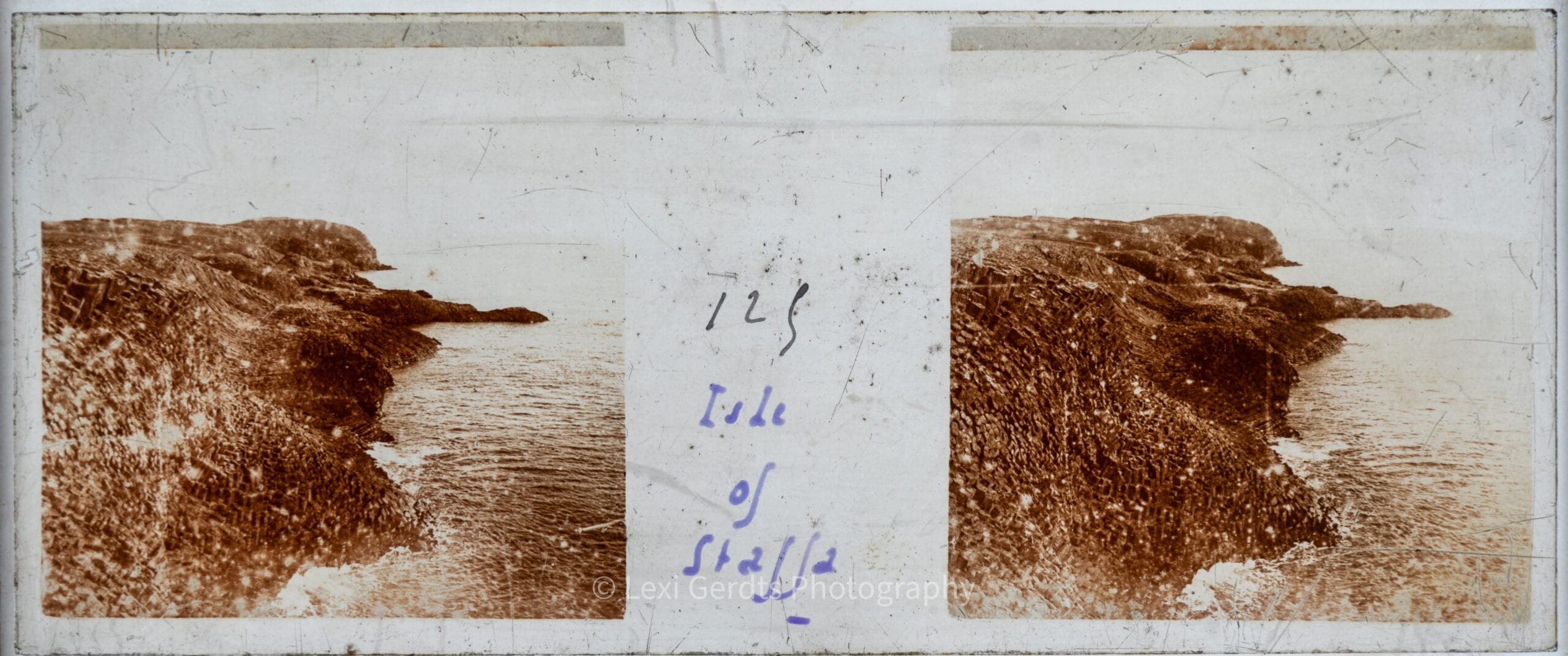
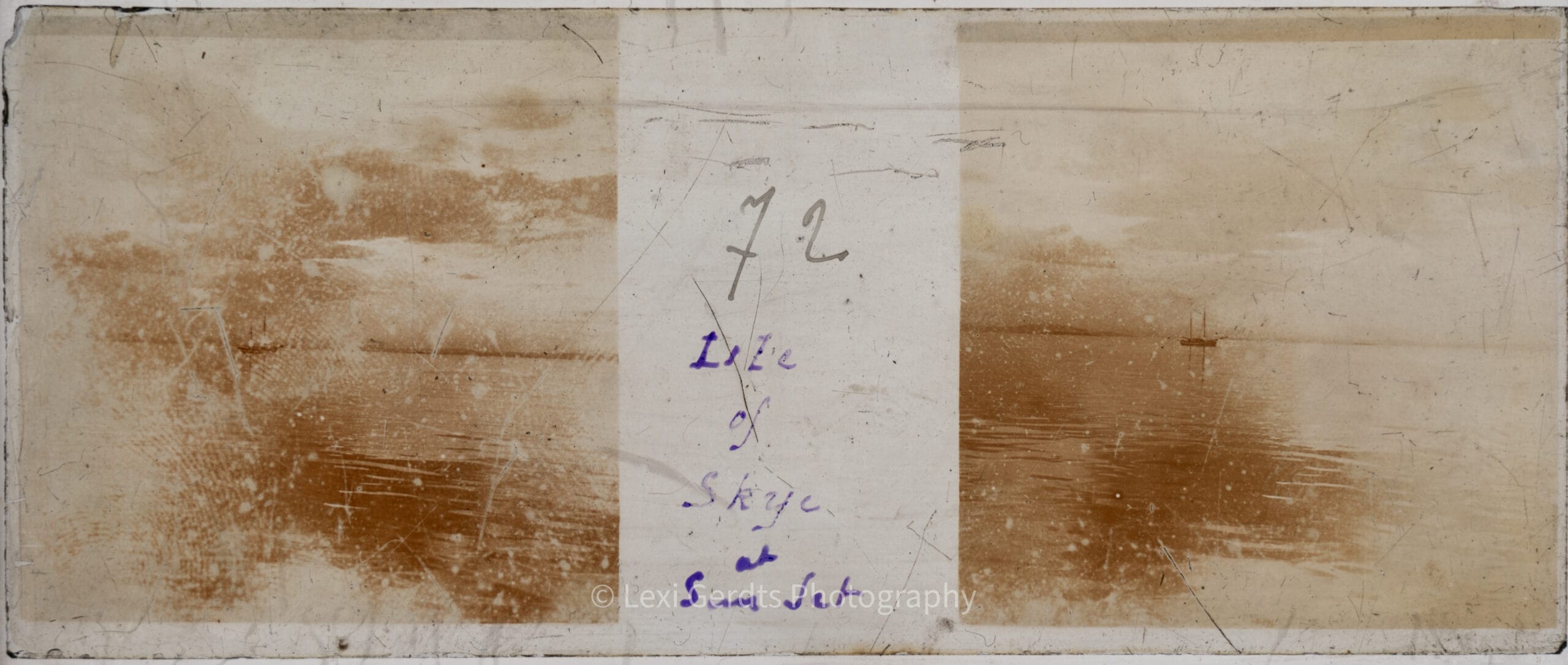
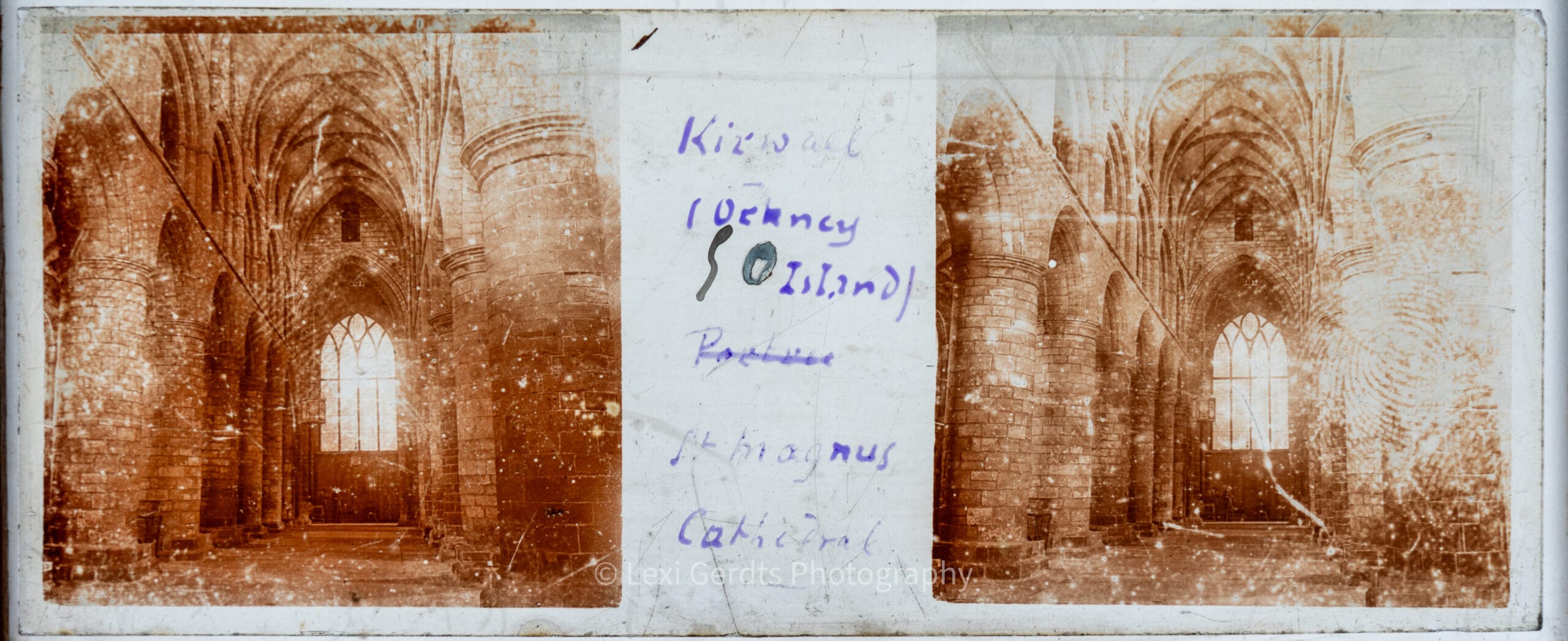
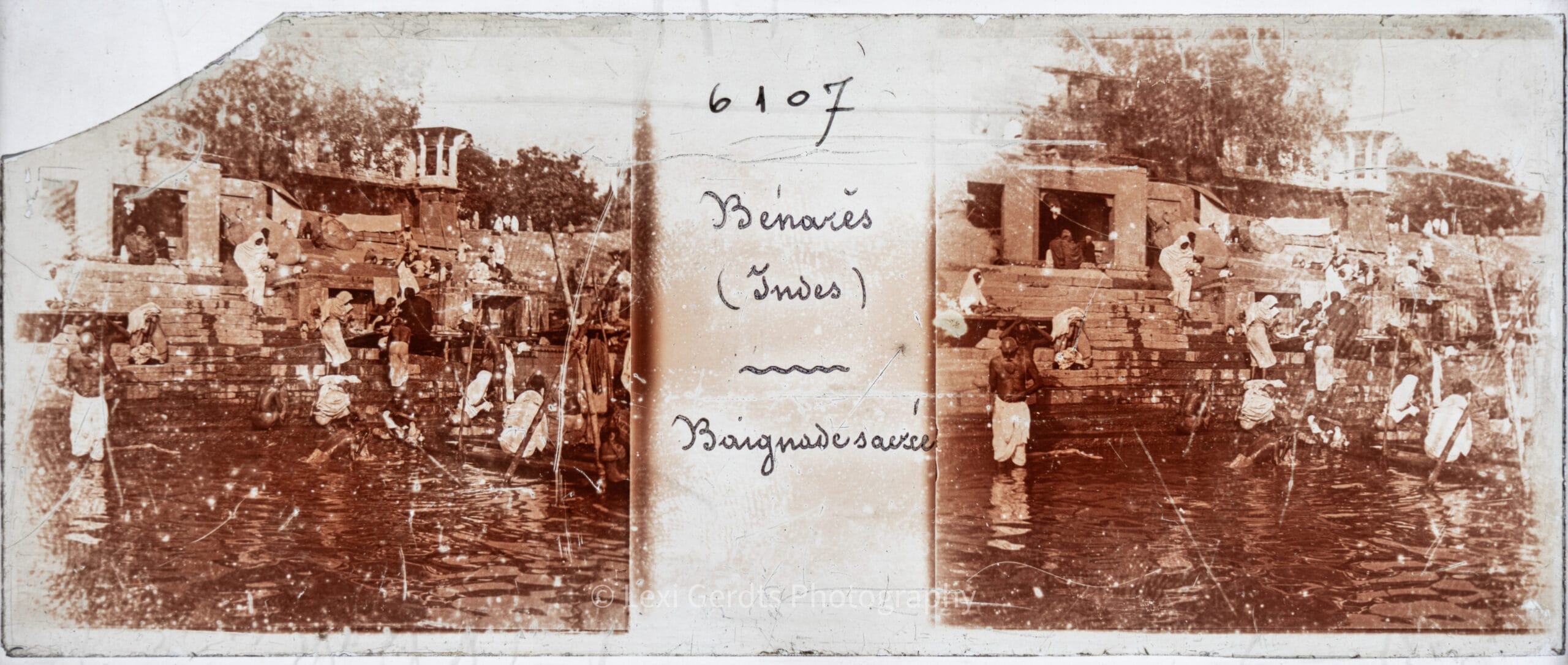
And in these slides? A woman in black shows up in the garden at Farnborough, consistent with the mourning attire Eugénie wore every single day after 1873. A recurring woman in white appears in several of the portrait gallery shots — possibly the Princesse Murat. There are interior photos of the Gallery, the Empress’s private study, a Winterhalter painting, Napoleon III’s sarcophagus in the crypt at Saint Michael’s Abbey. And then the travel slides: the Alhambra in Granada, Casa de Pilatos in Seville, Gibraltar, cathedrals in Mallorca, the Scottish islands, even India and Japan. Whoever took these photos had access to the Empress’s private rooms and traveled extensively.
Based on the viewer’s plaque address (Rue Halévy in Paris), the dating window lands at roughly 1907 to 1920 — the final stretch of Eugénie’s life at Farnborough.
Here’s why that matters for how these ended up in North Carolina. When Eugénie died in 1920, she wanted Farnborough Hill and its contents preserved. That didn’t happen. The family sold off most of the contents, and in 1927, the house was bought by a convent school. Her in-house Bonaparte museum display was dismantled. Paintings, furniture, and personal items scattered to auction houses and private buyers — many eventually repatriated to French museums like Compiègne and Versailles. A personal photo archive, though? That’s the kind of thing that slips through the cracks, gets boxed up, changes hands a few times over a century, and winds up in an antique store in the mountains of western North Carolina. Western North Carolina has deep ties to European collecting culture (the Vanderbilts built a French château 35 miles away) so maybe it’s not as strange as it sounds. However, with these being 120+ years old, it would be nearly impossible to track down the ownership all the way to the beginning.
I’m trying not to get ahead of myself. I’m not an appraiser. But this REALLY seems like a personal photo archive, shot by someone with access to the Empress and her circle, on French equipment from exactly the right period, with captions that name her directly. That’s a lot of things lining up.
Then I contacted a professional stereoscopic archivist
I found Denis Pellerin through the London Stereoscopic Company website (photos from Farnborough, England… makes sense right?). He is a photo historian who’s been researching stereoscopy for over 40 years, has an MA in Art History from the Sorbonne, and is the archivist for the Brian May Archive of Stereoscopy — yes, Brian May of Queen. He’s co-authored multiple books, including Stereoscopy: The Dawn of 3-D. He also wrote a book about the Imperial Family of France.
So basically, if there’s one person on the planet you’d want to look at a box of old Vérascope Richard slides with a possible Eugénie connection, it’s this guy!
I sent a cold email with some phone photos of the slides. He got back to me the same night.
His response: “I think you can relinquish any doubts. This looks very much like Farnborough (which I visited last year) and the person in the photo, although the definition is not enough to be 100 per cent sure, looks very much like the Empress Eugénie. What a great find !!”
He confirmed the sarcophagus in one of the slides is “no doubt” Napoleon III’s — he knows the crypt at Farnborough Abbey “very well.” He recognized the exterior of the house, the gallery — “all things I have seen.” He even thinks he knows the exact spot where the Empress and Princesse Murat photo was taken, and sent me a present-day photo of the location for comparison.
When I shared the full set of higher-quality “scans” I took on my Sony Alpha, he wrote back: “I recognised other things in the new photos you shared. The exterior of the house, obviously, and the gallery, all things I have seen. I do envy you this find.” He also said that having these images when he wrote his book about the Imperial Family of France “would have been great.”
He advised against trying to clean the emulsion, which is too risky after a century (makes sense!) but said the glass side can be cleaned, and digital cleaning after proper scanning is the safer path.
His sign-off: “It made my day!”
Mine too, Denis. Mine too.
The full collection
Here are all 27 slides. If you recognize any of the locations, people, or architectural details, I want to hear about it!!
What's next
I’ve cataloged all 27 slides and photographed them with my Sony A7R III. I’m planning to rescan the glass plates on my Epson V600 at home for even higher-quality reference images, and I’m working with Denis on potential professional high-res scanning to really do these justice.
There’s a lot more to dig into here. The specific people in the photographs. The locations. Whether any of the slides match known views from Eugénie’s later years. I’ll be writing more about this as the research develops.
For now, I’m still processing the fact that a box of glass slides from an antique store in Brevard, North Carolina might be a direct window into the world of the last Empress of France. Not how I expected my afternoon to go.
If you know anything about Vérascope Richard stereoscopic slides, Empress Eugénie’s circle at Farnborough Hill, or the Bonapartist exile community in England, I’d love to hear from you. Drop a comment or find me on Instagram @sunsets.n.chill.
Resources
Vérascope Richard / Stereoscopic Photography:
- Jules Richard (photographer) – Wikipedia
- Richard (Jules) – Camera-wiki.org
- Vérascope war stereoviews – Stereoscopy History
- Stereoscope, Richard Verascope – Cooper Hewitt / Smithsonian
Empress Eugénie / Farnborough Hill:
- Eugénie de Montijo – Wikipedia
- Eugénie – Britannica
- Our History – Farnborough Hill
- Apollo Magazine – Empress Eugénie in exile
- Cairn.info – Empress Eugénie and the imperial vestments
- St Michael’s Abbey, Farnborough – Wikipedia
- The Art Newspaper – Empress Eugénie’s English palace
- Empress Eugénie, photographed by W. & D. Downey, c. 1880.
- Country Life — Farnborough Hill and Empress Eugénie
Murat / Bonaparte Family:
Denis Pellerin / London Stereoscopic Company: