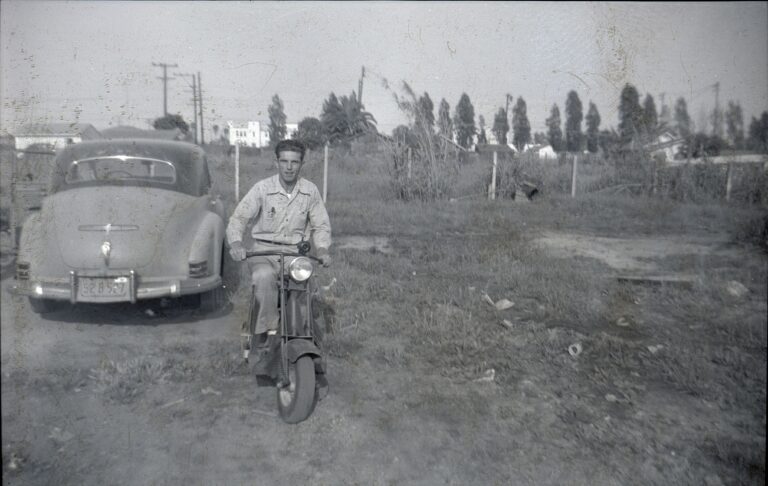
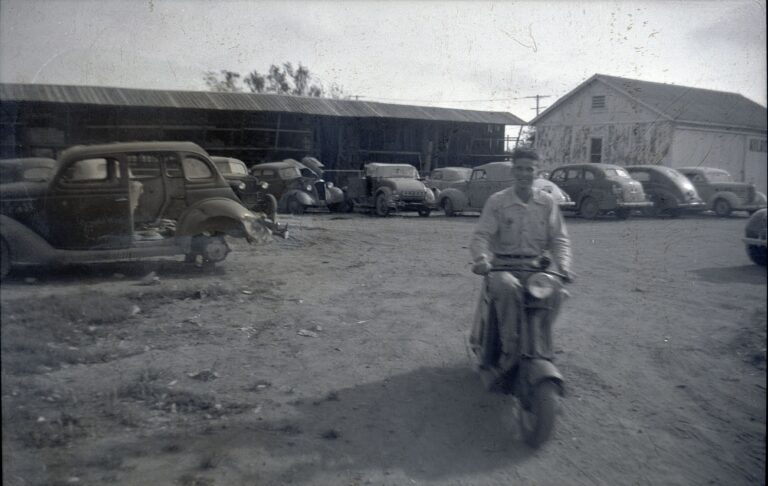
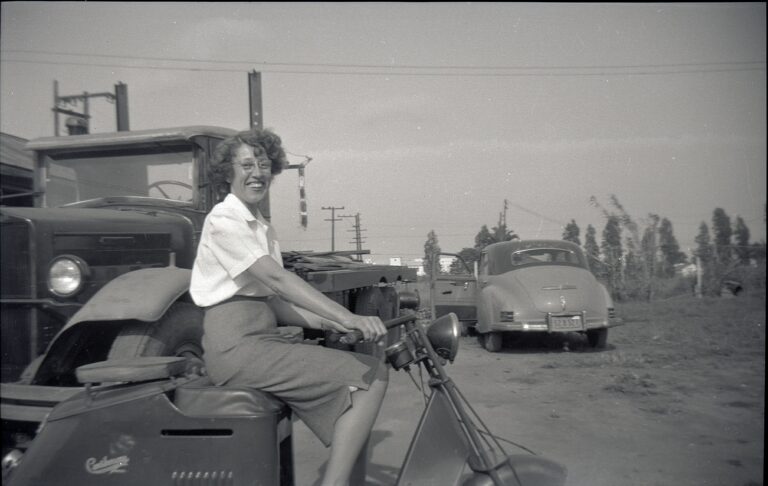
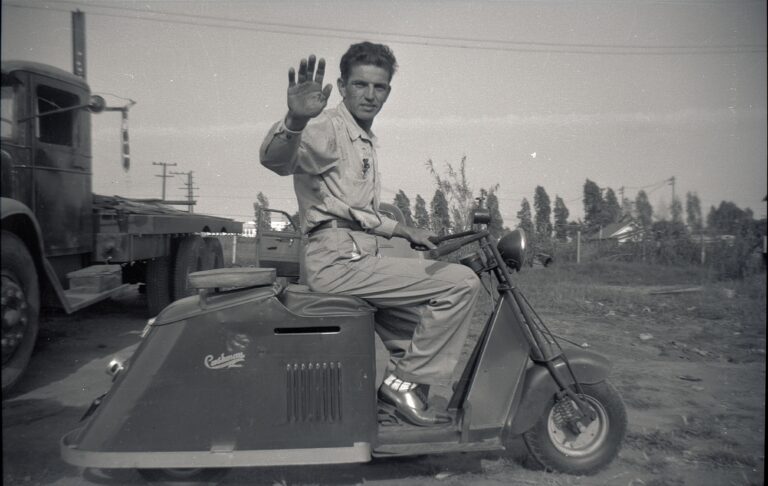
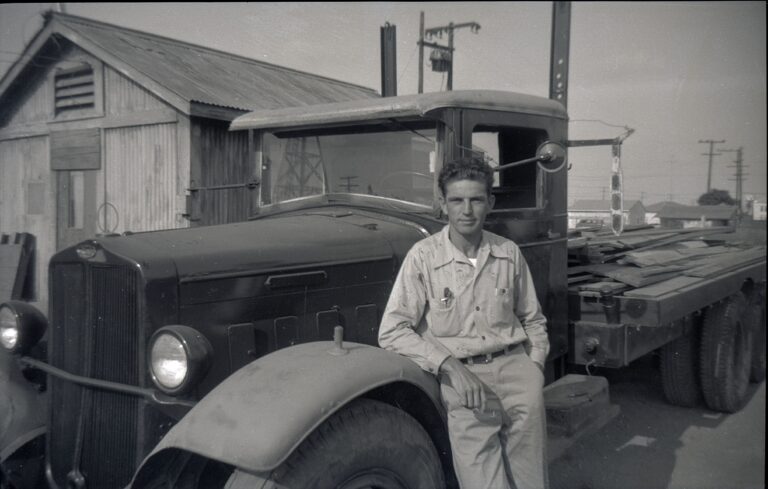
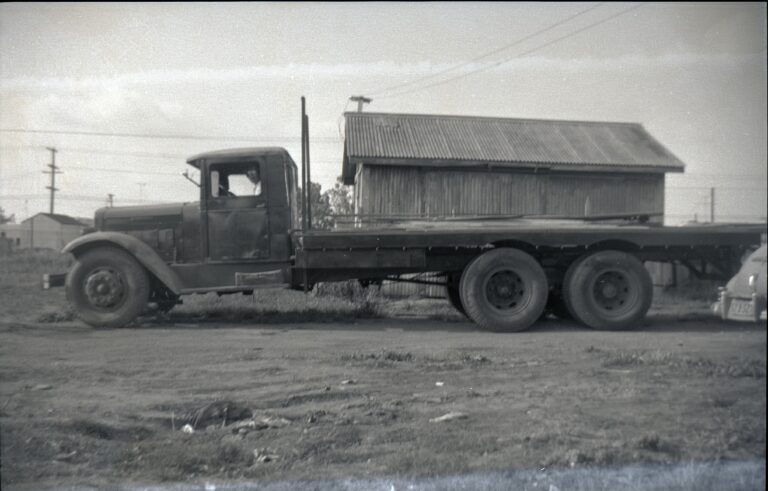
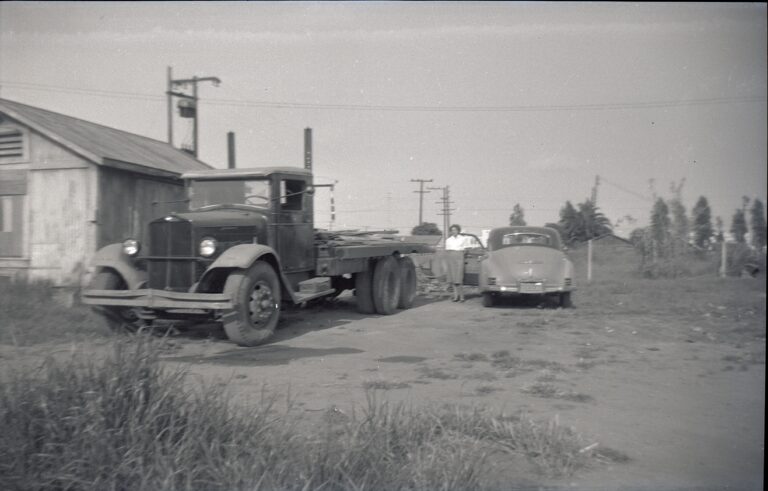
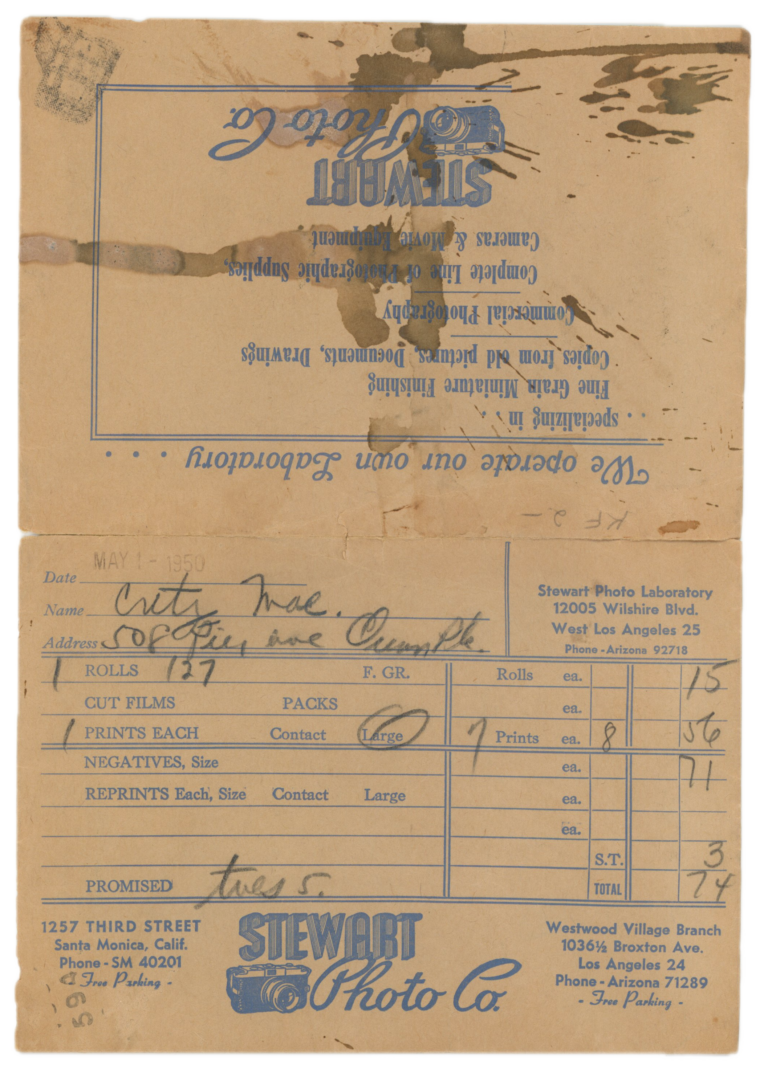
Last week, I bought a roll of found film negatives at an antique shop in Ocean Beach, San Diego. The developing envelope was tucked in with them, stamped May 1, 1950, and helped me trace the photos back to Ocean Park in Santa Monica, which at the time was a working-class beach neighborhood that has mostly been erased since. Here’s what’s on the roll and how I placed it!
Article Overview
What it is: a roll of B&W 127 film negatives from 1950, with the original developing envelope still tucked in.
Where I found it: a bin of orphaned negatives at an antique shop in Ocean Beach, San Diego.
Where & When it’s from: 1950’s Ocean Park / Santa Monica, a working-class beach neighborhood that’s mostly been erased since.
How I dated it: the envelope is stamped May 1, 1950, and the Cushman scooter, fat-fendered 1940s GM fastback, and its yellow 1947-base California plate all agree.
The paper trail: Stewart Photo Co. at 1257 Third Street (now the Third Street Promenade), with the customer address 508 Pier Ave, Ocean Park.
What’s on the roll: a young man and woman showing off a late-1940s Cushman motor scooter, plus a flatbed lumber truck, a used-car lot, and half-open dirt lots.
Why it matters: throwaway snapshots that outlived their neighborhood: a small record of an ordinary 1950 afternoon in a place that’s basically gone.
The Photos (7):
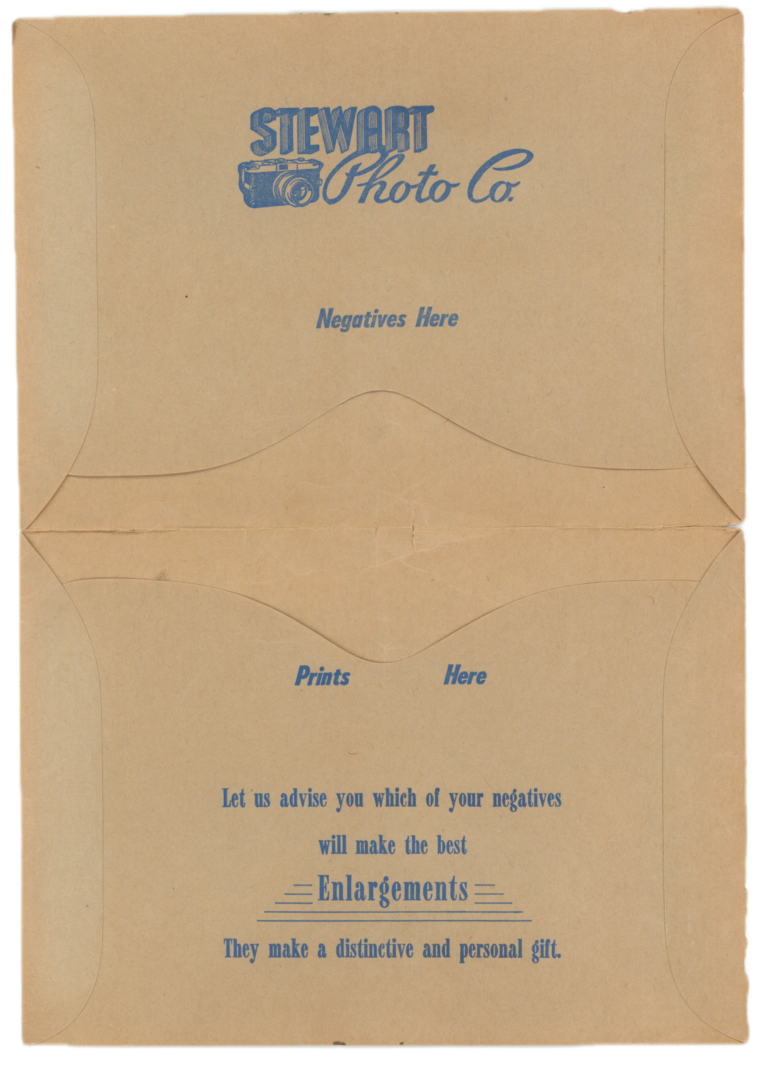
The Envelope:
What caught my interest
I collect old cameras, and I also have a weakness for the bins of orphaned negatives that pile up at antique stores. Most of them are nothing, but on this particular treasure hunt, the 127 format of this film roll is what caught my eye first because it’s the same film size my Vest Pocket Kodak takes (check out my VPK review here!). What sealed the deal was the original developing envelope that held the negatives. It held the key details about where the roll came from and did the initial detective work for me.
There’s also a personal reason this one grabbed me. I went to UCLA, spent eight-plus years in LA, and lived in Santa Monica for about half of it. Santa Monica is where my photography actually started — it’s where @sunsets.n.chill began!
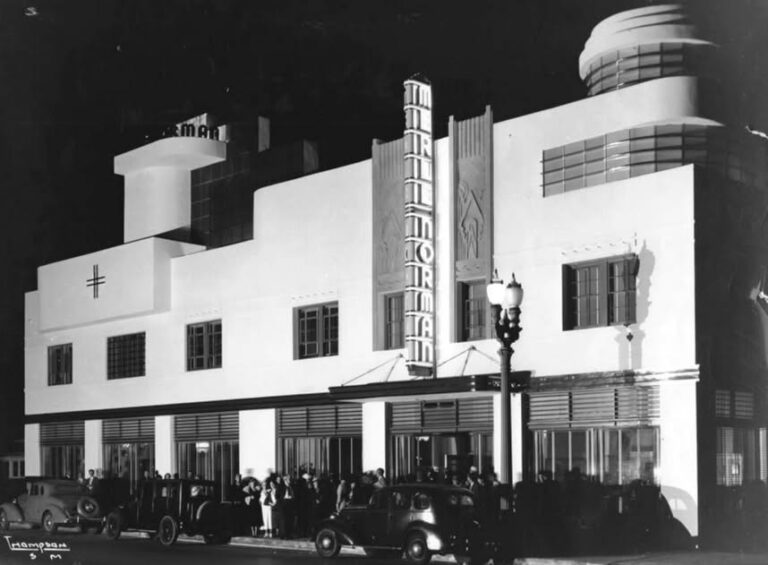
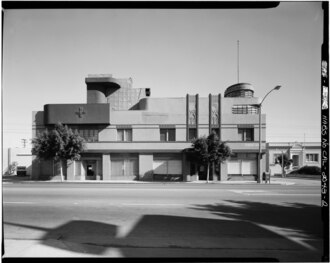
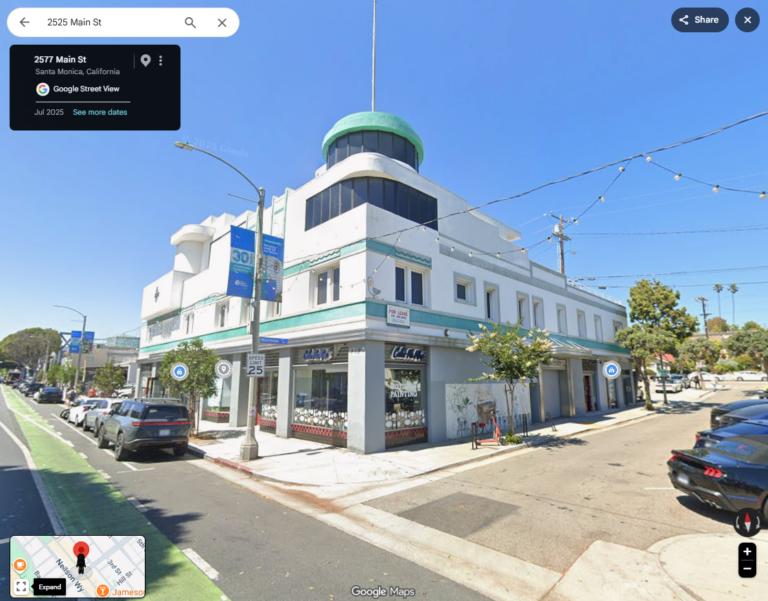
And on top of that, my first job out of college was in the Art Deco building on the corner of Main Street and Ocean Park Blvd, which is just a few blocks from both the film shop & home addresses listed on the envelope. The Merle Norman Building is a historic Streamline Moderne landmark built in 1936 by architect H.G. Thursby, and served as the headquarters for Merle Norman’s pioneering cosmetics empire (and was designated a historic landmark in 2002). Honestly, this building has it’s own incredible history that deserves it’s own blog post…. Stay tuned 😉 . But anyways, when I realized these negatives belonged to someone who lived a few blocks from my old office, seventy-five years earlier, I was not going to put them back in the bin.
The grand opening of the Merle Norman Cosmetics Building at 2525 Main Street in 1937.
Photo Source: The Ocean Park Historical Society
The Merle Norman Building, Santa Monica, California. Captured in 1983
Modern Day Google Maps Screenshot of the The Merle Norman Building in Santa Monica, California
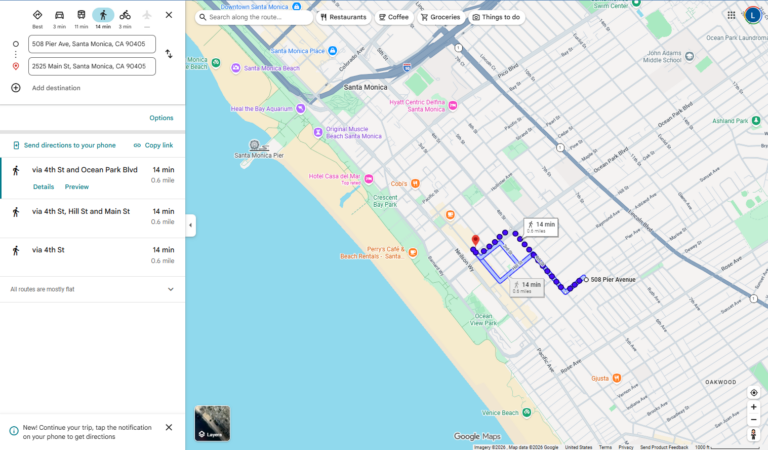
Walking route from my old office (Merle Norman Building) to the home address listed on the envelope.
What's on the negatives
The roll reads like an ordinary afternoon. A young man poses on a small Cushman motor scooter next to a fat-fendered late-1940s sedan. In the next frame a young woman sits on the same scooter, laughing at whoever is holding the camera. “Cushman” spelled out in script on the body. There’s a big flatbed lumber truck, a lot full of used cars behind corrugated-metal sheds, dirt lots, and power lines running off toward the beach.
The scooter is a late-1940s Cushman, the full-bodied kind that turned a generation of teenagers and young workers loose on cheap wheels after the war. The sedan is a General Motors fastback, the “torpedo” body style Pontiac and Chevrolet built in the 1940s, and it’s wearing a yellow California license plate with dark characters, the 1947 base, the base plate that stayed in use into the mid-1950s. None of it contradicts a 1950 date. Everything in the frame agrees with the receipt. Nobody was performing for history. They were just showing off a new scooter.
My Research Findings & Historical Context
The receipt that cracked the case: Stewart Photo Co., May 1, 1950
The envelope is from Stewart Photo Co., a Santa Monica camera shop, and it’s date-stamped MAY 1 – 1950. One roll of 127 film, fine-grain developing, a set of large contact prints plus eight prints. Total: $3.74. Film usually got dropped off within days or weeks of being shot, so these were taken around April 1950.
The customer address (my best guess from the handwriting) puts them a mile down the coast from the shop: 508 Pier Ave, Ocean Park. I’m still having trouble deciphering the name written above, but that single address line is what turns a random roll of negatives into a specific place and moment. 508 Pier Ave was most likely the customer’s home/mailing address, while the pictures were taken at a work yard somewhere nearby.
Bonus Find: Additional Stewart Photo Co. Receipts
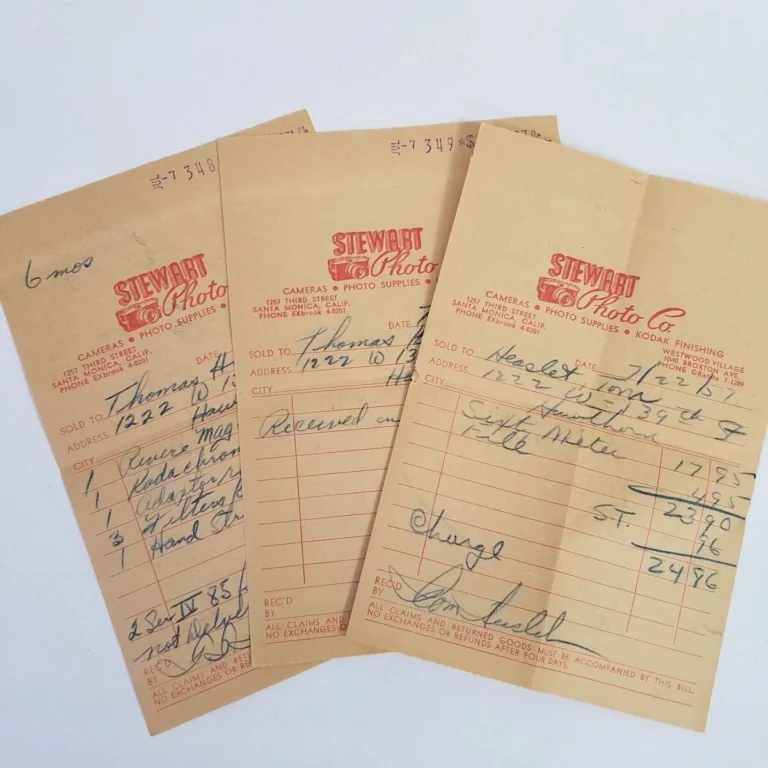
As I was diving into my research, a reverse-image-search brought me to this eBay page (linked here) that’s selling envelopes from that same film shop. From the writing on the envelopes, they’re from around 1957. Very cool to see other receipts from this shop!
What Ocean Park, Santa Monica was like in 1950
Ocean Park in 1950 was the working-class beach district straddling the Santa Monica and Venice line. It was cottages and courts packed close to the sand, an aging amusement pier, and just inland, blocks that were still half open lot. That inland fringe is what’s most likely in these frames. The person who owned this roll lived at 508 Pier Ave, and the young man looks like he worked at one of those operations nearby: the graded dirt, the corrugated sheds, and the lumber truck all point that way.
About that pier: it was past its prime by 1950, but it wasn’t done yet. In 1958 it got a full reinvention as Pacific Ocean Park, a nautical-themed park built to rival Disneyland. That didn’t last either, and it closed by 1967.
Ocean Park still has some of that boutique polish today. But back then, this inland stretch was mostly dirt lots and working yards, a.k.a the part of the neighborhood that hadn’t been built out yet.
Playlist
4 Videos
Stewart Photo Co & Third Street before it was the Promenade
Stewart Photo Co. sat at 1257 Third Street, in downtown Santa Monica, with a Westwood Village branch and its own finishing lab out on Wilshire. It ran the whole operation in-house and advertised fine-grain finishing, copy work, commercial photography, and a full line of cameras and supplies.
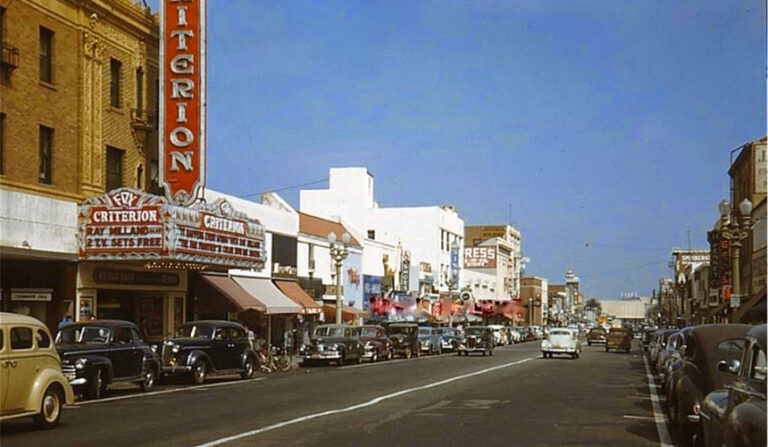
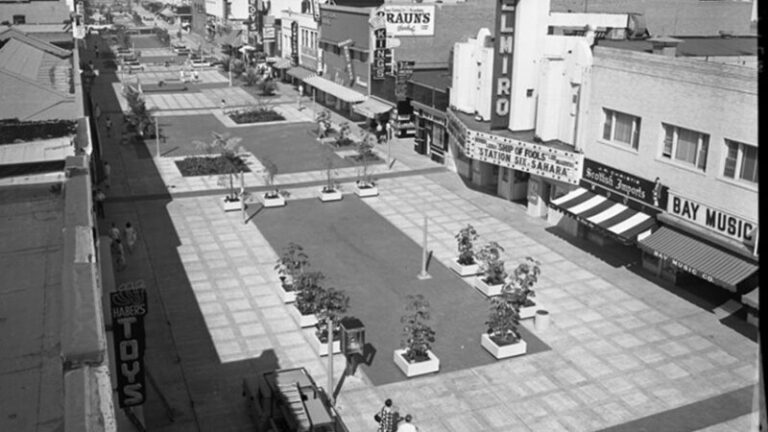
In 1950 you could still drive right down Third Street. It was a regular shopping street then, cars and all. That didn’t change until 1965, when the city closed three blocks to traffic and built the Santa Monica Mall. It struggled commercially for years, got a full renovation, and reopened in 1989 as the Third Street Promenade we know now.
Third Street In Santa Monica in 1949. Photo courtesy of lamag.com
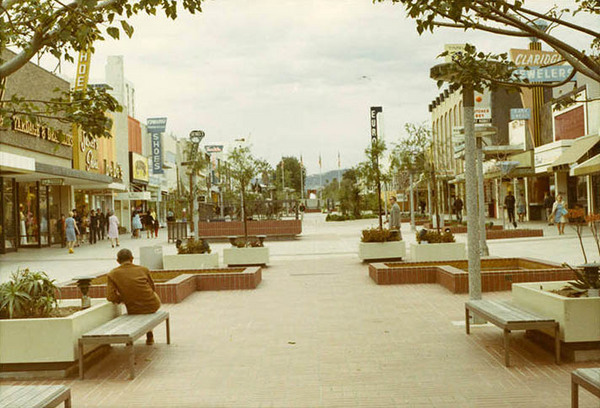
The Third St. Promenade during the '60s. Photo courtesy of lamag.com
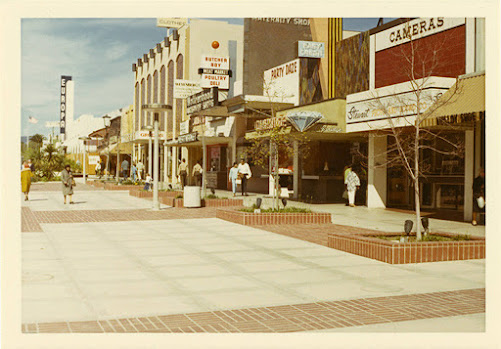
Third Street in 1970, when it was known as the Santa Monica Mall. Courtesy of the Santa Monica Public Library Image Archives.
Third Street in 1970, when it was known as the Santa Monica Mall. Courtesy of the Santa Monica Public Library Image Archives.
Stewart Photo hung on through a lot of that. A color photo of the pedestrian mall from the 1960s/70s shows the same shop still there, rebranded “Stewart Photo and Radio Co.” under a big CAMERAS sign, sitting alongside the kind of mom-and-pop tenants that filled the street back then. It’s gone now, like most of the neighborhood camera shops that made amateur photography (and the survival of rolls like this one) possible in the first place.
A neighborhood that outlived itself
The contrast is what gets me. Third Street went upmarket. Ocean Park went the other way. Redevelopment and “urban renewal” cleared much of the old neighborhood in the decades after these photos were taken. Which means the negatives outlasted the streetscape they were shot in! That’s most of their value to me. Some stranger’s snapshots of a new scooter turned into a surviving record of an ordinary day in a neighborhood that’s basically gone.
I think about that a lot as someone with strong roots to this coast. I lived in the area until late 2020 and the Santa Monica and Ocean Park I fell for are already changing, the same way theirs did. Somebody in 1950 pointed a cheap camera at a scooter and a lumber truck and, without meaning to, kept a piece of the neighborhood alive. That’s the whole job, really. Not bad for a dollar bin in San Diego!
Closing Thoughts
If there’s one takeaway here, it’s that these little rolls are worth saving. I still don’t know the name written above that address, and I may never pin down the exact yard where the scooter was parked, but that keeps the mystery alive. Someone spent a dollar on film, a spring afternoon showing off a new Cushman, and seventy-five years later it’s a window into a version of working-class LA life that doesn’t exist anymore.
So if you’ve got a shoebox of negatives in a closet, or you walk past a bin of them at a flea market, don’t assume they’re nothing. Get them scanned, sit with the small clues: the envelope, the plates, the storefronts in the background. See where they take you! I’m not done with this one either; the 1950 census is next on my list, and if that name ever surfaces, I’ll post an update. Until then, thanks for coming down the coast with me!
FAQ
What are "found film negatives"?
Found film negatives are undeveloped or already-developed photo negatives that turn up at secondhand shops, like estate sales, thrift stores, and antique shops. Usually separated from whoever originally shot them. They’re a form of “found” photography… ordinary personal snapshots that survive by accident, often with no names attached.
How were the negatives dated to 1950?
The original developing envelope was still with the roll, and its receipt is date-stamped May 1, 1950. Since film was typically developed within days or weeks of being shot, the photos themselves date to roughly April 1950. Details in the frames back that up, including a late-1940s Cushman scooter and a car wearing California’s 1947-base license plate.
What kind of film are the negatives?
They’re 127 roll film, a popular amateur format at the time, and the same format my Vest Pocket Kodak still shoots. The receipt specifies “fine grain” developing.
How much did it cost to develop a roll of film in 1950?
This order came to $3.74: one roll of 127 film developed with fine grain, plus a set of large contact prints and eight prints. That’s the whole itemized total on the Stewart Photo Co. receipt.
What was Ocean Park, Santa Monica like in 1950?
Ocean Park was a working-class beach neighborhood on the Santa Monica and Venice line. Cottages and courts were near the sand, there was a fading amusement pier, and inland blocks were still transitioning from open lots to small trucking and lumber yards. These negatives were shot on that semi-industrial inland edge most likely, but may have been shot somewhere in the vicinity.
What happened to the old Ocean Park neighborhood?
Much of it was cleared through redevelopment and “urban renewal” in the decades after 1950. Many of the old, tightly packed beach blocks (likely including the 508 Pier Ave address on this roll) no longer exist, which is why period photos of the area are relatively scarce.
Was Pacific Ocean Park around in 1950?
No. Pacific Ocean Park (or P.O.P), the big nautical-themed amusement park, didn’t open until 1958. In 1950 the older Ocean Park Pier was still operating, but well past its prime.
Could you drive down Third Street in Santa Monica in 1950?
Yes. In 1950, Third Street was a regular retail street open to car traffic. It wasn’t closed to vehicles until 1965.
When did Third Street become the Third Street Promenade?
The city first closed three blocks of Third Street to cars in 1965, creating the Santa Monica Mall. After years of commercial struggle and a major renovation, it reopened as the Third Street Promenade in 1989.
What was Stewart Photo Co., and is it still open?
Stewart Photo Co. was a small Westside camera-and-film chain that developed this roll. Around 1950 it had a main store at 1257 Third Street in Santa Monica, a Westwood Village branch, and its own finishing lab on Wilshire. It later rebranded as “Stewart Photo and Radio Co.” and survived into the Third Street mall era, but it is no longer in business.
Santa Monica Image Archives — Calisphere / Santa Monica Public Library — free primary-source photo trove of the city from 1875 on, searchable by neighborhood.https://calisphere.org/collections/26211/